
Portrait of a Man
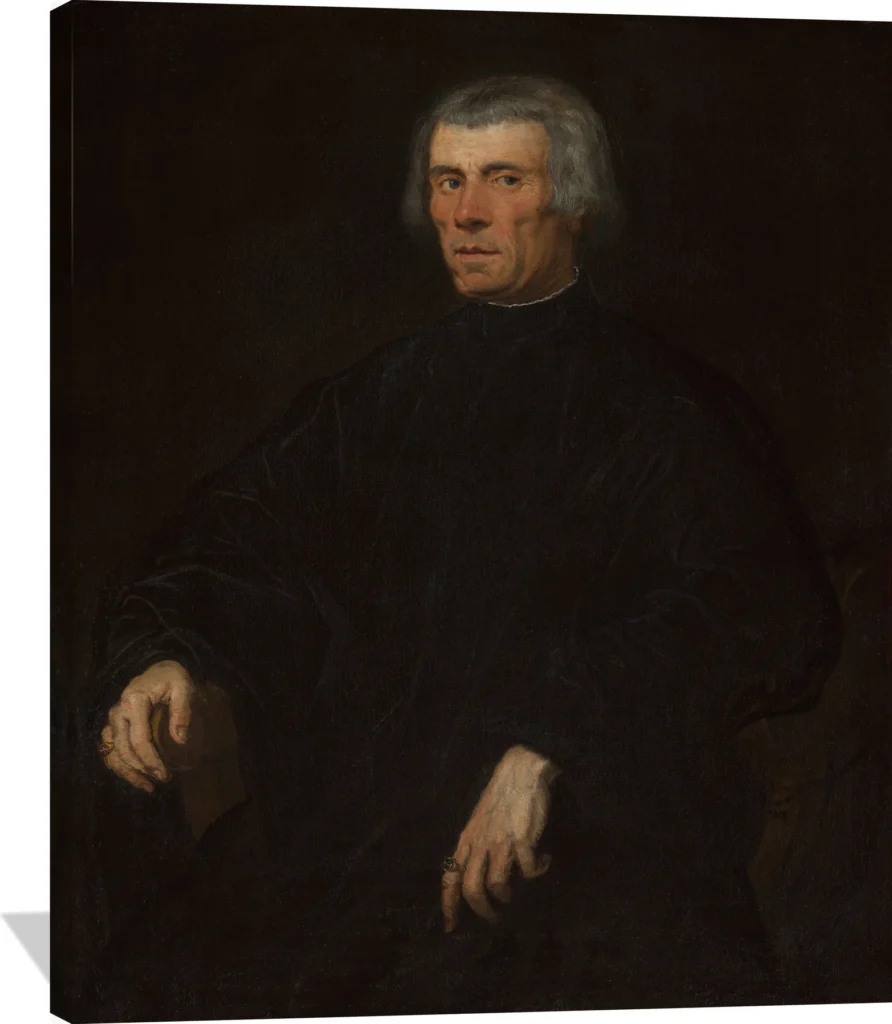
The Jacopo Tintoretto Portrait of a Man canvas captures the quiet authority and introspection of a Venetian gentleman through masterful chiaroscuro and restrained elegance. Deep tones of black, brown, and muted gold contrast with the sitter’s pale complexion, creating a timeless study in dignity and presence.
This museum-quality wall art brings Renaissance sophistication to any interior. Ideal for a study, library, or refined living space, this Tintoretto canvas print evokes the grandeur of 16th-century Venice while complementing modern décor with its subtle palette and contemplative mood.
Jacopo Tintoretto, born Jacopo Robusti in Venice between 1518 and 1519, was one of the most dynamic and inventive painters of the Venetian Renaissance. Active throughout the city until his death in 1594, he became renowned for his dramatic energy, daring perspective, and the distinctive interplay of light and shadow that set his work apart from his contemporaries.
Artistic Style
Tintoretto’s style is defined by swift, expressive brushwork and bold compositional experimentation. His paintings often feature intense contrasts of illumination, creating a theatrical atmosphere that heightens emotional impact. Working at remarkable speed, he cultivated a visual language that fused Venetian color with the structural rigor more commonly associated with central Italian art.
Subjects and Themes
His oeuvre spans large-scale religious narratives, mythological scenes, and portraits. Tintoretto approached sacred subjects with a sense of immediacy and movement, transforming familiar stories into immersive experiences. Mythological works similarly reveal his fascination with the human figure in motion, while his portraits capture a vivid psychological presence.
Legacy and Significance
Tintoretto’s contributions helped define the late Renaissance in Venice. His ambitious cycles for churches and confraternities, most notably the monumental works in the Scuola Grande di San Rocco, elevated narrative painting through their combination of technical mastery and expressive force. Celebrated for his fearless innovation, he remains a central figure in the evolution of European painting, admired for the dramatic intensity and distinctive vision that marked his long career.
Trust & policies
- 🚚 Free tracked shipping to 45+ countries. Local import duties or taxes may apply in some destinations.
- 🎨 Made-to-order, printed close to your delivery location
- 🛡️ If damaged, defective, or misprinted: free replacement or refund
- 🌍 Printed in US/CA/EU/UK/AU based on delivery location
- 💎 Acid-free, fade-resistant canvas with solid wood stretcher bars
- 🖼️ Optional pine floating frames in white, black, or brown
- 🪝 Ready to hang — hardware pre-installed