
The Lamentation
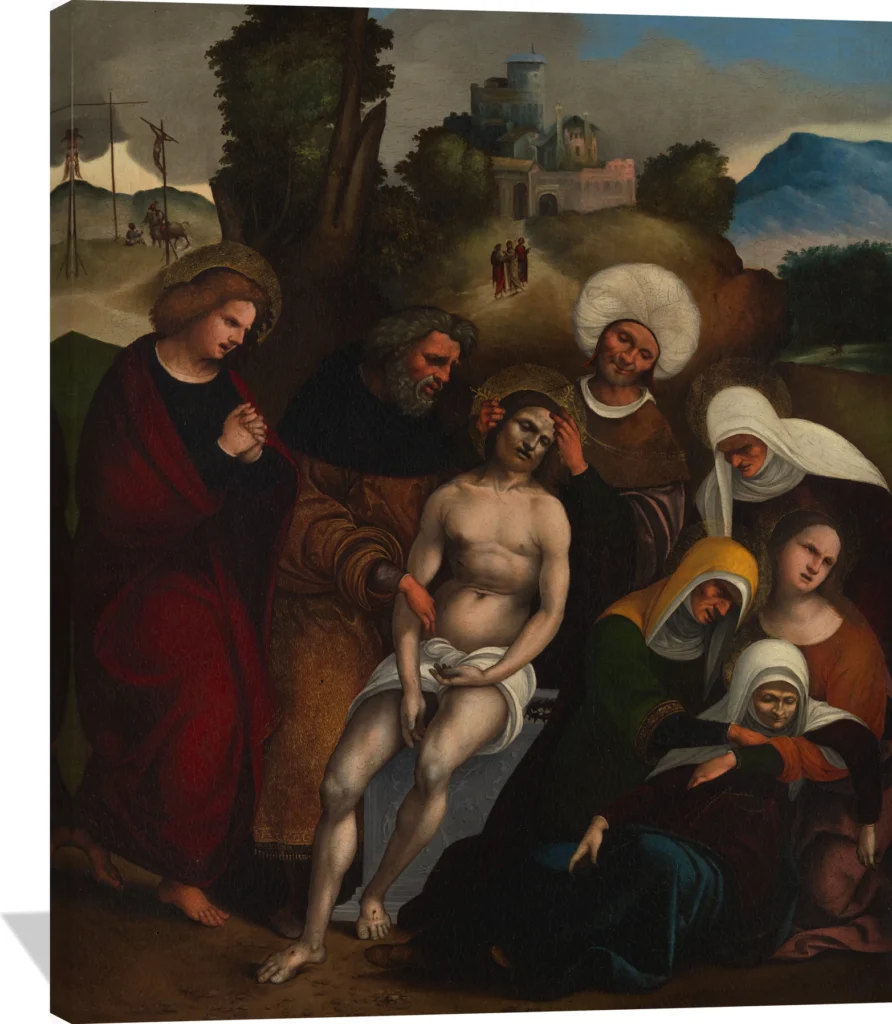
The Ludovico Mazzolino The Lamentation canvas captures a moment of profound emotion and spiritual depth. Rendered in rich tones of crimson, gold, olive, and deep brown, this Renaissance masterpiece draws the eye to its tender interplay of light and shadow. The figures’ graceful forms and sorrowful expressions evoke timeless reverence and compassion.
This museum-quality canvas print brings classical elegance to any interior, from a serene study to a sophisticated living room. Mazzolino’s masterful composition and luminous palette make The Lamentation a compelling focal point—an artwork that invites contemplation and adds a touch of historic grandeur to your wall art collection.
Ludovico Mazzolino was an Italian Renaissance painter active in Ferrara from around 1480 until after 1528. Known for his meticulous technique and jewel-like palette, he worked during a flourishing cultural moment under the Este court, contributing significantly to the visual identity of the Ferrarese school.
Artistic Style
Mazzolino’s paintings are distinguished by their shimmering color harmonies, richly patterned surfaces, and highly detailed architectural settings. His compositions often feature compact, animated groupings, creating an almost theatrical sense of movement. While rooted in the traditions of the Ferrarese Renaissance, his work displays an individuality marked by expressive faces, refined ornamentation, and a distinctive, almost miniature-like precision.
Subjects and Themes
He specialized in religious narratives, particularly scenes from the life of Christ and the Virgin, along with Old Testament stories. These works typically combine emotional intensity with elaborate backgrounds, blending devotional purpose with courtly elegance. Mazzolino’s frequent use of intricate details and symbolic motifs brought depth to familiar subjects, making his works both contemplative and visually captivating.
Legacy and Significance
Mazzolino holds a respected place within the Ferrarese tradition for his ability to merge local artistic influences with broader Renaissance ideals. His paintings demonstrate the transition between late Quattrocento intricacy and the more expansive forms of the early Cinquecento. Today, he is recognized for his uniquely ornate narrative style and his role in shaping the visual culture of Ferrara during a pivotal artistic era.
Trust & policies
- 🚚 Free tracked shipping to 45+ countries. Local import duties or taxes may apply in some destinations.
- 🎨 Made-to-order, printed close to your delivery location
- 🛡️ If damaged, defective, or misprinted: free replacement or refund
- 🌍 Printed in US/CA/EU/UK/AU based on delivery location
- 💎 Acid-free, fade-resistant canvas with solid wood stretcher bars
- 🖼️ Optional pine floating frames in white, black, or brown
- 🪝 Ready to hang — hardware pre-installed