
A Woman Seated at a Window
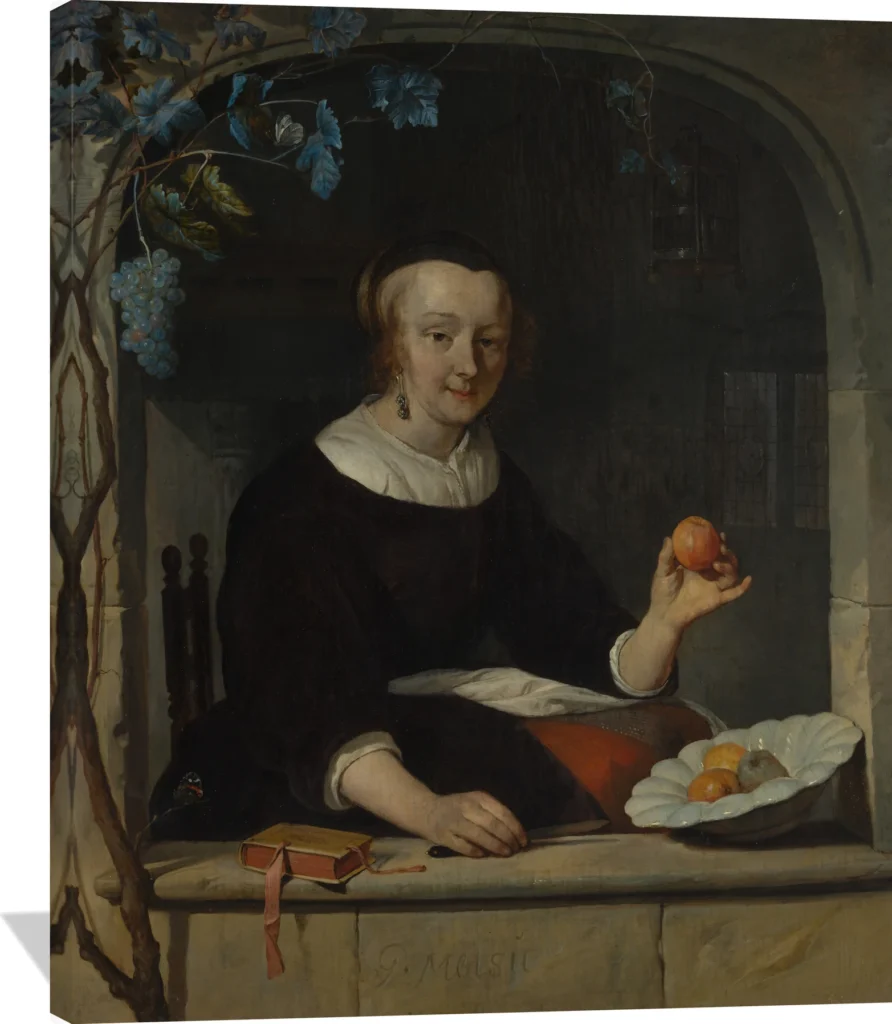
The Gabriël Metsu A Woman Seated at a Window canvas captures the quiet grace of 17th‑century Dutch domestic life. A woman, softly illuminated by natural light, sits by a stone window holding a piece of fruit, her calm expression framed by warm browns, soft creams, and muted blues. The artist’s refined brushwork and delicate play of shadow evoke intimacy and stillness.
This timeless wall art adds a touch of classical sophistication to any living room, study, or entryway. A canvas print of Metsu’s masterpiece brings the elegance of the Dutch Golden Age into your home, inviting reflection and serenity through its harmonious composition and subtle, enduring beauty.
Gabriël Metsu (1629–1667), born in Leiden and active in Amsterdam, was a master of the Dutch Golden Age whose intimate genre scenes and exceptional command of painterly detail placed him among the era’s most refined storytellers. His work reflects a seamless blend of Dutch realism and subtle emotional nuance, elevating everyday life into art of remarkable elegance.
Artistic Style
Metsu’s paintings are distinguished by their luminous color, delicately rendered textures, and carefully balanced compositions. His ability to capture fabrics, interior light, and expressive gestures reveals a deep sensitivity to both atmosphere and human presence. Often compared to contemporaries such as Vermeer and Ter Borch, he developed a highly personal style that combines technical finesse with quiet psychological depth.
Subjects and Themes
Metsu excelled in portraying domestic interiors, market scenes, and refined bourgeois activities. Works such as The Duet and The Sick Child demonstrate his talent for transforming simple moments into richly layered narratives. His figures are animated by subtle drama and tenderness, offering insight into seventeenth-century urban life while conveying timeless emotional resonance.
Legacy and Significance
Though his career was brief, Metsu’s contribution to Dutch genre painting is profound. His meticulous technique and evocative storytelling made him one of the period’s most admired artists, influencing later generations who celebrated his ability to blend realism with poetic restraint. Today, his paintings remain prized for their refined beauty, sensitive observation, and enduring expression of the Dutch Golden Age at its most intimate and human.
Trust & policies
- 🚚 Free tracked shipping to 45+ countries. Local import duties or taxes may apply in some destinations.
- 🎨 Made-to-order, printed close to your delivery location
- 🛡️ If damaged, defective, or misprinted: free replacement or refund
- 🌍 Printed in US/CA/EU/UK/AU based on delivery location
- 💎 Acid-free, fade-resistant canvas with solid wood stretcher bars
- 🖼️ Optional pine floating frames in white, black, or brown
- 🪝 Ready to hang — hardware pre-installed