Artistic Style
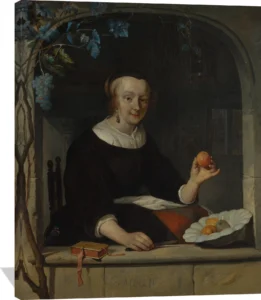
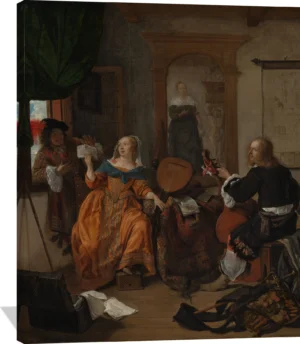
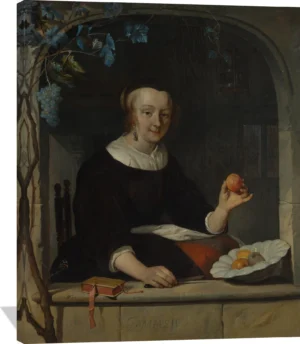
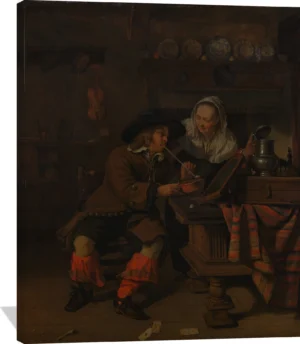
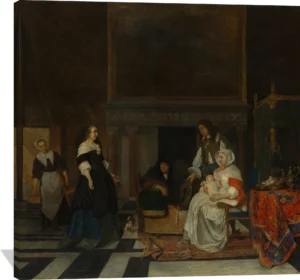
Metsu’s paintings are distinguished by their luminous color, delicately rendered textures, and carefully balanced compositions. His ability to capture fabrics, interior light, and expressive gestures reveals a deep sensitivity to both atmosphere and human presence. Often compared to contemporaries such as Vermeer and Ter Borch, he developed a highly personal style that combines technical finesse with quiet psychological depth.
Subjects and Themes
Metsu excelled in portraying domestic interiors, market scenes, and refined bourgeois activities. Works such as The Duet and The Sick Child demonstrate his talent for transforming simple moments into richly layered narratives. His figures are animated by subtle drama and tenderness, offering insight into seventeenth-century urban life while conveying timeless emotional resonance.
Legacy and Significance
Though his career was brief, Metsu’s contribution to Dutch genre painting is profound. His meticulous technique and evocative storytelling made him one of the period’s most admired artists, influencing later generations who celebrated his ability to blend realism with poetic restraint. Today, his paintings remain prized for their refined beauty, sensitive observation, and enduring expression of the Dutch Golden Age at its most intimate and human.