
Portrait of a Woman
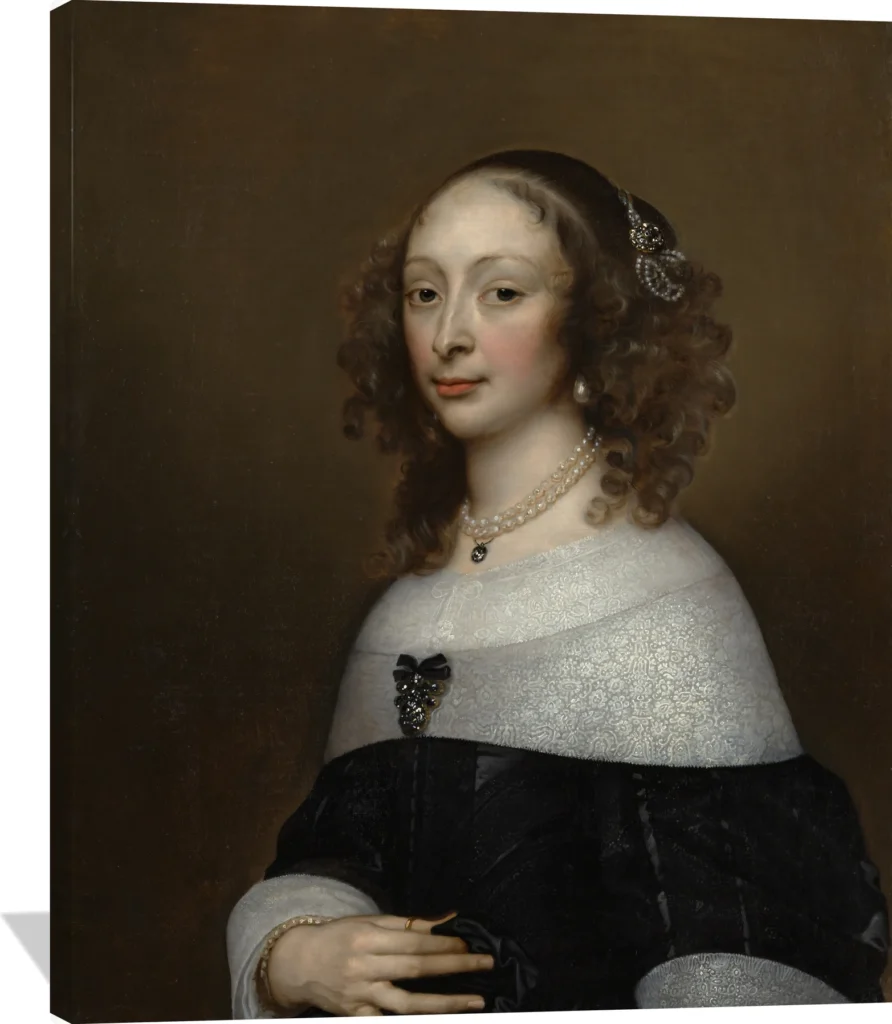
The Adriaen Hanneman Portrait of a Woman canvas captures timeless elegance through delicate detail and refined light. Rendered in soft tones of pearl white, deep black, warm beige, and subtle gold, this classic composition radiates quiet grace and sophistication. The sitter’s serene expression and intricate lace textures evoke the poise of 17th-century Dutch portraiture.
This premium Portrait of a Woman canvas print brings museum-quality artistry to your home. Ideal for a living room, study, or entryway, it adds an air of cultured refinement and understated luxury to any setting—an enduring tribute to Hanneman’s mastery and the beauty of the Dutch Golden Age.
Adriaen Hanneman (1603/4–1671) was a distinguished Dutch portraitist whose career flourished in The Hague during the Dutch Golden Age. Known for his refined technique and sophisticated portrayal of elite sitters, he became one of the leading painters of the city’s aristocratic and diplomatic circles.
Artistic Style
Hanneman’s work reflects a graceful synthesis of Dutch realism and the elegant courtly manner influenced by his time in England, where he absorbed the style of Anthony van Dyck. His portraits are marked by polished brushwork, luminous skin tones, and a poised composure that emphasized both likeness and status. He favored a harmonious color palette and subtle attention to costume and gesture, achieving a sense of quiet grandeur without excess ornamentation.
Subjects and Notable Contributions
Specializing in portraits, Hanneman captured members of the Dutch nobility, foreign ambassadors, and exiled royalists who settled in The Hague during the mid‑seventeenth century. His ability to convey dignity and psychological presence earned him a respected position among his contemporaries. While specific titles of his works vary, his depictions of courtly figures remain among his most recognized contributions.
Cultural and Historical Significance
Hanneman’s art occupies an important place in the visual history of the Dutch Republic. His portraits document a cosmopolitan moment in The Hague, when political and cultural networks connected the Netherlands with England and beyond. His refined style and his role in shaping the city’s portrait tradition make him a significant voice of Dutch Golden Age portraiture, celebrated for works that balance realism with dignified elegance.
Trust & policies
- 🚚 Free tracked shipping to 45+ countries. Local import duties or taxes may apply in some destinations.
- 🎨 Made-to-order, printed close to your delivery location
- 🛡️ If damaged, defective, or misprinted: free replacement or refund
- 🌍 Printed in US/CA/EU/UK/AU based on delivery location
- 💎 Acid-free, fade-resistant canvas with solid wood stretcher bars
- 🖼️ Optional pine floating frames in white, black, or brown
- 🪝 Ready to hang — hardware pre-installed