
Angelica and Medoro
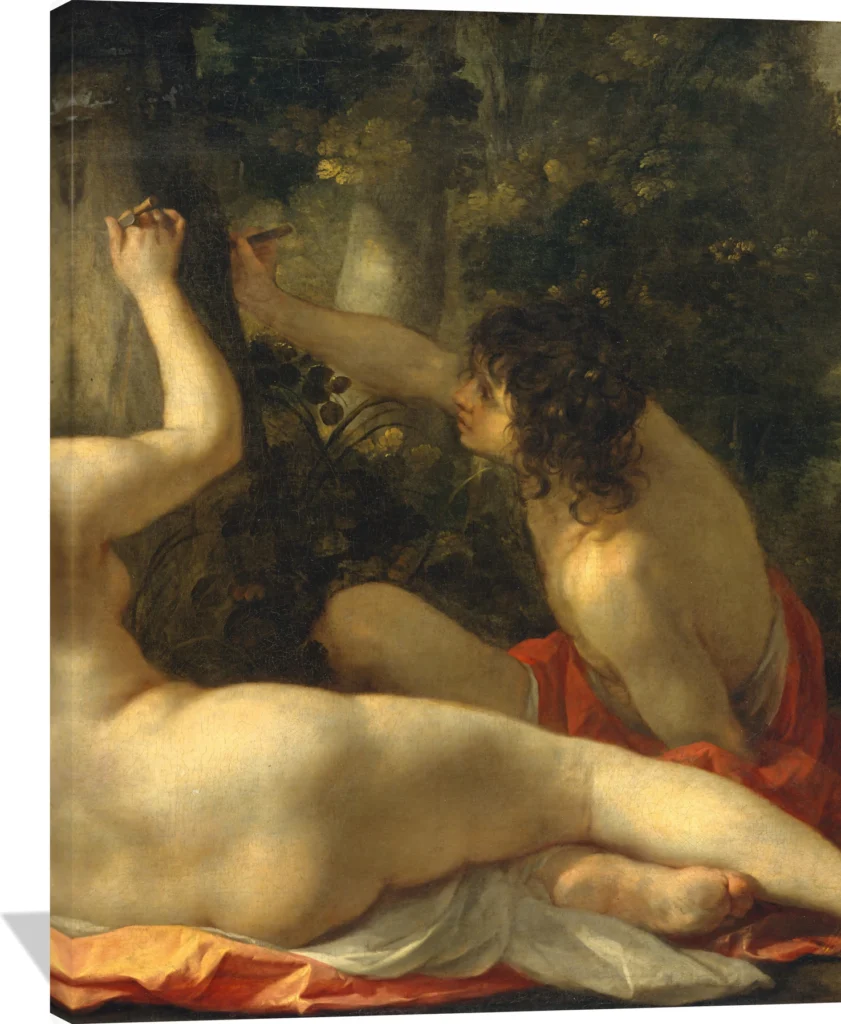
The Jacques Blanchard Angelica and Medoro canvas captures a tender moment of mythic romance bathed in warm golden light. Blanchard’s refined brushwork and soft chiaroscuro bring life to the intertwined figures, set against a lush woodland backdrop of deep greens, amber tones, and gentle sky blues. The composition’s sensual harmony and classical grace make it a timeless centerpiece for any art lover’s collection.
This exquisite wall art evokes intimacy and serenity, ideal for enhancing a living room, study, or elegant entryway. A premium Angelica and Medoro canvas print brings the poetic beauty of 17th‑century French art into contemporary interiors with effortless sophistication.
Jacques Blanchard (1600–1638) was a French Baroque painter celebrated for his refined lyricism and the sensual warmth of his compositions. Often associated with the Venetian-inspired current within French art, he brought a distinctive softness and emotional immediacy to early seventeenth‑century painting.
Artistic Style
Blanchard’s work is marked by luminous color harmonies, gentle modeling of the human figure, and a poetic atmosphere that set him apart from the more austere tendencies of his contemporaries. His style reflects the influence of Venetian masters, particularly in his use of rich chromatic contrasts and a subtly diffused light that envelops his subjects.
Subjects and Themes
He is best known for his graceful representations of mythological scenes, tender allegories, and religious narratives. Blanchard’s figures often appear in serene, intimate moments, imbued with a quiet sensuality that gives his compositions a distinctive emotional depth. Whether portraying sacred stories or classical subjects such as Venus and Adonis or The Virgin and Child, his works reveal a rare balance of elegance and warmth.
Legacy and Significance
Although his life was brief, Blanchard had a noteworthy impact on French painting of the period. His atmospheric approach and expressive handling of color contributed to shaping a more lyrical dimension within the Baroque tradition. Today, he is remembered for his evocative use of light and for bringing a uniquely tender sensibility to early seventeenth‑century French art.
Trust & policies
- 🚚 Free tracked shipping to 45+ countries. Local import duties or taxes may apply in some destinations.
- 🎨 Made-to-order, printed close to your delivery location
- 🛡️ If damaged, defective, or misprinted: free replacement or refund
- 🌍 Printed in US/CA/EU/UK/AU based on delivery location
- 💎 Acid-free, fade-resistant canvas with solid wood stretcher bars
- 🖼️ Optional pine floating frames in white, black, or brown
- 🪝 Ready to hang — hardware pre-installed