
Study of a Girl in Red
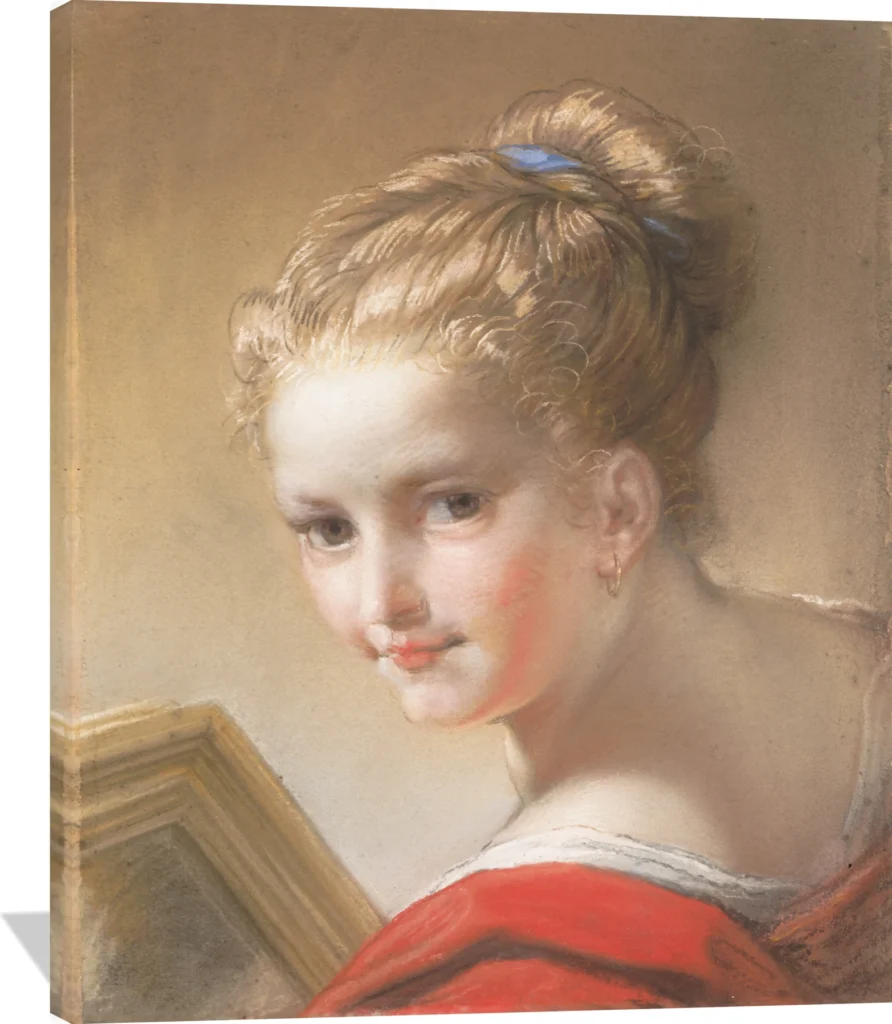
The Benedetto Luti Study of a Girl in Red canvas captures the quiet grace and luminous beauty of an Italian Baroque portrait. Soft golden tones, warm blushes, and the rich crimson of the subject’s draped garment create a delicate balance of warmth and refinement. The artist’s mastery of light and texture gives the figure a lifelike presence that feels both intimate and timeless.
This elegant wall art brings a touch of classical sophistication to any interior. Perfect for a living room, study, or entryway, this canvas print invites calm reflection and enduring style inspired by Florence’s artistic heritage.
Benedetto Luti (1666–1724) was an Italian painter and draftsman whose career bridged the refined traditions of Florentine training with the vibrant artistic culture of Rome. Celebrated for his mastery of chalks and pastels as well as oil painting, he developed a distinctive style marked by luminous color, elegant compositions, and a deeply expressive approach to the human figure.
Artistic Style and Technique
Luti became known for his delicate modeling of light and his ability to convey psychological depth through subtle facial expressions. His pastel portraits, in particular, were admired for their radiance and precision, elevating the medium to new artistic prestige. Whether working in pastel or oil, he favored graceful contours, soft transitions of tone, and a polished refinement characteristic of the late Baroque.
Typical Subjects and Themes
Although he produced portraits, Luti was especially valued for his religious and mythological scenes. His figures often embody an idealized beauty and gentle emotional intensity, bringing a sense of humanity to sacred narratives. Works such as his interpretations of The Annunciation and Madonna and Child reveal his sensitivity to devotional themes and his ability to infuse familiar subjects with fresh vitality.
Legacy and Significance
After relocating to Rome, Luti became a central figure in the city’s artistic circles. He served as an influential teacher and contributed to the evolving tastes of the Roman art world. His sophisticated use of pastel and his refined, expressive handling of form secured his reputation as one of the medium’s early champions. Today, he is remembered for his elegant draftsmanship and his role in shaping the transition between Florentine classicism and the more emotive Roman Baroque.
Trust & policies
- 🚚 Free tracked shipping to 45+ countries. Local import duties or taxes may apply in some destinations.
- 🎨 Made-to-order, printed close to your delivery location
- 🛡️ If damaged, defective, or misprinted: free replacement or refund
- 🌍 Printed in US/CA/EU/UK/AU based on delivery location
- 💎 Acid-free, fade-resistant canvas with solid wood stretcher bars
- 🖼️ Optional pine floating frames in white, black, or brown
- 🪝 Ready to hang — hardware pre-installed