
A Kitchen
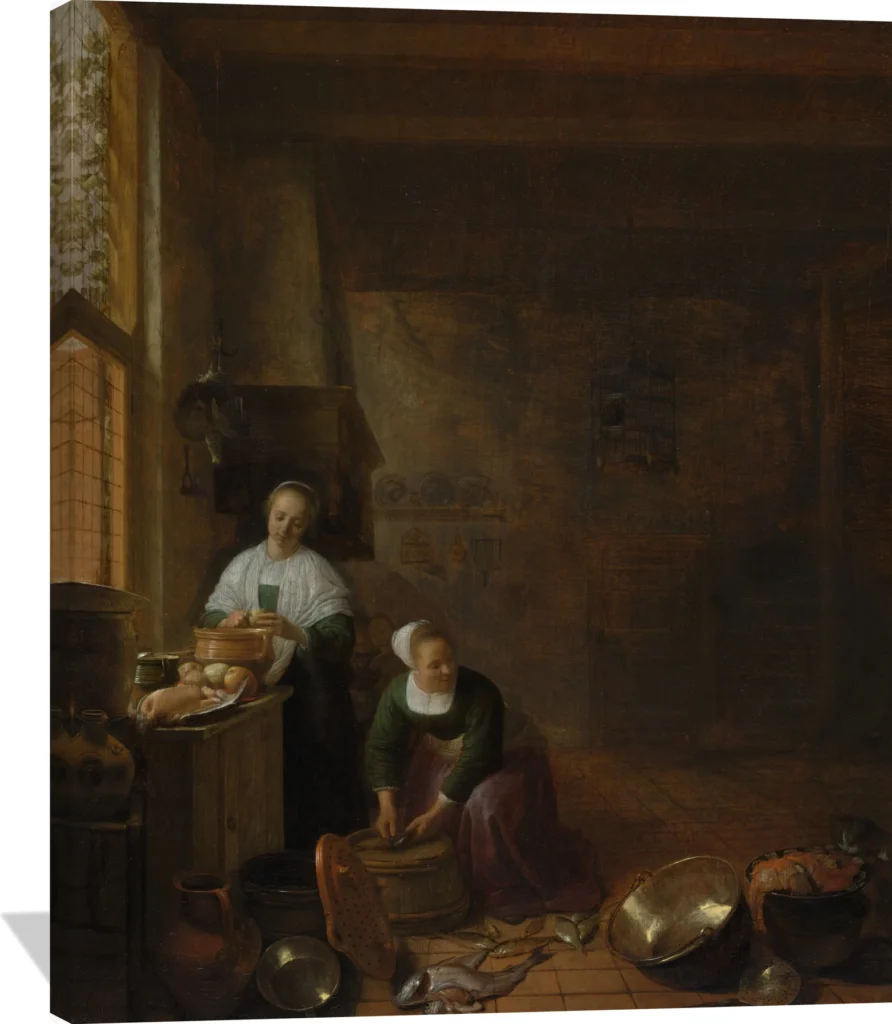
The Hendrick Sorgh A Kitchen canvas captures the quiet rhythm of domestic life in warm, golden light. Two women prepare food by a sunlit window, their calm focus framed by earthenware, copper tones, and soft shadows. Deep browns, muted greens, and amber highlights create a timeless harmony that evokes the intimacy of a 17th-century home.
This finely detailed canvas print brings classic Dutch realism to modern interiors, offering a sense of stillness and craftsmanship. Ideal for a living room, study, or entryway, A Kitchen adds depth and quiet elegance to any wall art collection.
Hendrick Sorgh (Rotterdam, 1609/11–1670) was a leading figure of the Dutch Golden Age, known for his richly detailed interiors and masterful command of light and texture. Working throughout his life in Rotterdam, he helped shape the city’s artistic identity through carefully observed genre scenes that capture the rhythms of everyday life.
Artistic Style
Sorgh’s paintings are distinguished by their meticulous realism, warm tonal palette, and subtle use of chiaroscuro. He excelled at depicting the interplay of light across domestic spaces, highlighting surfaces such as pewter, copper, and fabric with exceptional precision. His style reflects the broader Dutch Golden Age devotion to realism while maintaining a distinctly intimate atmosphere.
Subjects and Themes
He is best known for interior scenes featuring cooks, musicians, market vendors, and household activities. Sorgh often infused these moments with narrative detail, allowing viewers to glimpse everyday life in 17th‑century Holland. Still lifes, especially those incorporating kitchenware and foodstuffs, also form an important part of his oeuvre, rendered with the same tactile clarity found in his genre paintings.
Legacy and Significance
Sorgh’s work stands out for its ability to transform ordinary moments into visually engaging compositions. His careful observation and technical refinement made him an influential contributor to Dutch genre painting. Today, his paintings remain valued for their intimate realism, cultural insight, and the textural richness that defines his most celebrated scenes.
Trust & policies
- 🚚 Free tracked shipping to 45+ countries. Local import duties or taxes may apply in some destinations.
- 🎨 Made-to-order, printed close to your delivery location
- 🛡️ If damaged, defective, or misprinted: free replacement or refund
- 🌍 Printed in US/CA/EU/UK/AU based on delivery location
- 💎 Acid-free, fade-resistant canvas with solid wood stretcher bars
- 🖼️ Optional pine floating frames in white, black, or brown
- 🪝 Ready to hang — hardware pre-installed