Artistic Style and Approach
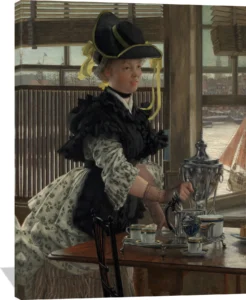
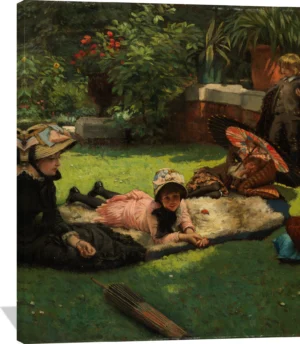
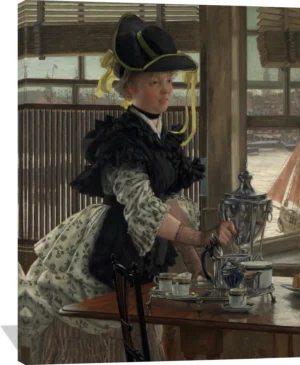
Tissot’s style blended academic precision with the fresh immediacy of modern subjects. His paintings are known for their meticulous rendering of textiles, interiors, and gesture, capturing subtle social cues with remarkable clarity. He frequently employed a polished surface and controlled palette, enabling viewers to focus on character, setting, and the interplay of emotion beneath outward elegance.
Subjects and Themes
Celebrated for his portrayals of fashionable Parisian and London society, Tissot depicted leisure, domestic interiors, and moments of quiet contemplation. His narrative scenes often suggest untold stories, inviting the viewer into intimate social worlds. Later in his career, he produced a highly ambitious series of biblical illustrations, including works such as The Life of Christ, noted for their archaeological detail and dramatic visual storytelling.
Cultural and Historical Significance
Positioned between academic classicism and emerging modernist sensibilities, Tissot occupies a unique place in nineteenth-century art. His ability to capture the social dynamics of his era with both elegance and psychological depth has made his work enduringly compelling. Today, he is recognized for his contribution to the visual history of the period and for artworks that continue to resonate through their beauty, precision, and quietly revealing narratives.