Artistic Style
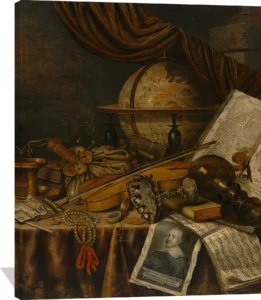
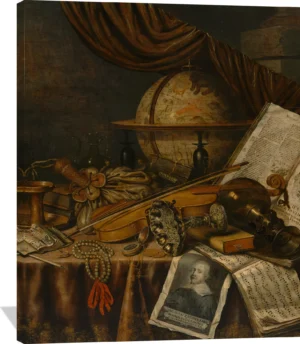
Collier’s paintings are distinguished by precise detailing, controlled lighting, and a disciplined sense of composition. He excelled in rendering reflective surfaces, aged paper, and the tactile qualities of everyday objects. His mastery of illusionistic realism allowed him to transform simple materials into visually captivating arrangements.
Notable Subjects
He is best known for his letter racks, vanitas still lifes, and compositions featuring books, documents, quills, and seals. These works often include subtle symbolic elements such as timepieces, skulls, or extinguished candles that encourage contemplation of knowledge, ephemerality, and the passage of time. Titles like Still Life with Books and Manuscripts exemplify his ability to elevate scholarly objects into poetic visual statements.
Cultural Significance
Active during a period when Dutch art was flourishing, Collier contributed to the broader cultural interest in learning, literacy, and intellectual life. His paintings resonated with collectors in both the Netherlands and England, where his career later took him. Today he is recognized for enriching the still-life genre with scenes that feel intimate, introspective, and deeply human.
What Makes His Work Distinctive
Collier’s legacy rests on his unparalleled skill in deceiving the eye, as well as his ability to balance realism with quiet symbolism. His carefully arranged books, papers, and instruments of knowledge not only demonstrate technical excellence but also speak to the enduring value of reflection and inquiry. His works remain admired for their craftsmanship, elegance, and ability to draw the viewer into a world where illusion and meaning coexist.