
In the Studio
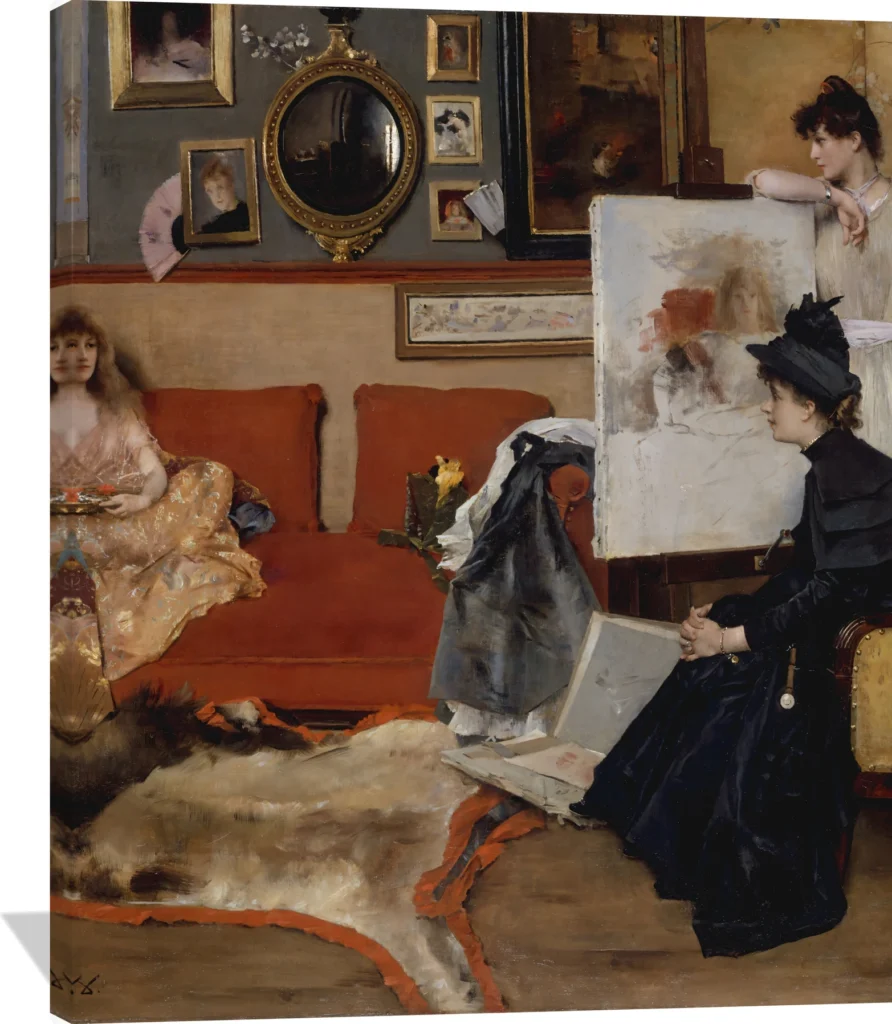
The Alfred Stevens In the Studio canvas captures a refined moment of artistic life in 19th-century Paris. Bathed in warm amber, soft rose, and deep charcoal tones, Stevens’ masterful brushwork reveals an intimate interior where elegance and creativity meet. The composition’s gentle light and detailed textures evoke quiet sophistication and timeless charm.
This exquisite canvas print brings a touch of cultured grace to any living room, study, or entryway. A celebration of beauty, artistry, and feminine poise, In the Studio transforms your wall into a window onto the golden age of European art.
Alfred Stevens (Brussels 1823–1906 Paris) was a Belgian-born painter celebrated for his refined depictions of modern Parisian life. Trained in the academic tradition yet deeply responsive to contemporary culture, he became one of the most admired interpreters of fashionable society in the mid‑to‑late nineteenth century.
Artistic Style
Stevens mastered a polished realist style influenced by both academic painting and emerging modern sensibilities. His surfaces are smooth and luminous, revealing meticulous attention to fabric, décor, and gesture. Subtle psychological depth and an elegant sense of color define his best work, placing him among the leading painters bridging Realism and early Impressionist tendencies.
Subjects and Themes
He is most closely associated with exquisitely rendered interior scenes featuring Parisian women. Through settings filled with silk drapery, ornate furniture, and imported objects, Stevens explored themes of beauty, introspection, and the private rituals of urban life. He also ventured into marine views and scenes shaped by Japonisme, reflecting his early role in introducing Japanese aesthetics to European painting.
Legacy and Significance
Stevens was highly sought after in his era, admired for his ability to capture the allure and complexity of contemporary femininity. His paintings offer a rich visual record of fashionable nineteenth‑century Paris, combining grace with an observant realism that continues to resonate today. His enduring significance lies in his masterful technique and in his contribution to shaping modern tastes, making him a distinctive and influential figure in European art.
Trust & policies
- 🚚 Free tracked shipping to 45+ countries. Local import duties or taxes may apply in some destinations.
- 🎨 Made-to-order, printed close to your delivery location
- 🛡️ If damaged, defective, or misprinted: free replacement or refund
- 🌍 Printed in US/CA/EU/UK/AU based on delivery location
- 💎 Acid-free, fade-resistant canvas with solid wood stretcher bars
- 🖼️ Optional pine floating frames in white, black, or brown
- 🪝 Ready to hang — hardware pre-installed