
Portrait of a Woman
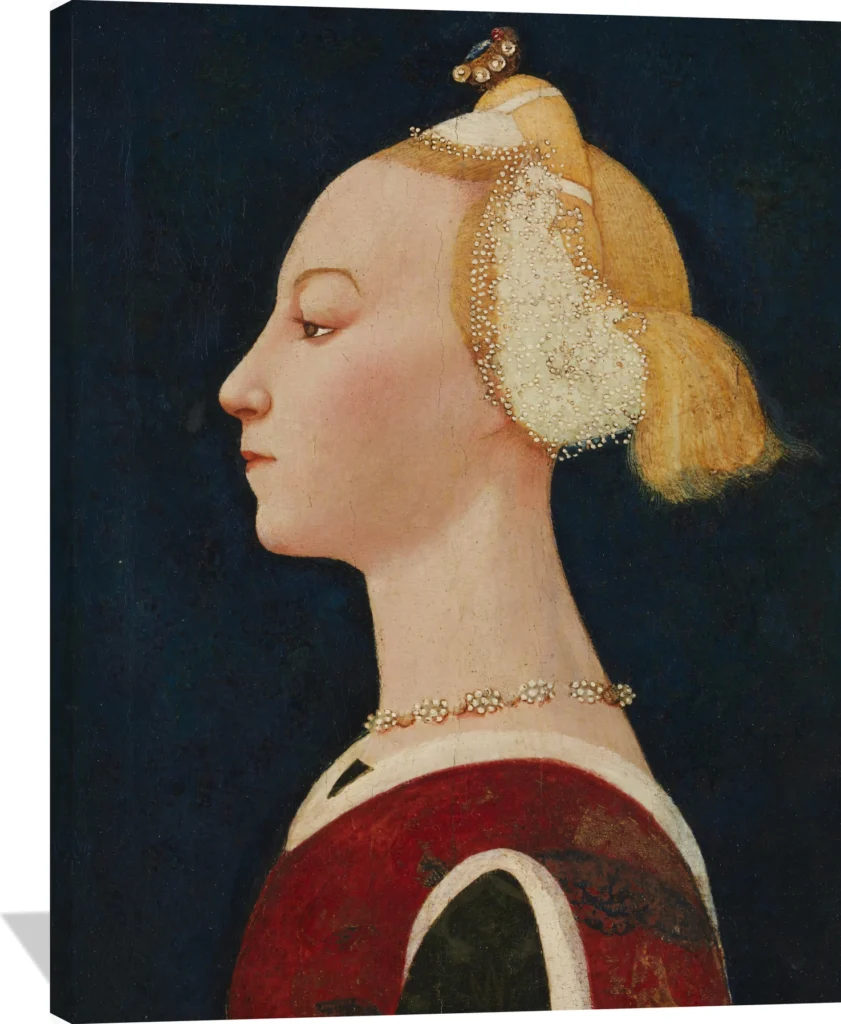
The Master of the Castello Nativity Portrait of a Woman canvas captures the serene elegance of early Renaissance Florence. Against a deep blue background, the sitter’s pale profile, adorned with pearls and golden hair, radiates quiet dignity and refinement. The rich crimson and ivory tones evoke timeless sophistication, making this artwork a striking centerpiece for any interior.
This museum-quality canvas print brings the grace of 15th-century portraiture into your home. Ideal for a living room, study, or entryway, the Portrait of a Woman wall art adds a touch of classical beauty and historical depth to modern spaces.
The Master of the Castello Nativity was an Italian painter active in Florence between approximately 1445 and 1475, recognized today through a distinctive group of works attributed to his hand. Though his name remains unknown, his artistic identity is shaped by a refined visual language characteristic of mid‑Quattrocento Florence.
Artistic Style
His paintings display a graceful blend of late Gothic elegance and emerging Renaissance naturalism. Delicate linearity, luminous color, and carefully balanced compositions define his work, while his figures often possess a serene, contemplative presence. Subtle attention to architectural settings and landscape elements reveals his engagement with the evolving spatial innovations of his contemporaries.
Typical Subjects
The artist is best known for intimate devotional scenes, particularly Nativities, Adorations, and tender portrayals of the Virgin and Child. These works emphasize spiritual warmth and visual clarity, qualities that made such images especially appealing for private worship in fifteenth‑century Florence.
Notable Contributions
His most famous attributed work, the Nativity from the Villa Castello, exemplifies his ability to merge narrative detail with emotional depth. The painting’s balanced interplay of architecture, landscape, and figural grace reflects a sophisticated understanding of the period’s artistic shifts. Through works like this, the Master contributed to the broader transition from the ornate Gothic tradition toward a more spatially coherent and naturalistic Renaissance approach.
Cultural Significance
Although his identity remains anonymous, the Master of the Castello Nativity occupies a meaningful place in Florentine art history. His paintings offer insight into the devotional culture of the time and demonstrate how workshop‑based artists shaped the visual language of the early Renaissance. Today, his work is valued for its refinement, emotional resonance, and the subtle yet enduring influence it exerted on Florentine artistic practice.
Trust & policies
- 🚚 Free tracked shipping to 45+ countries. Local import duties or taxes may apply in some destinations.
- 🎨 Made-to-order, printed close to your delivery location
- 🛡️ If damaged, defective, or misprinted: free replacement or refund
- 🌍 Printed in US/CA/EU/UK/AU based on delivery location
- 💎 Acid-free, fade-resistant canvas with solid wood stretcher bars
- 🖼️ Optional pine floating frames in white, black, or brown
- 🪝 Ready to hang — hardware pre-installed