
Portrait of a Young Man; (reverse) Girl Making a Garland
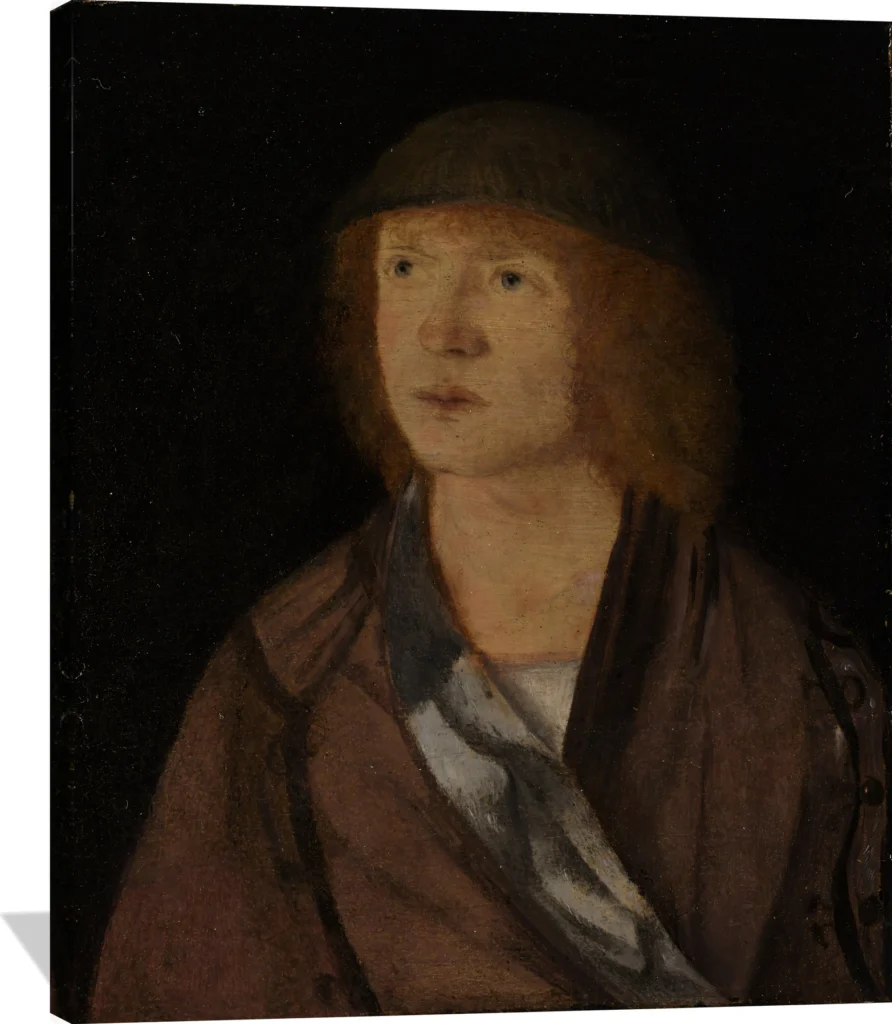
The Hans Süss von Kulmbach Portrait of a Young Man canvas captures the quiet intensity of Renaissance portraiture with remarkable depth and restraint. Subtle earth tones of umber, sienna, and muted gold are set against a deep shadowed background, drawing focus to the sitter’s contemplative gaze and luminous complexion. This masterful balance of light and texture evokes timeless introspection and grace.
Perfect as refined wall art for a study, library, or entryway, this museum-quality canvas print brings the sophistication of early 16th-century Nuremberg craftsmanship into a modern interior. The Portrait of a Young Man adds a serene yet powerful focal point to any curated art collection.
Hans Süss von Kulmbach (ca. 1480–1522) was a German painter active in Nuremberg during the early sixteenth century, known for his refined blend of Northern precision and emerging Renaissance influences. Trained in the orbit of Albrecht Dürer, he developed a distinctive visual language that combined luminous color, graceful figure modeling, and meticulously rendered detail.
Artistic Style
Kulmbach’s paintings reveal a sophisticated command of line and color, marked by serene compositions and expressive yet harmonious forms. He excelled in altarpieces and devotional imagery, infusing sacred narratives with clarity and gentle emotional depth. His work is recognized for its polished finish, jewel-like tones, and the subtle interplay between spiritual symbolism and naturalistic observation.
Subjects and Contributions
Specializing in religious commissions, Kulmbach created panels featuring saints, Madonna-and-Child themes, and complex multi-panel altarpieces. These works often highlight his skill in orchestrating richly costumed figures and delicately rendered landscapes. He played a key role in shaping Nuremberg’s artistic identity during a transitional moment, helping to introduce Renaissance sensibilities while maintaining the characteristic precision of German painting.
Cultural Significance
Kulmbach stands as a vital link between late Gothic traditions and the developing Renaissance style in Northern Europe. His collaborations with Dürer’s workshop and his independent commissions established him as a respected master whose works embodied both innovation and continuity. Today, his paintings remain valued for their elegant craftsmanship and their ability to convey devotional themes with intimate clarity.
Trust & policies
- 🚚 Free tracked shipping to 45+ countries. Local import duties or taxes may apply in some destinations.
- 🎨 Made-to-order, printed close to your delivery location
- 🛡️ If damaged, defective, or misprinted: free replacement or refund
- 🌍 Printed in US/CA/EU/UK/AU based on delivery location
- 💎 Acid-free, fade-resistant canvas with solid wood stretcher bars
- 🖼️ Optional pine floating frames in white, black, or brown
- 🪝 Ready to hang — hardware pre-installed