
Charles Claude de Flahaut (1730–1809), Comte d’Angiviller
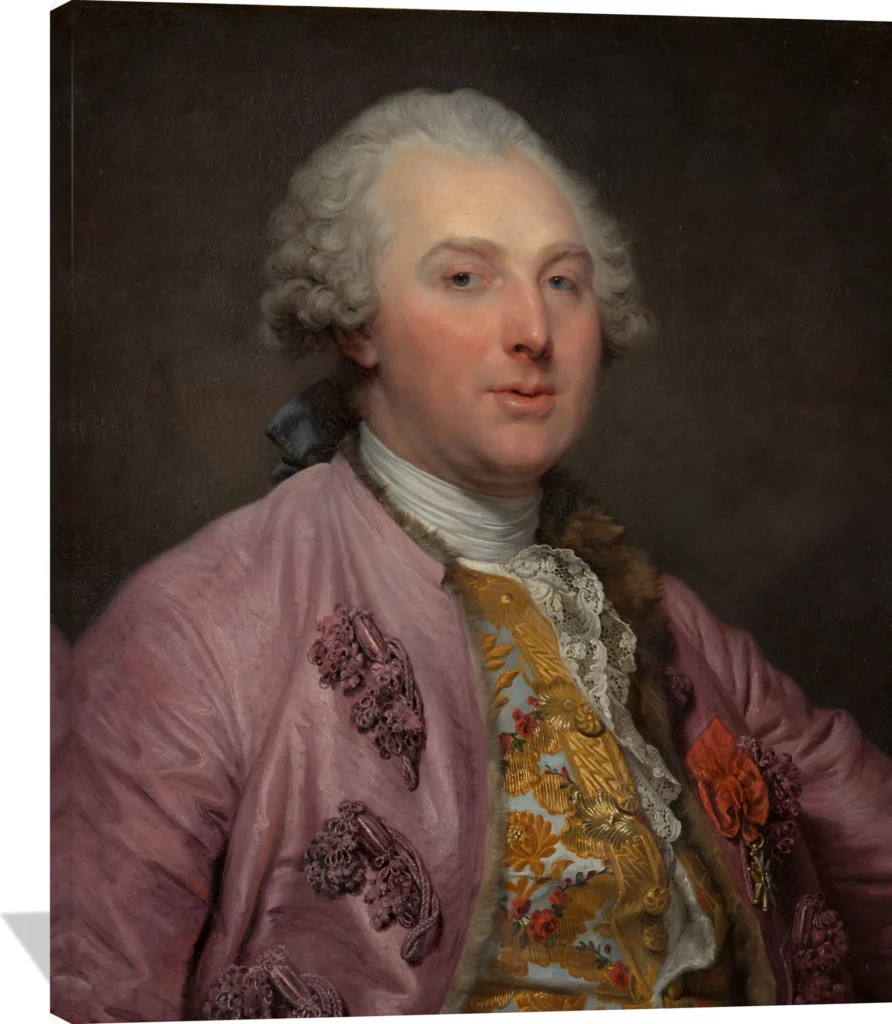
The Jean-Baptiste Greuze Charles Claude de Flahaut (1730–1809), Comte d’Angiviller canvas captures the elegance and refinement of 18th-century French portraiture. Bathed in soft light, the sitter’s powdered hair, rose-toned silk coat, and richly embroidered gold waistcoat emerge against a muted background, creating a timeless balance of grace and dignity. Subtle hues of mauve, gold, ivory, and warm brown lend the composition a regal yet intimate atmosphere.
This exquisite wall art brings classical sophistication to any interior. Ideal for a living room, study, or entryway, this canvas print celebrates the artistry of Greuze—French, Tournus 1725–1805 Paris—and adds a touch of historical grandeur to contemporary spaces.
Jean-Baptiste Greuze (French, Tournus 1725–1805 Paris) was a celebrated painter of the late eighteenth century, renowned for his emotionally charged domestic scenes and finely rendered portraits. His work resonated deeply with audiences of the Enlightenment era, capturing the moral ideals and sentiments of his time.
Artistic Style and Approach
Greuze’s style is distinguished by its blend of intimate realism and expressive drama. He favored carefully modeled figures, luminous skin tones, and meticulous attention to detail, creating compositions that feel both tender and theatrical. His mastery of gesture and facial expression allowed him to convey complex emotional states with remarkable clarity.
Subjects and Themes
Best known for his moralizing genre scenes, Greuze often depicted family life, filial devotion, and moments of virtue or transgression. Works such as The Village Bride exemplify his ability to stage narratives that are both visually refined and morally charged. In addition to genre paintings, he produced elegant portraiture that captured the individuality and psychological presence of his sitters.
Legacy and Significance
Greuze played an important role in shaping the transition between Rococo elegance and the emerging sensibilities of Neoclassicism. His emotionally resonant storytelling and commitment to naturalism influenced generations of artists and established him as a major figure in French art. Today, his paintings remain admired for their sensitivity, technical finesse, and enduring human appeal, reinforcing his reputation as a master of expressive narrative painting.
Trust & policies
- 🚚 Free tracked shipping to 45+ countries. Local import duties or taxes may apply in some destinations.
- 🎨 Made-to-order, printed close to your delivery location
- 🛡️ If damaged, defective, or misprinted: free replacement or refund
- 🌍 Printed in US/CA/EU/UK/AU based on delivery location
- 💎 Acid-free, fade-resistant canvas with solid wood stretcher bars
- 🖼️ Optional pine floating frames in white, black, or brown
- 🪝 Ready to hang — hardware pre-installed