
Study in Green and Black
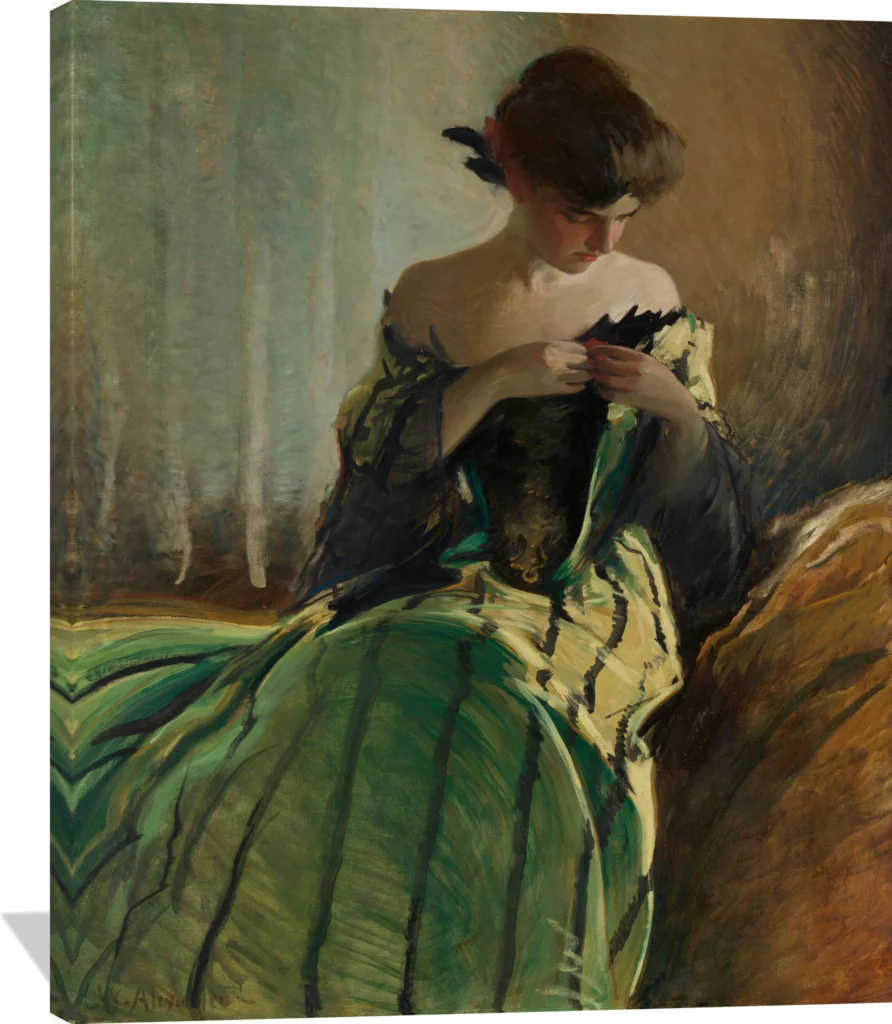
The John White Alexander Study in Green and Black canvas captures quiet introspection through graceful form and luminous color. A seated woman, bathed in soft light, is enveloped in flowing shades of emerald, black, and gold, creating a serene balance of elegance and depth. The painterly brushwork and subtle contrasts evoke timeless sophistication and emotional stillness.
This museum-quality canvas print brings refined artistry to any interior. Ideal for a living room, study, or entryway, the Study in Green and Black wall art adds a touch of classic beauty and contemplative charm to modern and traditional spaces alike.
John White Alexander (1856–1915) was an American painter celebrated for his refined draftsmanship, atmospheric elegance, and the poetic fluidity of his compositions. Born in Allegheny, Pennsylvania, and later active in New York, he emerged as a prominent figure of the American Gilded Age, admired for his ability to merge tonal harmony with expressive, modern sensibilities.
Artistic Style
Alexander developed a distinctive style characterized by sweeping curves, soft contours, and a subtle yet rich palette. His work often blended elements of Tonalism and Aestheticism, resulting in compositions that feel both serene and emotionally resonant. Figures seem to drift within their environments, shaped by rhythmic lines and atmospheric light. This lyrical approach became a hallmark of his mature period and contributed significantly to his enduring reputation.
Subjects and Themes
He is best known for his expressive portraits, elegant depictions of women, and symbolic interiors, many rendered with a sense of quiet introspection. His sitters, often poised in flowing garments, appear suspended in luminous environments that elevate mood over narrative. Alexander also created murals and allegorical works, expanding his visual language beyond portraiture while maintaining his signature grace.
Cultural Significance
A respected figure in American art circles, Alexander helped shape the nation’s transition toward more modern pictorial forms. His ability to merge American realism with European artistic influences reflects his international perspective and professional experience abroad. Today, his works stand as important examples of late 19th- and early 20th-century American painting, admired for their lyricism and refined sense of design.
Trust & policies
- 🚚 Free tracked shipping to 45+ countries. Local import duties or taxes may apply in some destinations.
- 🎨 Made-to-order, printed close to your delivery location
- 🛡️ If damaged, defective, or misprinted: free replacement or refund
- 🌍 Printed in US/CA/EU/UK/AU based on delivery location
- 💎 Acid-free, fade-resistant canvas with solid wood stretcher bars
- 🖼️ Optional pine floating frames in white, black, or brown
- 🪝 Ready to hang — hardware pre-installed