
Three Beauties
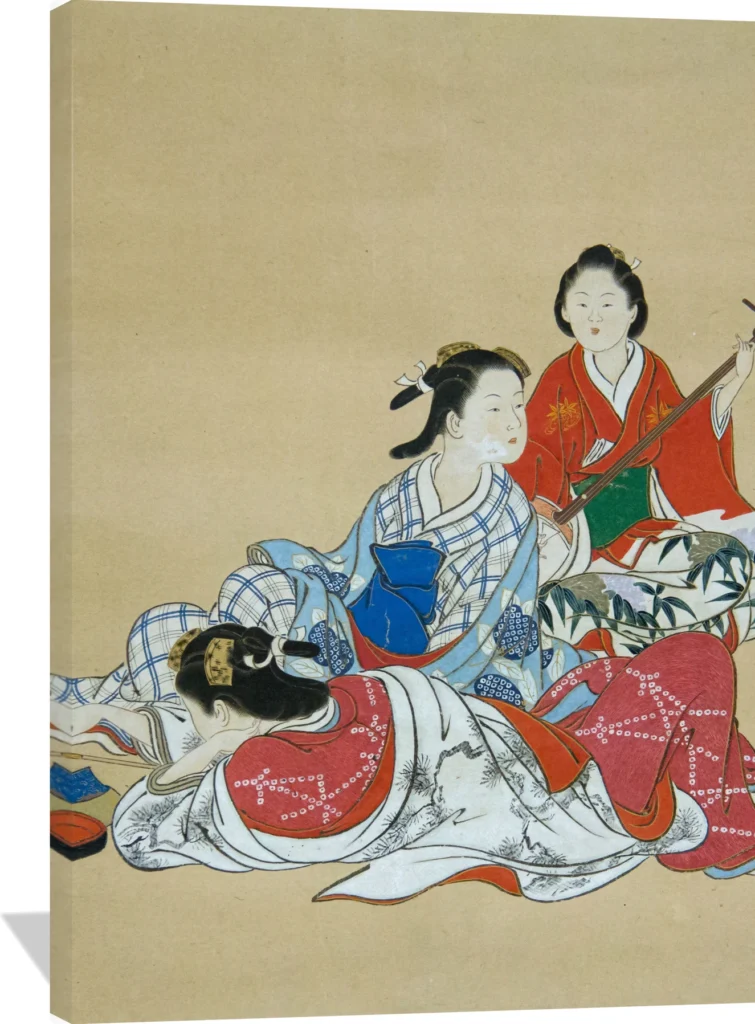
The Nishikawa Sukenobu Three Beauties canvas captures the grace and refinement of Edo-period Japan through delicate linework and serene composition. Three elegantly dressed women, adorned in flowing robes of crimson, indigo, and ivory, gather in quiet harmony against a warm parchment background, evoking a timeless sense of poise and intimacy.
This exquisite wall art brings a touch of classical Japanese beauty to any modern space. Ideal for a living room, study, or entryway, this canvas print celebrates Sukenobu’s mastery of feminine elegance and subtle emotion, making it a refined centerpiece for art lovers and collectors alike.
Nishikawa Sukenobu (1671–1750) was a prominent Japanese artist of the Edo period, celebrated for his elegant ukiyo-e printed books and refined depictions of women. Active primarily in Kyoto, he became one of the most influential illustrators of his time, shaping the visual culture of fashion, beauty, and everyday life in early 18th‑century Japan.
Artistic Style
Sukenobu’s work is distinguished by its graceful linework, subtle detailing, and harmonious compositions. His figures are rendered with a gentle fluidity, emphasizing poise and movement. Known for an approach that blended sophistication with naturalism, he helped define the aesthetic ideal of feminine beauty in ukiyo-e before the rise of later Edo masters.
Subjects and Themes
Best known for his portrayals of women from various social classes, Sukenobu captured court ladies, geisha, and ordinary townspeople with equal sensitivity. His illustrations often documented clothing, customs, and interiors, making them valuable visual records of Kyoto life. He also produced works on moral instruction and classical literature, crafting scenes with a narrative clarity that reflected his mastery of book illustration.
Notable Contributions
Sukenobu was a prolific creator of illustrated books, including influential volumes such as Hyakunin Joro Shinasadame and Hyakunin Bijin, which showcased one hundred women in varied roles and attire. These publications were widely circulated and deeply admired, cementing his reputation as a leading figure of Kyoto’s artistic community. His ability to blend aesthetic refinement with accessible storytelling made him a central contributor to the evolution of ukiyo-e print culture.
Cultural Significance
Working outside Edo the main center of the print world Sukenobu brought a distinct Kyoto sensibility to ukiyo-e, characterized by elegance and understated beauty. His focus on everyday women and domestic scenes broadened the thematic scope of the genre, influencing artists throughout Japan. Today, his works are valued for both their artistic refinement and their cultural insight into the lives and fashions of Edo‑period women.
Nishikawa Sukenobu remains celebrated for his exquisite portrayals of feminine grace and his enduring impact on the development of Japanese woodblock illustration. His art continues to captivate viewers with its quiet sophistication and historical richness.
Trust & policies
- 🚚 Free tracked shipping to 45+ countries. Local import duties or taxes may apply in some destinations.
- 🎨 Made-to-order, printed close to your delivery location
- 🛡️ If damaged, defective, or misprinted: free replacement or refund
- 🌍 Printed in US/CA/EU/UK/AU based on delivery location
- 💎 Acid-free, fade-resistant canvas with solid wood stretcher bars
- 🖼️ Optional pine floating frames in white, black, or brown
- 🪝 Ready to hang — hardware pre-installed