
The Two Sisters
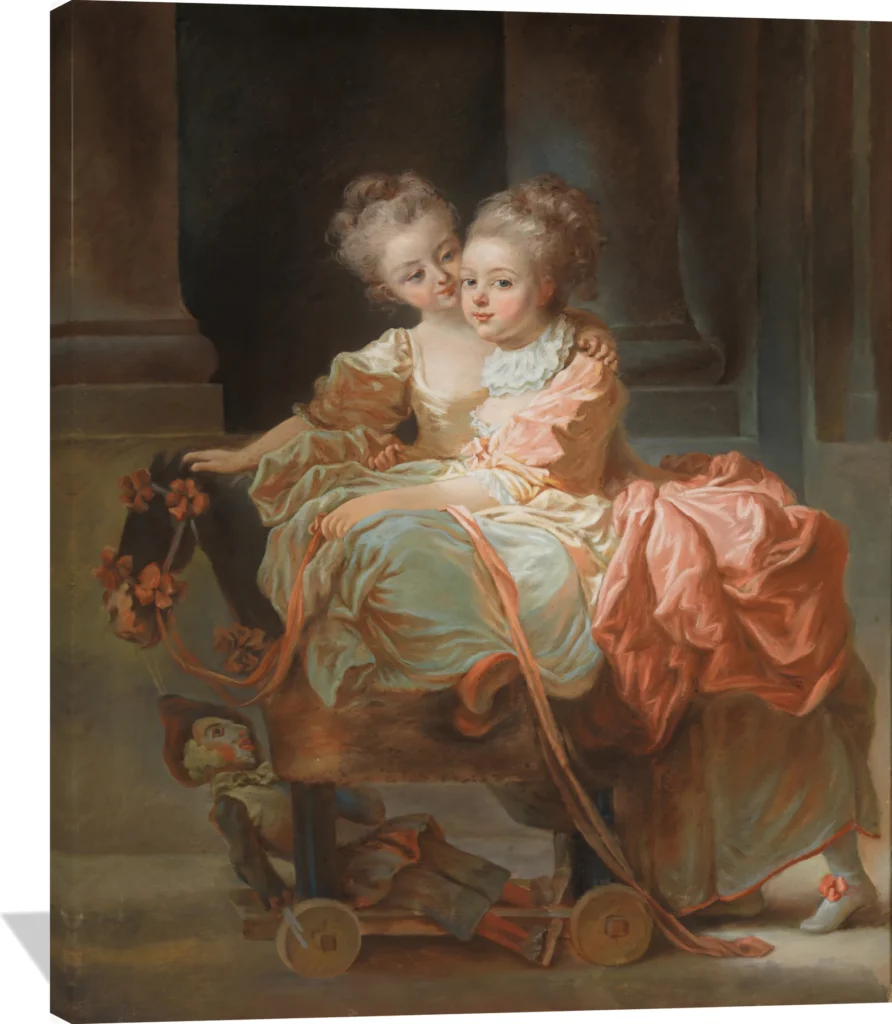
The Jean Claude Richard, Abbé de Saint-Non The Two Sisters canvas captures a tender moment of childhood affection with soft pastel tones and graceful Rococo charm. Warm hues of rose, cream, and powder blue blend seamlessly with gentle light, creating a serene and timeless composition that radiates intimacy and innocence.
This elegant wall art brings a refined sense of nostalgia to any space—perfect for a living room, study, or entryway. The The Two Sisters canvas print celebrates the delicate artistry of 18th-century France, offering a touch of classic beauty that complements both traditional and modern interiors.
Jean Claude Richard, Abbé de Saint-Non (Paris 1727–1791 Paris) was a French artist, patron, and amateur etcher whose refined sensibility helped shape the visual culture of the late eighteenth century. Known for his cultivated eye and deep engagement with the arts, he moved effortlessly within the creative circles of his era, fostering collaborations that enriched both his own work and that of his contemporaries.
Artistic Style and Approach
Saint-Non’s artistic style is distinguished by its clarity, elegance, and subtle atmospheric effect. Although not a professional painter by vocation, he developed a mature and expressive etching practice. His prints often exhibit a graceful balance between precision and softness, reflecting the transitional moment between the Rococo’s lyrical charm and the emerging Neoclassical interest in structure and archeological accuracy.
Typical Subjects
Much of Saint-Non’s artistic output centers on landscapes, architectural views, and scenes inspired by travel, particularly his extended journey through Italy. He frequently depicted Roman ruins, pastoral vistas, and urban scenes, rendering them with a refined touch that elevated everyday observations into poetic visual records. His work also includes interpretations of compositions by fellow artists, offering thoughtfully executed translations that preserve the spirit of the originals while highlighting his own technical restraint.
Notable Contributions
Saint-Non is perhaps best remembered for commissioning and contributing to the celebrated travel volumes documenting Italy’s artistic heritage. His etchings and collaborative plates from this project helped circulate Italian artistic and architectural motifs throughout France, enriching the cultural exchange that informed eighteenth‑century taste. Through these efforts, he played a quiet but meaningful role in shaping the visual language admired by collectors, scholars, and travelers of his time.
Cultural and Historical Significance
As a figure at the crossroads of art, scholarship, and aristocratic culture, Saint-Non embodied the cultivated spirit of the Enlightenment. His salon networks, collaborative ventures, and patronage supported the emergence of new artistic voices while preserving a keen appreciation for antiquity. His legacy rests not only in his own finely produced etchings but also in his influence as a connector and advocate, fostering a shared artistic vocabulary that resonated across Europe.
Today, Saint-Non’s works remain valued for their elegant craftsmanship and for the historically rich perspectives they offer on travel, architecture, and artistic exchange in the eighteenth century.
Trust & policies
- 🚚 Free tracked shipping to 45+ countries. Local import duties or taxes may apply in some destinations.
- 🎨 Made-to-order, printed close to your delivery location
- 🛡️ If damaged, defective, or misprinted: free replacement or refund
- 🌍 Printed in US/CA/EU/UK/AU based on delivery location
- 💎 Acid-free, fade-resistant canvas with solid wood stretcher bars
- 🖼️ Optional pine floating frames in white, black, or brown
- 🪝 Ready to hang — hardware pre-installed