
Still Life with a Glass and Oysters
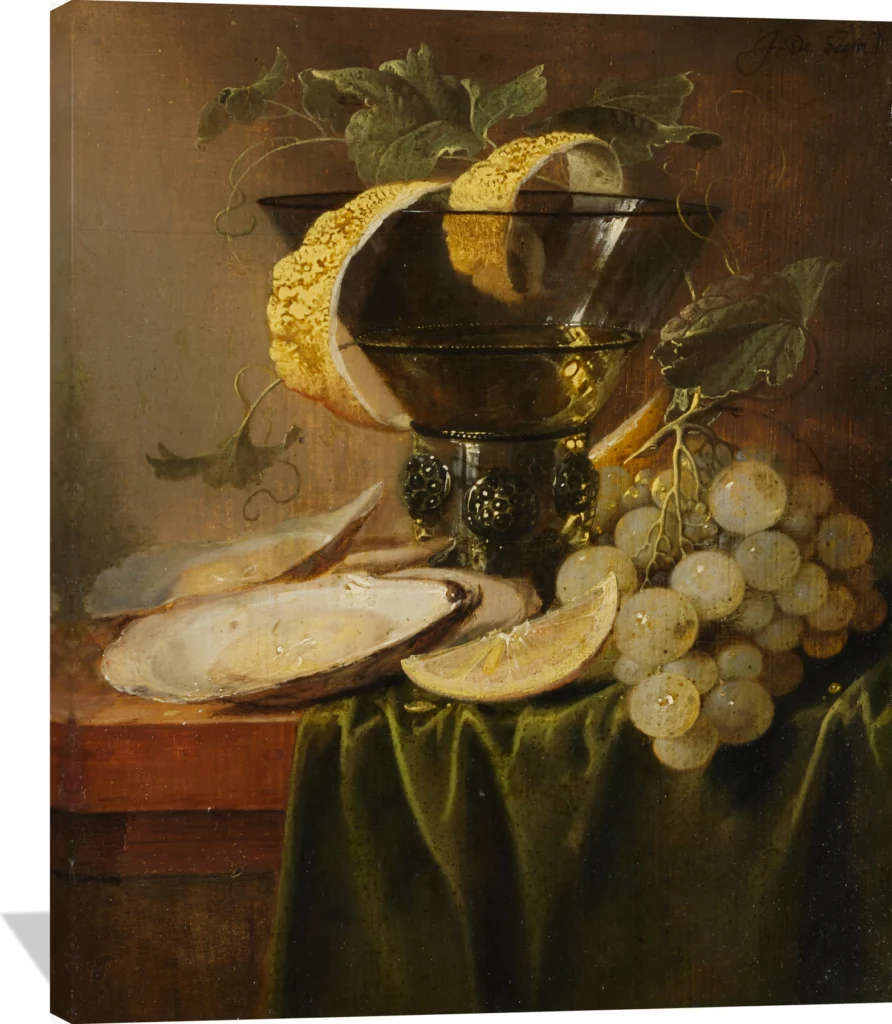
The Jan Davidsz de Heem Still Life with a Glass and Oysters canvas captures the quiet luxury of the Dutch Golden Age with exquisite realism. A luminous glass, peeled lemon, and glistening oysters rest on a richly draped table, rendered in warm amber, olive green, ivory, and golden tones. Each detail reflects de Heem’s mastery of light and texture, evoking both abundance and refinement.
This elegant wall art brings timeless sophistication to any setting—perfect for a living room, dining area, or study. A canvas print of this masterpiece adds depth and classic charm, inviting contemplation and conversation in any space it graces.
Jan Davidsz de Heem (Dutch, Utrecht 1606–1683/84 Antwerp) was one of the most celebrated still-life painters of the Dutch Golden Age, admired for his exquisite technique and richly atmospheric compositions.
Artistic Style and Technique
De Heem mastered the intricate language of still life, blending Dutch precision with the lush color and grandeur characteristic of Flemish painting. His work is distinguished by virtuosic detail, harmonious arrangements, and a refined sense of light that elevates everyday objects into scenes of remarkable visual abundance. He excelled in both modest tabletop studies and opulent pronkstilleven, achieving a balance of realism and poetic intensity.
Subjects and Themes
Fruit, flowers, musical instruments, glassware, metalwork, and rare delicacies frequently populate his compositions. De Heem portrayed these elements with exceptional sensitivity, capturing textures and surfaces with unmatched clarity. Many of his works, such as lavish banquet pieces or floral arrangements, incorporate symbolic references to transience and beauty, offering viewers both sensory delight and quiet contemplation.
Cultural and Historical Significance
Celebrated in both the Dutch Republic and Antwerp, de Heem influenced generations of still-life painters across Northern Europe. His innovative blending of regional artistic traditions helped shape the evolution of Baroque still life, and his meticulous yet sumptuous approach remains a touchstone for the genre. Today, his paintings are admired for their technical brilliance and their ability to reveal the extraordinary within the everyday.
Trust & policies
- 🚚 Free tracked shipping to 45+ countries. Local import duties or taxes may apply in some destinations.
- 🎨 Made-to-order, printed close to your delivery location
- 🛡️ If damaged, defective, or misprinted: free replacement or refund
- 🌍 Printed in US/CA/EU/UK/AU based on delivery location
- 💎 Acid-free, fade-resistant canvas with solid wood stretcher bars
- 🖼️ Optional pine floating frames in white, black, or brown
- 🪝 Ready to hang — hardware pre-installed