
Near the Coast
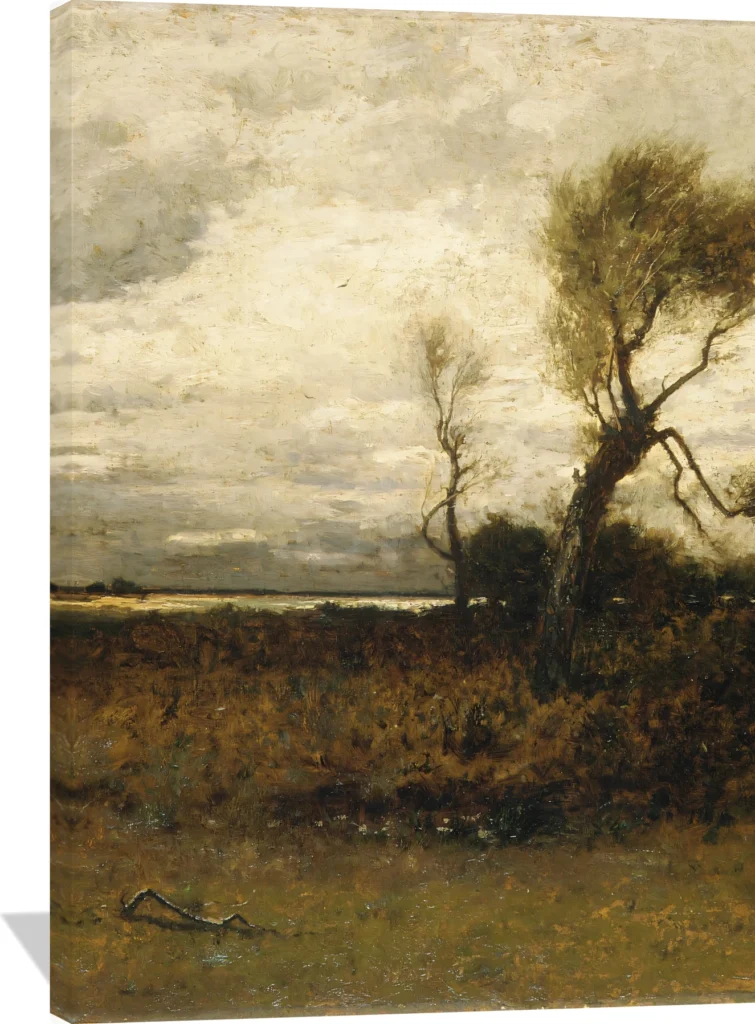
Robert Swain Gifford’s Near the Coast canvas captures the quiet drama of nature with a masterful blend of light and atmosphere. Windswept trees rise against a vast, clouded sky, rendered in muted earth tones of ochre, sage, and soft gray. The scene evokes a serene yet powerful sense of solitude, inviting contemplation and calm.
This timeless wall art brings a touch of coastal tranquility to any space. Perfect for a living room, study, or entryway, this canvas print reflects Gifford’s refined eye for natural beauty and the subtle poetry of the American landscape.
Robert Swain Gifford (Nonamesset, Massachusetts, 1840–1905, New York) was a distinguished American landscape painter celebrated for his evocative depictions of coastal wilderness and atmospheric vistas. Active during a pivotal era in American art, he became known for merging naturalistic detail with a refined sense of mood, producing works that resonated with both American and European audiences.
Artistic Style
Gifford’s landscapes are marked by subtle tonal harmonies, delicate handling of light, and a quietly dramatic sense of space. While rooted in the traditions of the Hudson River School and Luminism, his work gradually adopted a more cosmopolitan sensibility influenced by his travels abroad. His paintings often balance precision with poetic restraint, revealing a mastery of tonal contrast and an intuitive understanding of atmosphere.
Subjects and Themes
Coastlines, tidal marshes, windswept dunes, and rugged wilderness settings define much of Gifford’s oeuvre. He frequently painted scenes from New England, capturing the shifting weather and expansive horizons of the Atlantic seaboard. His journeys to Europe, North Africa, and the Middle East added further depth to his subjects, inspiring contemplative compositions that highlight the relationship between humans and the natural world.
Notable Contributions
Gifford belonged to a generation of American artists who broadened the scope of landscape painting, bringing global influences into a distinctly American idiom. His work contributed to the growing appreciation for tonalism and atmospheric interpretation in the late nineteenth century. As a respected teacher and exhibitor, he helped shape the sensibilities of younger painters and solidified his reputation within the country’s artistic circles.
Legacy
Today, Gifford is remembered for the enduring subtlety and emotional clarity of his landscapes. His paintings remain valued for their quiet elegance and their ability to evoke both place and feeling. Through works ranging from serene New England scenes to evocative views inspired by his travels, Robert Swain Gifford secured his place as an important figure in the evolution of American landscape art.
Trust & policies
- 🚚 Free tracked shipping to 45+ countries. Local import duties or taxes may apply in some destinations.
- 🎨 Made-to-order, printed close to your delivery location
- 🛡️ If damaged, defective, or misprinted: free replacement or refund
- 🌍 Printed in US/CA/EU/UK/AU based on delivery location
- 💎 Acid-free, fade-resistant canvas with solid wood stretcher bars
- 🖼️ Optional pine floating frames in white, black, or brown
- 🪝 Ready to hang — hardware pre-installed