
Modern Rome
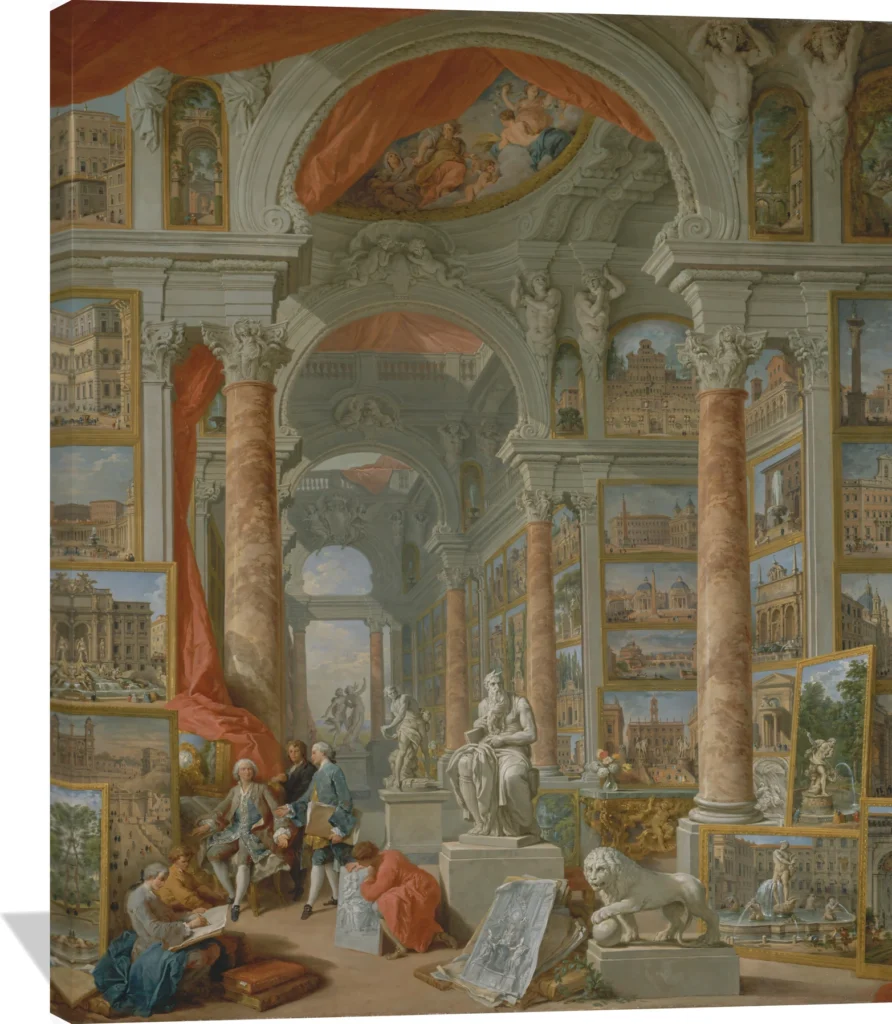
The Giovanni Paolo Panini Modern Rome canvas captures the grandeur of classical architecture and artistic mastery in a luminous display of arches, statues, and city views. Bathed in warm tones of terracotta, gold, and sky blue, this intricate composition invites the viewer into an imagined gallery of Rome’s most iconic landmarks, framed by marble columns and draped fabrics.
This exquisite wall art brings a timeless European elegance to any space—perfect for a sophisticated living room, study, or entryway. A canvas print of Modern Rome offers a window into 18th‑century Italy’s cultural splendor, showcasing Panini’s unmatched eye for perspective and detail.
Giovanni Paolo Panini (1691–1765) was an Italian painter and architect whose mastery of perspective and theatrical composition made him one of the most celebrated view painters of eighteenth‑century Rome. Born in Piacenza and active primarily in the Eternal City, he became renowned for his vivid depictions of Rome’s grand architecture, ancient ruins, and ceremonial spectacles.
Artistic Style
Panini worked at the height of the Roman Baroque, blending clarity of detail with a dynamic sense of space. His precision in rendering architectural settings, combined with lively narrative touches, gave his paintings both documentary value and dramatic allure. He became a leading practitioner of the veduta, the highly detailed city view, elevating it into an art form marked by atmospheric light, rhythmic structure, and impeccable perspective.
Typical Subjects
Among Panini’s most defining subjects are Rome’s iconic monuments, including the Colosseum, the Pantheon, and St. Peter’s Basilica. He also created imaginative architectural capricci, merging real and idealized structures into majestic, invented spaces. His scenes frequently include elegantly dressed figures and travelers who animate the settings without distracting from the monumental architecture. Panini’s works such as The Interior of St. Peter’s and The Gallery of Views of Ancient Rome exemplify his fascination with grandeur, order, and the endurance of classical antiquity.
Notable Contributions
Beyond painting, Panini was also an accomplished architect and designer whose understanding of spatial harmony deeply informed his art. His ability to portray vast interiors with mathematical precision distinguished him from his contemporaries and secured his reputation among European aristocrats, scholars, and Grand Tour travelers. His paintings served as both souvenirs and cultural documents, capturing Rome’s architectural legacy at a time when its ruins inspired renewed interest in classical history.
Cultural and Historical Significance
Panini played a significant role in shaping eighteenth‑century Europe’s visual imagination of Rome. His works not only celebrated the city’s ancient and Baroque splendors but also conveyed the intellectual spirit of the period, which revered classical civilization as a foundation of Western culture. Through his rigorous yet poetic interpretation of architecture, he influenced generations of artists and helped define the visual language associated with the Grand Tour.
Today, Panini is remembered as a brilliant interpreter of Rome an artist whose paintings continue to evoke the majesty, memory, and enduring allure of one of the world’s great cities.
Trust & policies
- 🚚 Free tracked shipping to 45+ countries. Local import duties or taxes may apply in some destinations.
- 🎨 Made-to-order, printed close to your delivery location
- 🛡️ If damaged, defective, or misprinted: free replacement or refund
- 🌍 Printed in US/CA/EU/UK/AU based on delivery location
- 💎 Acid-free, fade-resistant canvas with solid wood stretcher bars
- 🖼️ Optional pine floating frames in white, black, or brown
- 🪝 Ready to hang — hardware pre-installed