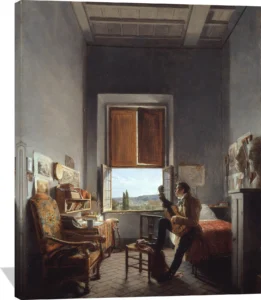
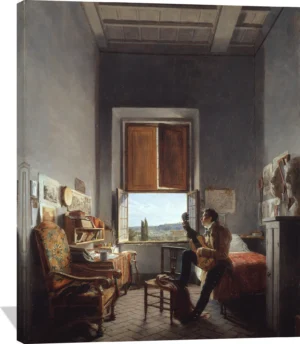
Artistic Style and Approach
Alaux’s work is rooted in the clarity, balance, and idealization characteristic of Neoclassicism. His paintings reveal a disciplined command of line and proportion, paired with a measured emotional tone that reflects his training within the academic conventions of his era. His style is distinguished by its polished surfaces and harmonious compositions, shaped by a strong commitment to classical ideals.
Subjects and Notable Contributions
Alaux specialized in historical and mythological subjects, portraying scenes drawn from antiquity, biblical narratives, and episodes of French history. His ability to fuse narrative precision with visual elegance made him a respected figure among academic circles. He produced significant works for public institutions and royal commissions, reinforcing his reputation as a trusted interpreter of France’s cultural heritage.
Among his most recognized achievements was his involvement with the French Academy in Rome, where he later served as director. This role positioned him at the heart of artistic education, influencing generations of young painters and shaping the continuation of classical practice well into the nineteenth century.
Cultural and Historical Significance
Alaux occupies an important place in the lineage of French academic painting. His work bridged the high ideals of eighteenth‑century classicism with the evolving tastes of the Restoration and July Monarchy periods. Through his public commissions, teaching, and leadership roles, he contributed enduringly to the institutional foundations of French art.
Collectors today value Alaux for the elegant restraint and intellectual clarity that mark his compositions. His pieces offer a window into a pivotal moment in French art history, when classical form and national identity converged in powerfully crafted visual narratives.