
Man in Prayer
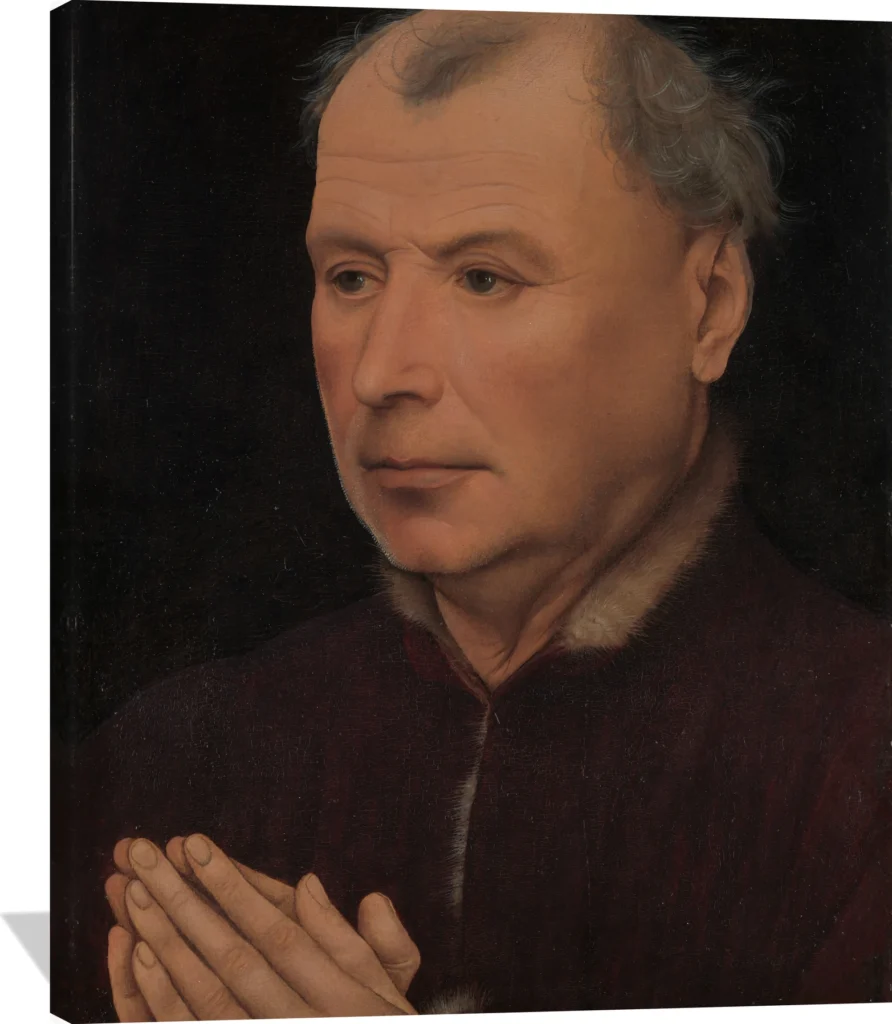
The Rogier van der Weyden Man in Prayer canvas captures a moment of quiet devotion with remarkable realism and depth. Subtle tones of warm flesh, deep burgundy, and soft brown emerge from a dark background, creating a serene and contemplative presence that draws the viewer inward. Every detail, from the clasped hands to the gentle expression, reflects van der Weyden’s mastery of human emotion and light.
This timeless wall art brings a sense of introspection and grace to any space. Ideal for a study, library, or entryway, this fine canvas print invites reflection and adds an aura of classical refinement to modern interiors.
Rogier van der Weyden (Netherlandish, Tournai ca. 1399–1464 Brussels) stands among the most influential painters of the Northern Renaissance, revered for his poignant emotional realism and masterful command of detail. Active primarily in Brussels, he shaped the visual language of 15th‑century Europe through works that combined spiritual intensity with remarkable technical precision.
Artistic Style
Van der Weyden’s paintings are distinguished by their expressive human presence, heightened drama, and meticulous attention to surface textures. His style bridges the elegance of Gothic tradition with emerging Renaissance naturalism, producing compositions that feel both intimate and monumental. The artist’s sensitive modeling of faces and use of vivid, saturated color evoke deep psychological impact, making his work instantly recognizable.
Notable Contributions
Renowned for his altarpieces and devotional panels, van der Weyden played a central role in defining the emotional tenor of Northern European art. Works such as the Descent from the Cross exemplify his ability to translate spiritual narratives into compelling visual experiences. As official painter of Brussels, he influenced generations of artists, spreading his aesthetic across courts and cities through widely circulated copies and commissions.
Subjects and Themes
Religious storytelling forms the core of his oeuvre, portrayed with striking sincerity and human vulnerability. He depicted biblical scenes, saints, and donors with clarity and reverence, often setting his figures against architectural spaces or patterned fabrics that enhance their presence. His portraits are equally admired for their refinement and psychological depth.
Cultural Significance
Celebrated as a leading master of Northern Renaissance painting, van der Weyden helped shape a new visual sensibility grounded in emotional truth and heightened realism. His legacy endures through his influential approach to composition and his profound ability to communicate devotion, making him one of the era’s most enduring and defining artistic voices.
Trust & policies
- 🚚 Free tracked shipping to 45+ countries. Local import duties or taxes may apply in some destinations.
- 🎨 Made-to-order, printed close to your delivery location
- 🛡️ If damaged, defective, or misprinted: free replacement or refund
- 🌍 Printed in US/CA/EU/UK/AU based on delivery location
- 💎 Acid-free, fade-resistant canvas with solid wood stretcher bars
- 🖼️ Optional pine floating frames in white, black, or brown
- 🪝 Ready to hang — hardware pre-installed