
John Neagle
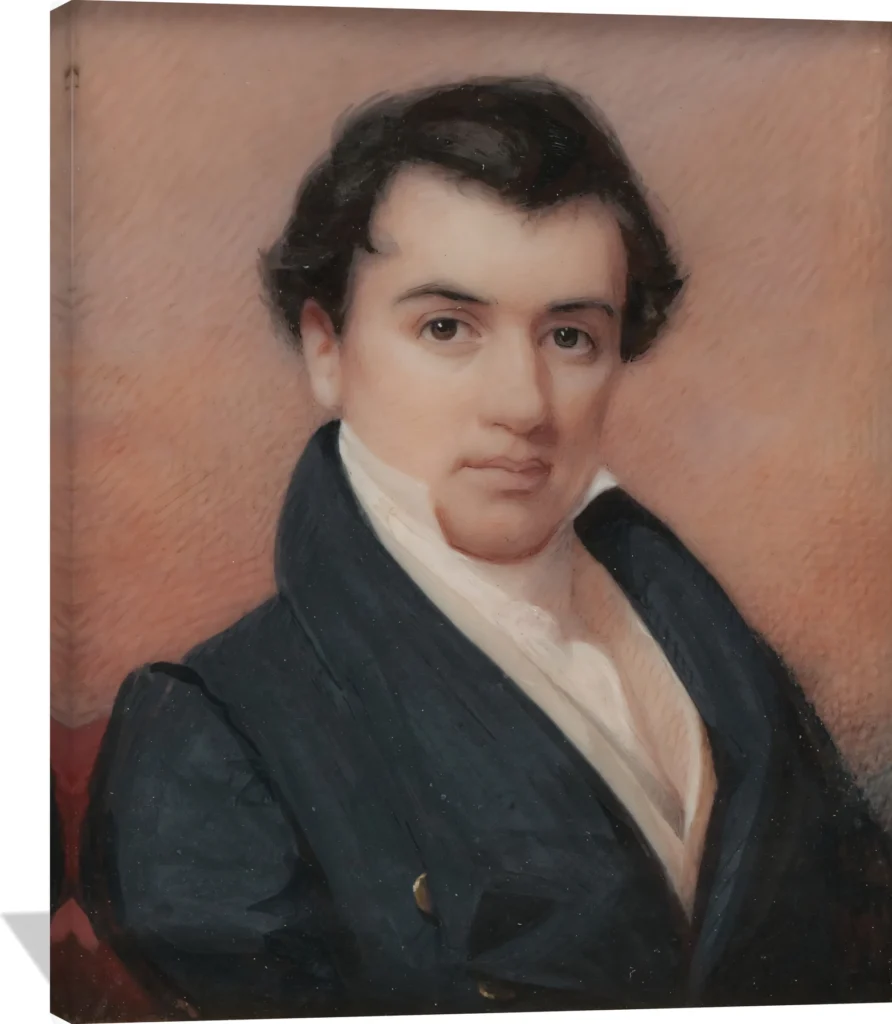
The Daniel Dickinson John Neagle canvas captures timeless refinement through delicate brushwork and warm, balanced tones. Soft peach and rose hues frame the sitter’s calm expression, while deep navy and ivory accents lend a sense of poise and depth. This classic portrait evokes quiet confidence and 19th-century elegance, making it a striking focal point in any collection.
Perfect for a study, library, or sophisticated living space, this canvas print brings historical artistry into modern interiors. Its graceful composition and dignified mood invite reflection and conversation, enhancing your wall art display with enduring character.
Daniel Dickinson (1795–1877) was a 19th‑century American artist whose work reflects the evolving visual culture of the early republic. Active during a period when portraiture flourished as a means of personal and civic identity, Dickinson contributed to the tradition with paintings valued for their clarity, composure, and quiet emotional presence.
Artistic Style
Dickinson’s approach aligns with the restrained elegance characteristic of early American portraiture. His paintings often feature clean contours, balanced compositions, and an emphasis on the sitter’s dignity. Subtle modeling and a measured use of color lend his works a calm refinement, echoing the broader aesthetic of the Federal and early Victorian eras.
Subjects and Themes
Best known for his portraits, Dickinson frequently depicted individuals and families from his regional community, creating works that serve as both personal keepsakes and historical documents. His sitters are rendered with attentive detail, from apparel to posture, capturing the social aspirations and cultural values of the time. These pieces convey a sense of stillness and introspection, giving viewers a direct connection to 19th‑century American life.
Legacy and Significance
Though not widely publicized in his lifetime, Dickinson’s paintings hold enduring appeal for their authenticity and historical resonance. They offer insight into the visual language of an America defining its identity, and his commitment to clarity and character speaks to the broader tradition of early American portraiture. Today, his surviving works are appreciated for their craftsmanship and their role in preserving the faces and stories of a formative era.
Trust & policies
- 🚚 Free tracked shipping to 45+ countries. Local import duties or taxes may apply in some destinations.
- 🎨 Made-to-order, printed close to your delivery location
- 🛡️ If damaged, defective, or misprinted: free replacement or refund
- 🌍 Printed in US/CA/EU/UK/AU based on delivery location
- 💎 Acid-free, fade-resistant canvas with solid wood stretcher bars
- 🖼️ Optional pine floating frames in white, black, or brown
- 🪝 Ready to hang — hardware pre-installed