
William Axtell
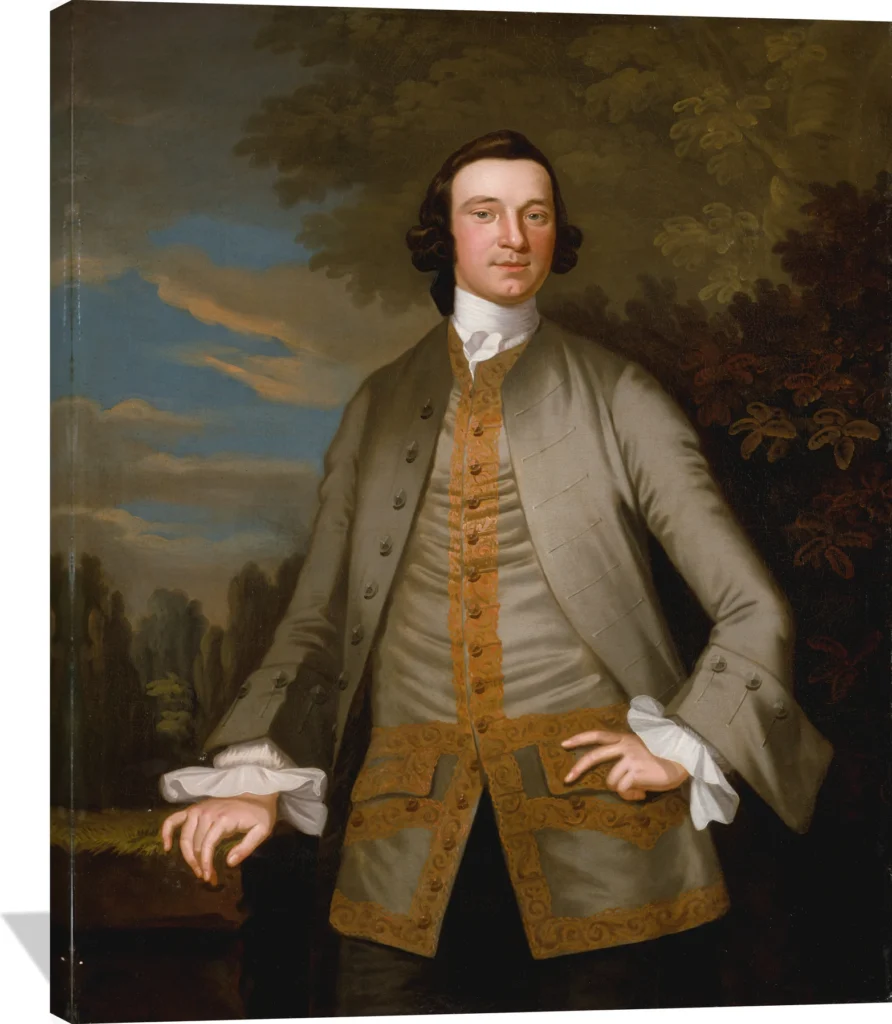
The John Wollaston William Axtell canvas captures the refined elegance of 18th-century portraiture with remarkable poise. Set against a softly lit landscape, the sitter’s confident stance and finely detailed attire in warm taupe, gold, and muted green tones evoke a sense of dignity and composure. The artist’s masterful use of light and texture brings timeless sophistication to any setting.
This premium canvas print brings historical grace and understated luxury to your home. Ideal for a study, library, or classic living room, the William Axtell wall art adds depth and character to contemporary and traditional interiors alike.
John Wollaston (Anglo-American, active 1733–67) was a prominent portraitist whose elegant style helped shape the visual culture of the eighteenth century on both sides of the Atlantic.
Artistic Style
Wollaston’s portraits are recognized for their refined composure, elongated facial features, and graceful figure proportions. His polished surfaces, delicate color transitions, and attention to sumptuous fabrics reflect the influence of British Rococo portraiture. These qualities lend his sitters an air of distinction that became a hallmark of his work.
Notable Contributions
After establishing his career in London, Wollaston traveled extensively through the American colonies, becoming one of the era’s most sought-after portrait painters. His arrival provided colonial patrons with a sophisticated European aesthetic that elevated the standards of local portraiture. His capacity to adapt his technique to regional tastes helped spread a more cosmopolitan visual language throughout mid‑eighteenth‑century America.
Typical Subjects
Wollaston focused on portraiture, capturing merchants, landowners, civic leaders, and their families. His compositions often highlight material refinement through detailed renderings of attire and accessories, emphasizing the social aspirations and personal identities of his sitters. Works such as The Parrot exemplify his interest in pairing human likeness with symbolic elements that enhance narrative and character.
Cultural Significance
Wollaston’s career marks an important moment in early American art history. By bringing a cultivated European style to colonial settings, he influenced a generation of local artists and patrons. His portraits remain valuable records of the emerging American elite, offering insight into the cultural ambitions and self‑presentation of a society in transition.
Today, John Wollaston is remembered for his graceful portrait style and for helping shape the development of early American painting through his distinctive fusion of British elegance and colonial sensibility.
Trust & policies
- 🚚 Free tracked shipping to 45+ countries. Local import duties or taxes may apply in some destinations.
- 🎨 Made-to-order, printed close to your delivery location
- 🛡️ If damaged, defective, or misprinted: free replacement or refund
- 🌍 Printed in US/CA/EU/UK/AU based on delivery location
- 💎 Acid-free, fade-resistant canvas with solid wood stretcher bars
- 🖼️ Optional pine floating frames in white, black, or brown
- 🪝 Ready to hang — hardware pre-installed