
Mrs. Gabriel Manigault
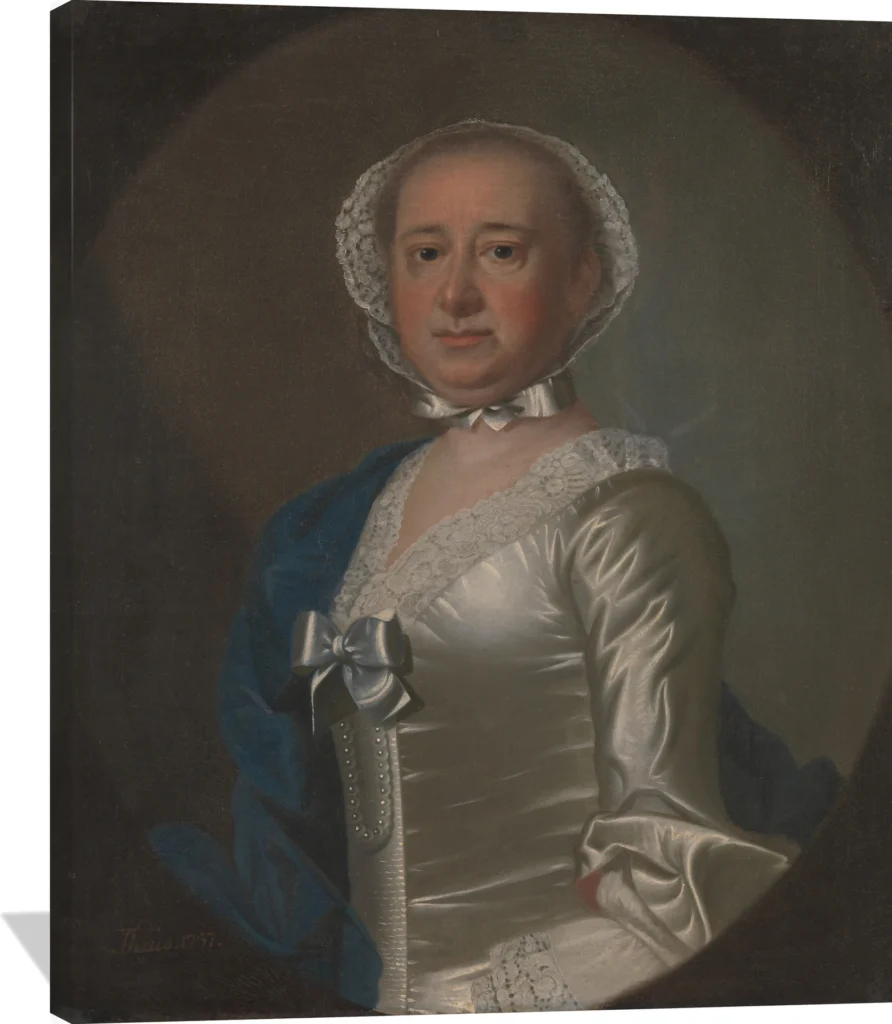
The Jeremiah Theus Mrs. Gabriel Manigault canvas captures the refined grace of 18th-century portraiture with timeless elegance. Rendered in soft ivory, silvery satin, and deep blue tones, this exquisite wall art radiates a quiet dignity and luminous texture that draws the eye to every delicate detail. Theus’s masterful use of light and shadow brings depth and warmth to the sitter’s poised expression.
Perfect for a living room, study, or entryway, this premium canvas print adds a touch of historical sophistication to any space. The Mrs. Gabriel Manigault canvas print celebrates American artistry at its most graceful, offering a serene focal point for both classic and contemporary interiors.
Jeremiah Theus (1716–1774) was a Swiss-born American painter who became one of colonial Charleston’s most sought-after portraitists. Active during a formative period in early American art, he is celebrated for his refined technique, sensitive character studies, and keen attention to the genteel aesthetics of the 18th-century South.
Artistic Style
Theus’s portraits are distinguished by their clear, elegant compositions and polished yet approachable realism. He favored luminous color, graceful detailing, and carefully rendered textures, from lustrous fabrics to delicate lacework. His style blends European training with a distinctly colonial sensibility, resulting in works that feel both sophisticated and intimately personal.
Subjects and Themes
The artist is best known for his portraits of Charleston’s prominent families, capturing adults and children with warmth and precision. His sitters are often shown in fashionable attire, surrounded by symbolic objects that communicate refinement and status. Theus’s child portraits, in particular, are valued for their gentle expressions and vibrant palette.
Cultural Significance
As one of the earliest professional painters in the American South, Theus played a vital role in shaping the visual identity of colonial Charleston. His work documents a rising urban society and provides a rare, vivid record of its people. His enduring legacy lies not only in the technical quality of his paintings but also in his contribution to early American artistic traditions.
Trust & policies
- 🚚 Free tracked shipping to 45+ countries. Local import duties or taxes may apply in some destinations.
- 🎨 Made-to-order, printed close to your delivery location
- 🛡️ If damaged, defective, or misprinted: free replacement or refund
- 🌍 Printed in US/CA/EU/UK/AU based on delivery location
- 💎 Acid-free, fade-resistant canvas with solid wood stretcher bars
- 🖼️ Optional pine floating frames in white, black, or brown
- 🪝 Ready to hang — hardware pre-installed