
Portrait of a Man
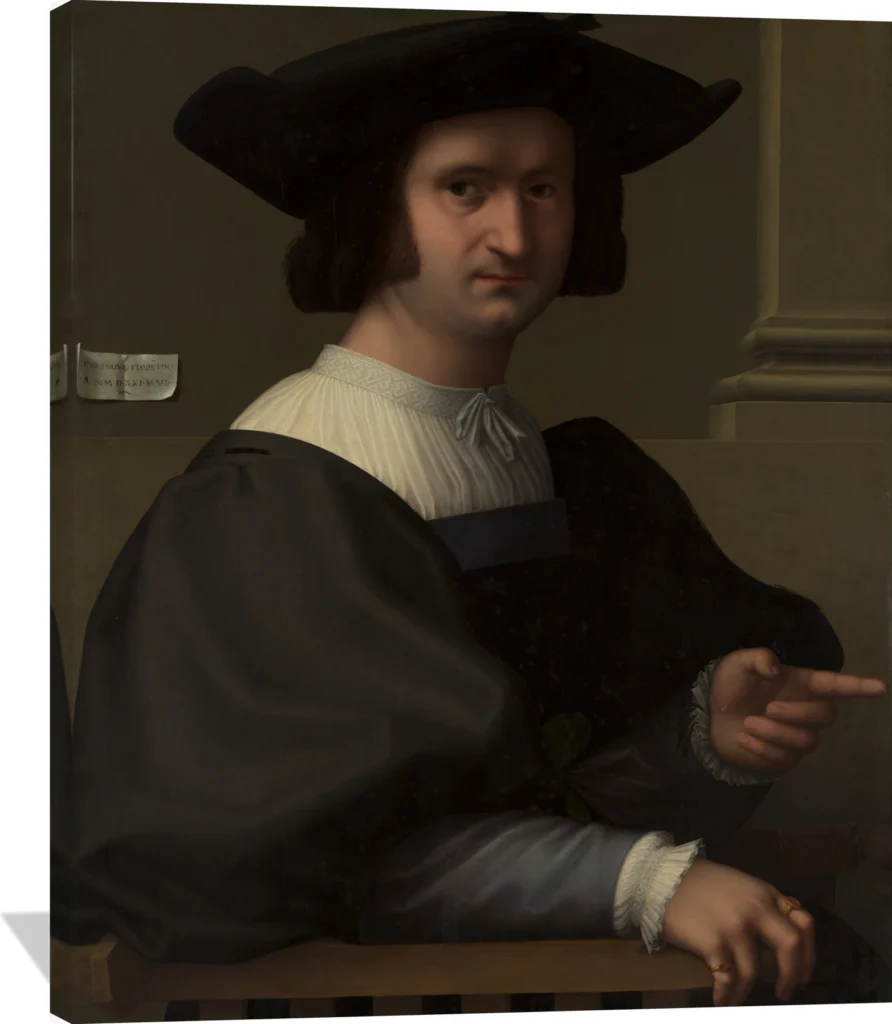
The Tommaso Fiorentino Portrait of a Man canvas captures the quiet dignity and refined realism of the Italian Renaissance. Subtle tones of deep black, warm beige, and muted olive frame the sitter’s composed expression, while soft light reveals exquisite detail in the folds of his garments and the texture of his skin. This masterful balance of shadow and form evokes introspection and timeless grace.
Perfect for a study, living room, or entryway, this museum-quality canvas print brings classical sophistication to modern interiors. The Portrait of a Man wall art by Tommaso Fiorentino (Tommaso di Stefano Lunetti) offers a serene focal point that celebrates the artistry of Florentine portraiture.
Tommaso Fiorentino, also known as Tommaso di Stefano Lunetti, was an Italian painter active in Florence during the first half of the sixteenth century. Working within the flourishing artistic climate of the High Renaissance and early Mannerist period, he contributed to the refined decorative traditions that characterized Florentine visual culture.
Artistic Style
Fiorentino’s work reflects the elegant craftsmanship associated with Florentine Renaissance painting. His style is marked by balanced compositions, controlled linearity, and a subtle use of color that emphasizes harmony and clarity. He often incorporated ornamental detailing, a testament to the sophisticated design sensibilities permeating Florence at the time.
Subjects and Themes
His subjects typically included religious narratives and devotional imagery, rendered with a gentle emotional tenor and attention to architectural setting. Fiorentino’s scenes frequently display a measured interplay between figures and space, suggesting the influence of leading Florentine masters while maintaining his own restrained and thoughtful character.
Legacy and Significance
Though not among the most widely known artists of his era, Tommaso Fiorentino contributed to the visual fabric of sixteenth‑century Florence through works that exemplify the city’s dedication to artistic refinement. His paintings embody the transition from Renaissance clarity to the more stylized sophistication of emerging Mannerism, offering modern viewers a glimpse into a pivotal moment in Italian art. His legacy endures in the way his work brings together grace, structural precision, and the quiet innovation characteristic of the Florentine tradition.
Trust & policies
- 🚚 Free tracked shipping to 45+ countries. Local import duties or taxes may apply in some destinations.
- 🎨 Made-to-order, printed close to your delivery location
- 🛡️ If damaged, defective, or misprinted: free replacement or refund
- 🌍 Printed in US/CA/EU/UK/AU based on delivery location
- 💎 Acid-free, fade-resistant canvas with solid wood stretcher bars
- 🖼️ Optional pine floating frames in white, black, or brown
- 🪝 Ready to hang — hardware pre-installed