
Mrs. Williams
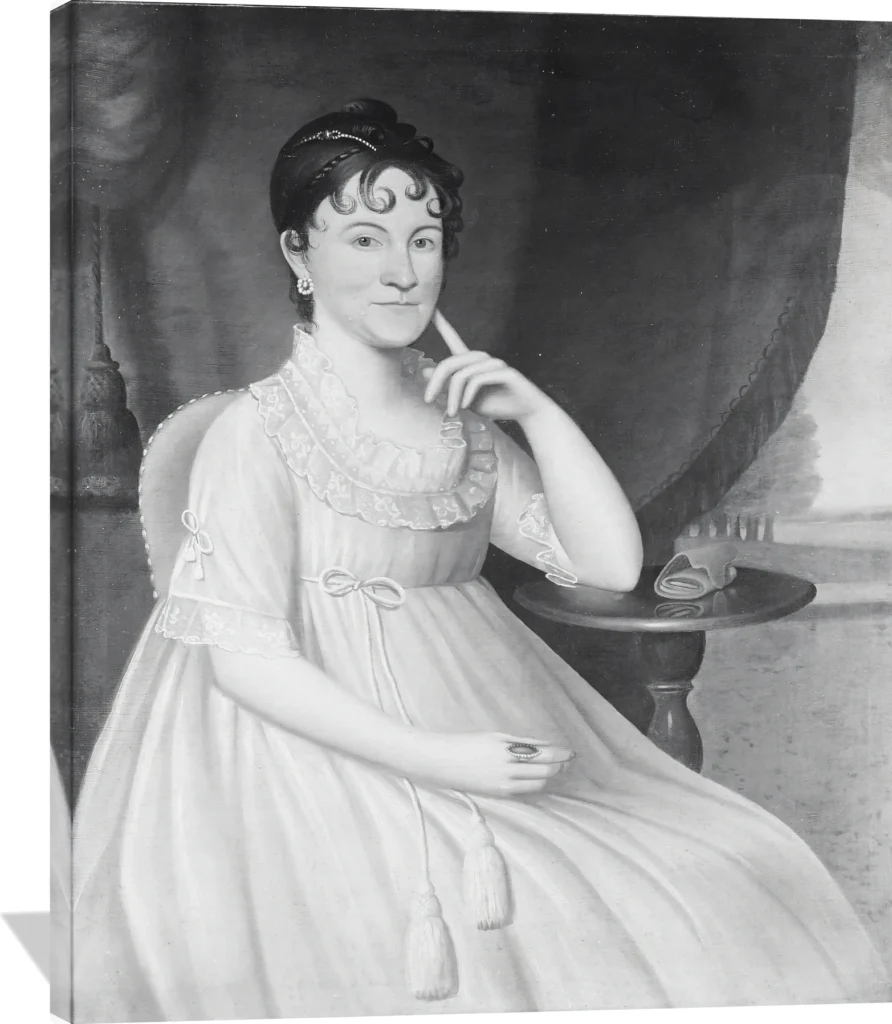
The Ralph E. W. Earl Mrs. Williams canvas captures the quiet elegance of early American portraiture. Soft ivory tones, warm beige, and muted browns frame a poised sitter in delicate lace, her thoughtful expression illuminated by subtle light. Earl’s refined brushwork and balanced composition evoke grace and introspection, making this piece a timeless statement of refinement.
This exquisite Mrs. Williams wall art brings a sense of heritage and sophistication to any interior. Ideal for a living room, study, or entryway, this premium canvas print adds depth and historical charm while complementing both classic and modern décor.
Ralph E. W. Earl (ca. 1785–1838) was an influential American portraitist known for capturing the emerging identity of the early United States. Working during a period of rapid national transformation, he helped define how prominent political and military figures were visually remembered.
Artistic Style and Approach
Earl’s work is distinguished by a refined yet direct realism. His portraits emphasize clarity of likeness, balanced composition, and a calm, dignified presence. He favored clean lines, smooth surfaces, and controlled lighting, creating images that conveyed both individuality and the aspirational spirit of the new republic.
Notable Subjects and Contributions
Earl is best known for his close association with President Andrew Jackson, for whom he created numerous official and semi-official portraits. These works became defining representations of Jackson’s public image and played a major role in shaping early American political iconography. Earl’s ability to portray authority without excess ornamentation made his paintings especially influential, and his portrayals of military and civic leaders continue to hold historical value.
Historical Significance
Working primarily in the American South, Earl served as an important cultural figure in a region that was still developing its artistic institutions. His portraits document the people who shaped early nineteenth‑century politics, frontier society, and national identity. Through his careful observation and understated style, he contributed to the visual record of a formative era in American history.
Today, Earl’s artworks remain appreciated for their clarity, restraint, and strong sense of character, offering a compelling window into the personalities and ambitions of the early United States.
Trust & policies
- 🚚 Free tracked shipping to 45+ countries. Local import duties or taxes may apply in some destinations.
- 🎨 Made-to-order, printed close to your delivery location
- 🛡️ If damaged, defective, or misprinted: free replacement or refund
- 🌍 Printed in US/CA/EU/UK/AU based on delivery location
- 💎 Acid-free, fade-resistant canvas with solid wood stretcher bars
- 🖼️ Optional pine floating frames in white, black, or brown
- 🪝 Ready to hang — hardware pre-installed