
John Adams Conant
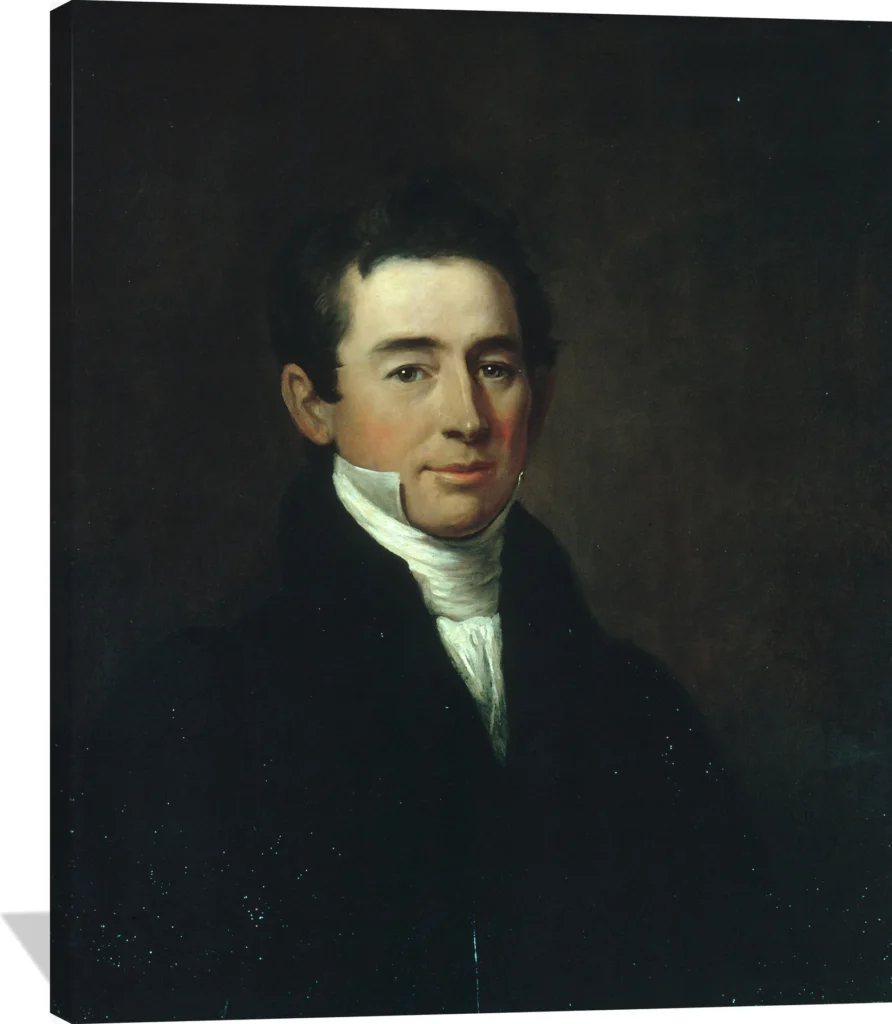
The William Dunlap John Adams Conant canvas captures the quiet dignity and refined presence of early American portraiture. Rendered in rich tones of deep brown, soft ivory, and muted black, this piece reveals Dunlap’s mastery of light and texture, giving the sitter a lifelike warmth against a subdued background. Its classic composition and poised expression evoke timeless sophistication.
This elegant canvas print brings a touch of historical grace to any interior. Ideal for a study, library, or formal living room, the John Adams Conant wall art adds depth and character to contemporary or traditional spaces alike, celebrating the artistry of one of America’s early masters.
William Dunlap (1766–1839) was a pioneering figure in early American art, admired for his multifaceted career as a painter, playwright, and chronicler of the nation’s emerging cultural identity. Born in Perth Amboy, New Jersey, and active primarily in New York, he helped lay the groundwork for a distinctly American artistic tradition during a formative period in the country’s history.
Artistic Style and Approach
Dunlap’s painting style reflects the refined naturalism characteristic of late eighteenth- and early nineteenth‑century American portraiture. His works often combine careful observation with a restrained elegance, revealing an interest in clarity, character, and expressive likeness. While best known for portraiture, he also produced historical compositions that demonstrated his commitment to documenting the people and events shaping the young nation.
Notable Contributions
Dunlap played a central role in shaping the early American art scene. As a co-founder of the National Academy of Design, he helped establish professional standards for artists and supported the development of an institutional structure that would nurture generations of American creators. His written works, particularly his history of the nation’s artists, remain a foundational resource for understanding early American art.
Subjects and Themes
His portraits capture leading figures of his era, often emphasizing individuality and civic character. Through his historical subjects, Dunlap explored themes tied to national identity, cultural growth, and collective memory. This blend of personal and public narratives gives his work a distinctive resonance, bridging intimate portrayal with broader cultural significance.
Cultural and Historical Significance
William Dunlap is remembered as a vital contributor to America’s artistic heritage. His commitment to documenting artists, shaping institutions, and refining portraiture helped define the cultural landscape of the early United States. Today, his paintings stand as important visual records of an emerging nation and reflect the ambitions of an artist devoted to enriching American artistic life.
Trust & policies
- 🚚 Free tracked shipping to 45+ countries. Local import duties or taxes may apply in some destinations.
- 🎨 Made-to-order, printed close to your delivery location
- 🛡️ If damaged, defective, or misprinted: free replacement or refund
- 🌍 Printed in US/CA/EU/UK/AU based on delivery location
- 💎 Acid-free, fade-resistant canvas with solid wood stretcher bars
- 🖼️ Optional pine floating frames in white, black, or brown
- 🪝 Ready to hang — hardware pre-installed