
Margherita Gonzaga (1591–1632), Princess of Mantua
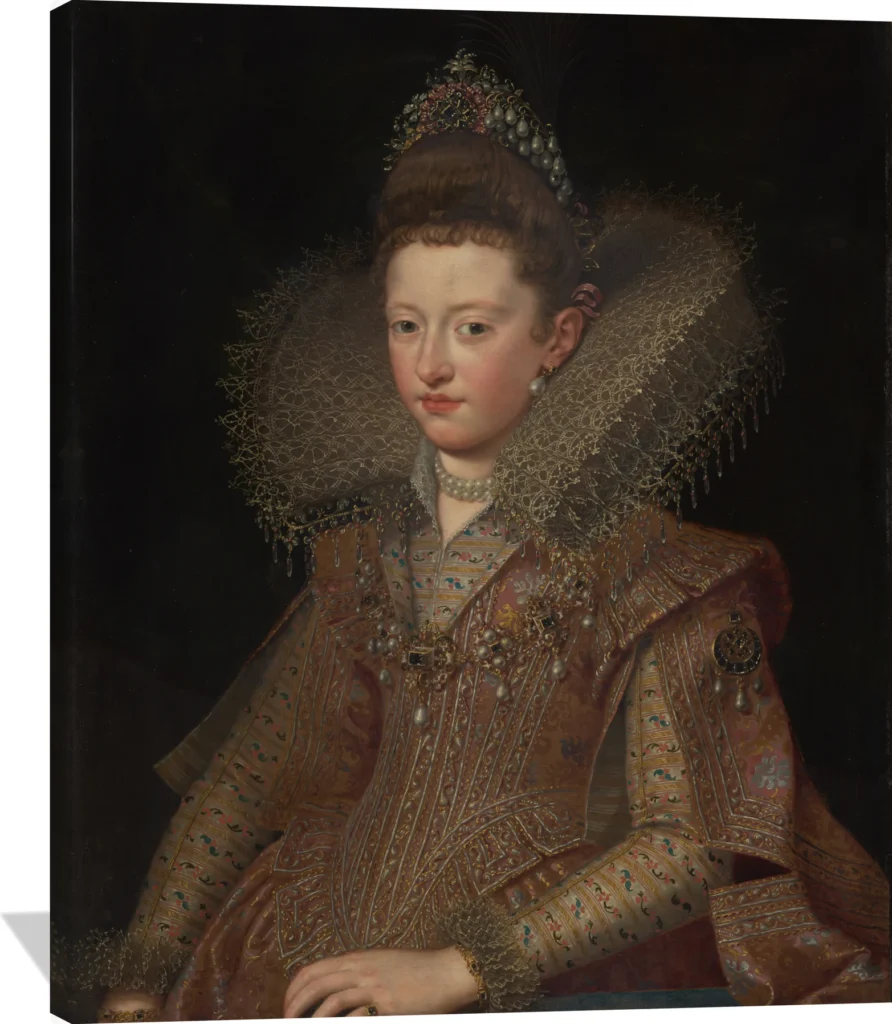
The Frans Pourbus the Younger Margherita Gonzaga (1591–1632), Princess of Mantua canvas captures the refined elegance of Renaissance portraiture with exquisite detail and regal poise. Rich tones of gold, burgundy, and deep brown highlight the princess’s ornate attire, while the soft glow of her complexion contrasts beautifully against the dark background, creating a sense of timeless sophistication.
This museum-quality wall art brings a touch of noble grace to any setting—perfect for a living room, study, or entryway. A canvas print that celebrates the artistry and precision of Netherlandish master Frans Pourbus the Younger, it adds depth, history, and quiet grandeur to your curated space.
Frans Pourbus the Younger (Netherlandish, Antwerp 1569–1622 Paris) was one of the most sought-after court portraitists of early seventeenth‑century Europe, admired for his refined technique and dignified representations of royal and noble sitters. Active in Antwerp, Mantua, and eventually Paris, he served prominent patrons including the Gonzaga family and the French court of Marie de’ Medici and Louis XIII.
Artistic Style
Pourbus is celebrated for an exacting, meticulously polished style that balanced realism with courtly elegance. His portraits are distinguished by their precise rendering of luxurious textiles, jewelry, and heraldic details, capturing both likeness and status with exceptional clarity. The cool, controlled palette and smooth surface finish typical of his work reflect the highly formal aesthetic favored by European courts of his time.
Subjects and Themes
Specializing in stately portraiture, Pourbus depicted monarchs, nobility, and influential political figures. His sitters are often shown in richly embellished attire, positioned against subtly atmospheric backgrounds that enhance their authority. Works such as his portraits of members of the French royal household exemplify his ability to convey restrained emotion and symbolic power without overt dramatization.
Cultural and Historical Significance
As a pivotal figure bridging the late Renaissance and early Baroque periods, Pourbus helped shape the visual language of European aristocratic identity. His portraits provided a model for the ceremonial image-making central to court culture, influencing generations of court painters across France and beyond. Today, his work is valued for its historical insight, technical finesse, and its enduring role in defining the aesthetics of dynastic representation.
Trust & policies
- 🚚 Free tracked shipping to 45+ countries. Local import duties or taxes may apply in some destinations.
- 🎨 Made-to-order, printed close to your delivery location
- 🛡️ If damaged, defective, or misprinted: free replacement or refund
- 🌍 Printed in US/CA/EU/UK/AU based on delivery location
- 💎 Acid-free, fade-resistant canvas with solid wood stretcher bars
- 🖼️ Optional pine floating frames in white, black, or brown
- 🪝 Ready to hang — hardware pre-installed