
Sentimental Conversation
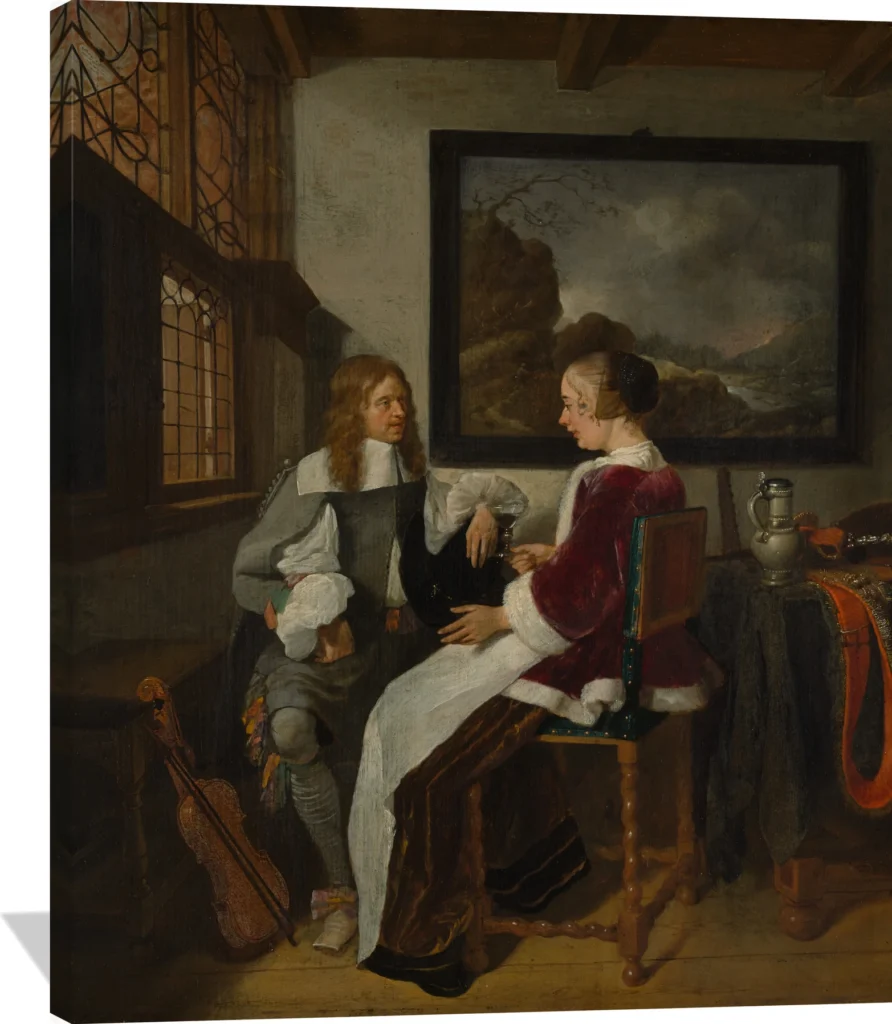
The Quirijn van Brekelenkam Sentimental Conversation canvas captures an intimate domestic moment bathed in soft, golden light. A gentleman and lady share a quiet exchange in a richly detailed interior, framed by warm wood tones, deep burgundy, muted grays, and gentle ivory hues. The artist’s refined brushwork and subtle play of light evoke a timeless sense of calm and connection.
This elegant wall art brings Dutch Golden Age serenity to any space—perfect for a living room, study, or entryway. A Sentimental Conversation canvas print adds depth, warmth, and classic sophistication to modern interiors while celebrating the quiet poetry of everyday life.
Quirijn van Brekelenkam (after 1622–ca. 1669) was a Dutch painter active in Leiden, known for his intimate and finely observed portrayals of everyday life. Often associated with the Leiden fijnschilders, he created works distinguished by their quiet atmosphere, delicate brushwork, and meticulous attention to domestic detail.
Artistic Style
Brekelenkam’s paintings reflect the refined precision characteristic of Leiden’s Golden Age artists. His controlled compositions, subtle lighting, and soft tonal transitions contribute to a sense of stillness and intimacy. Though not as highly polished as some contemporaries, his work possesses a distinctive warmth and authenticity that highlights the quiet dignity of ordinary life.
Subjects and Themes
He specialized in genre scenes set within modest interiors, often depicting tailors, seamstresses, shopkeepers, and humble households absorbed in daily tasks. These subjects allowed him to explore texture, gesture, and mood with gentle specificity. By focusing on the working class, Brekelenkam brought visibility to the rhythms of domestic labor and the quiet resilience of everyday people.
Legacy and Significance
Brekelenkam’s contribution to Dutch genre painting lies in his ability to elevate simple scenes into evocative moments of human presence. His paintings serve as lyrical documents of 17th‑century urban life and remain valued for their understated elegance and intimate realism. Through his careful observation and thoughtful compositions, he helped define a tradition of small‑scale interior painting that continues to resonate with collectors and art historians alike.
Trust & policies
- 🚚 Free tracked shipping to 45+ countries. Local import duties or taxes may apply in some destinations.
- 🎨 Made-to-order, printed close to your delivery location
- 🛡️ If damaged, defective, or misprinted: free replacement or refund
- 🌍 Printed in US/CA/EU/UK/AU based on delivery location
- 💎 Acid-free, fade-resistant canvas with solid wood stretcher bars
- 🖼️ Optional pine floating frames in white, black, or brown
- 🪝 Ready to hang — hardware pre-installed