
Plum blossoms
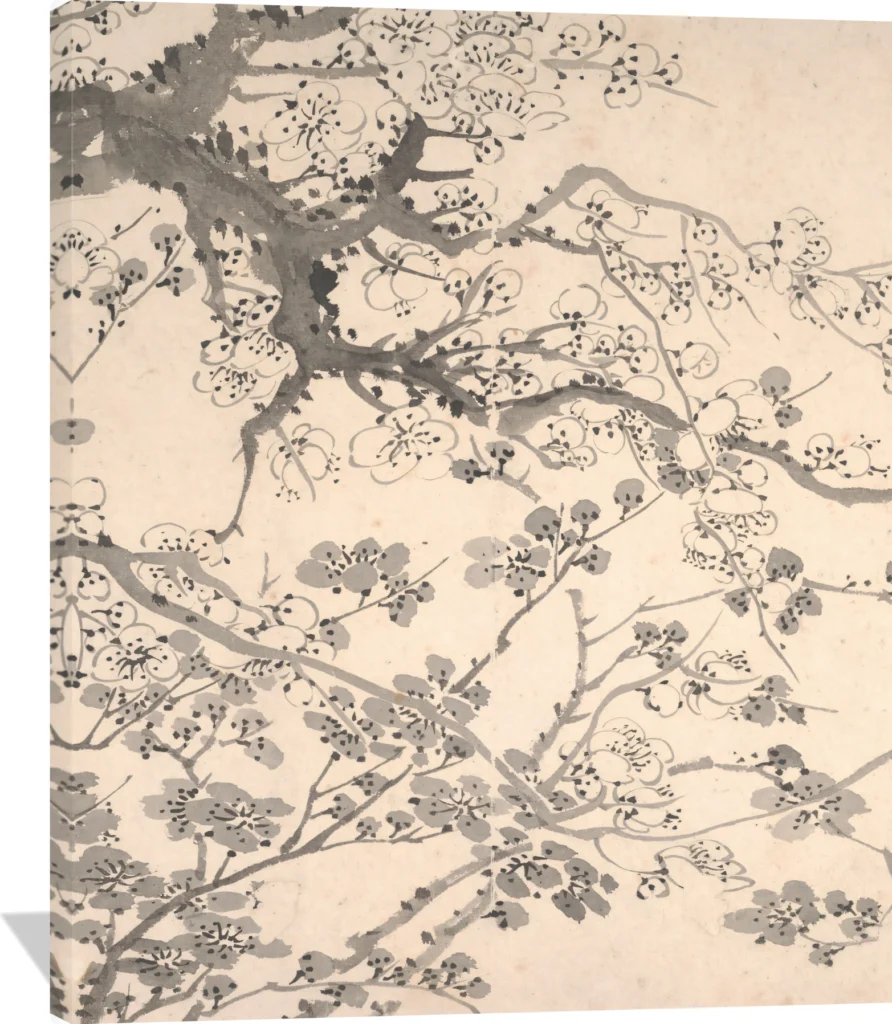
The Jin Nong Plum Blossoms canvas captures the quiet grace of early spring through delicate ink brushwork and soft, natural tones. Shades of charcoal gray, muted ivory, and subtle taupe intertwine across graceful branches, evoking renewal and poetic stillness. This timeless wall art reflects the refined minimalism of 18th-century Chinese painting, bringing a sense of calm and contemplation to any space.
Elegant and understated, this canvas print pairs beautifully with both modern and traditional interiors. Display it in a living room, study, or entryway to invite balance and serenity inspired by Jin Nong’s enduring artistry.
Jin Nong (1687–1773) was a celebrated Chinese painter, calligrapher, and poet of the Qing dynasty, recognized as one of the influential “Eight Eccentrics of Yangzhou.” His work is admired for its individuality, expressive character, and resistance to orthodox academic styles.
Artistic Style
Jin Nong developed a distinctive aesthetic marked by bold brushwork, simplified forms, and an understated yet lyrical sensibility. His calligraphy, especially his celebrated “lacquer script,” displays a sculptural, rhythmic quality that became a signature element of his art. This expressive freedom positions him as a key figure in the evolution of literati painting.
Subjects and Themes
Known primarily for his depictions of plum blossoms, bamboo, and Buddhist figures, Jin Nong infused traditional subjects with a uniquely personal voice. His plum blossom paintings, often accompanied by elegant inscriptions, reflect both poetic sensitivity and symbolic depth. The imagery is at once restrained and emotionally charged, capturing the quiet resilience associated with the plum motif.
Cultural Significance
As part of the vibrant artistic culture of Yangzhou, Jin Nong challenged conventional standards and championed an individualistic approach to painting. His fusion of painting, poetry, and calligraphy exemplifies the literati ideal while simultaneously expanding its boundaries. By prioritizing expressive authenticity over technical refinement, he established a legacy that continues to influence modern appreciations of Qing-dynasty art.
Today, Jin Nong is celebrated for his innovative spirit and the enduring beauty of his introspective, elegantly pared-down compositions. His works, whether portraying seasonal blossoms or contemplative figures such as those found in Lohan and Crane, retain a timeless resonance and offer a window into one of the most artistically dynamic periods in Chinese cultural history.
Trust & policies
- 🚚 Free tracked shipping to 45+ countries. Local import duties or taxes may apply in some destinations.
- 🎨 Made-to-order, printed close to your delivery location
- 🛡️ If damaged, defective, or misprinted: free replacement or refund
- 🌍 Printed in US/CA/EU/UK/AU based on delivery location
- 💎 Acid-free, fade-resistant canvas with solid wood stretcher bars
- 🖼️ Optional pine floating frames in white, black, or brown
- 🪝 Ready to hang — hardware pre-installed