Artistic Style
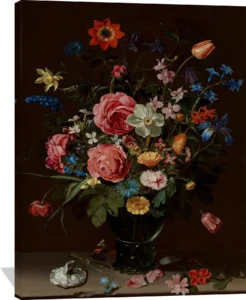
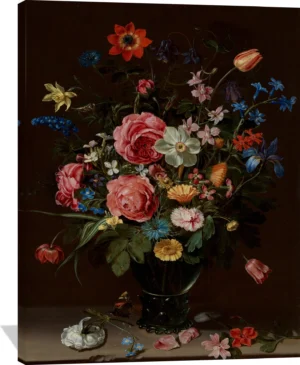
Peeters is renowned for her meticulously detailed still lifes, characterized by crisp realism, luminous surfaces, and carefully balanced compositions. Her works often feature reflective metalwork, textured bread, ripe fruit, and delicate floral elements, rendered with striking accuracy. The subtle play of light across polished objects and sumptuous materials demonstrates her exceptional observation skills and mastery of oil technique.
Typical Subjects
She frequently depicted arranged tables featuring silver goblets, Venetian glass, nuts, cheeses, and porcelain objects that symbolized prosperity in 17th-century Flanders. Many of her paintings include her own tiny reflection in the sheen of a cup or goblet, a quiet but compelling assertion of authorship and presence. Works such as Still Life with Flowers, Goblet, Dried Fruit, and Pretzels exemplify her ability to transform everyday objects into intimate, contemplative scenes.
Notable Contributions
As one of the few documented female painters of her era, Peeters helped shape the development of the still-life genre. Her refined technique and her subtle inclusion of the artist’s reflection set her apart from contemporaries. She played an important role in establishing still-life painting as a respected subject in the Low Countries, influencing later generations who expanded on the genre’s symbolic and sensory richness.
Cultural Significance
Peeters’s work offers a vivid glimpse into the domestic and material culture of 17th-century Flanders, while also highlighting the presence and skill of women artists in a period when their professional opportunities were limited. Her paintings continue to be admired for their exquisite detail, their serene yet luxurious atmosphere, and their contribution to the evolution of the still-life tradition. Today, she is recognized as a pioneer of the Flemish still-life, whose artistry remains both culturally significant and visually captivating.