Artistic Style
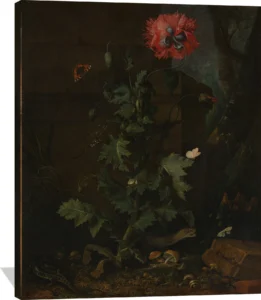
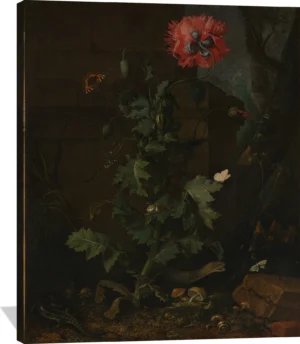
Marseus van Schrieck is best known for the style later termed the “sottobosco,” a close‑up view of the forest floor where plants, insects, reptiles, and fungi coexist in atmospheric half‑light. His meticulous technique, rich textures, and uncanny sense of mood create scenes that feel both scientific and theatrical. The use of deep shadows and sharply illuminated forms became a hallmark of his approach.
Notable Subjects
His compositions often feature snakes, butterflies, lizards, thistles, and mushrooms arranged in tense natural encounters. These elements were not merely decorative; they reflected early modern curiosity about the natural world. Marseus van Schrieck is believed to have kept a menagerie of live specimens, enabling unusually accurate depictions that set his work apart from his contemporaries.
Contributions and Significance
Marseus van Schrieck’s paintings introduced a new, immersive perspective on nature, merging observational precision with a mysterious, almost allegorical atmosphere. His influence spread across Europe, and he became a central figure in the development of naturalist still life. His ability to turn the forest floor into a stage for subtle drama remains one of his most enduring contributions.