Artistic Style
Thompson’s paintings are marked by clear, balanced compositions and warmly lit settings that invite viewers into the scenes they depict. He favored a refined realism, carefully modeling figures and environments to create an inviting sense of place. His ability to merge landscape and narrative made him a distinctive voice in nineteenth-century American art, offering images that were both visually captivating and emotionally resonant.
Typical Subjects
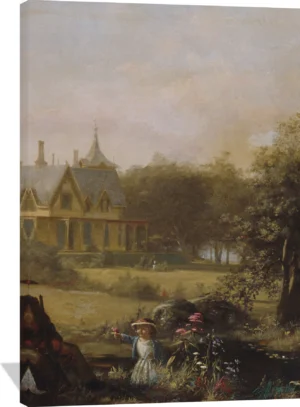
Best known for his genre scenes, Thompson often portrayed leisurely outdoor gatherings, musical entertainments, and moments of rural recreation. These subjects allowed him to explore themes of community, harmony, and the quiet pleasures of daily life. His landscapes, frequently detailed with rolling hills, waterways, and wooded clearings, provided the ideal setting for these intimate human stories. Works such as Harvest Dance exemplify his talent for capturing the spirit of American social life with warmth and sincerity.
Contributions and Significance
Thompson’s paintings played an important role in shaping nineteenth-century American visual culture, particularly through his ability to convey a sense of national character. While contemporaries emphasized the grandeur of untouched wilderness, Thompson highlighted the human presence within nature, creating scenes that celebrated the rhythms of rural life. His work offered a counterpoint to more dramatic landscape traditions, presenting instead a vision of America rooted in familiarity and shared experience.
Today, Thompson is remembered for his graceful narrative sensibility and his contribution to the development of American genre painting. His images, grounded in everyday observation yet elevated through artistry, continue to resonate for their charm, craftsmanship, and cultural insight.