
Joseph Howell, Jr.
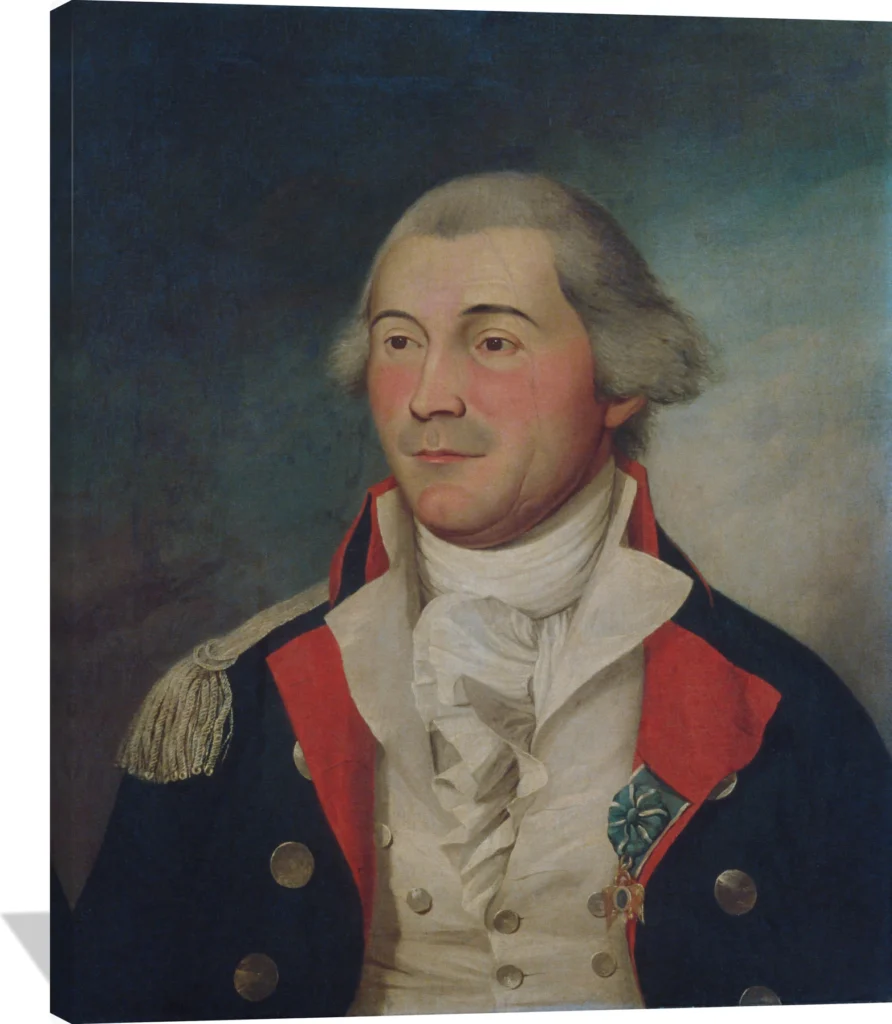
The Charles Peale Polk Joseph Howell, Jr. canvas captures the dignified presence of an 18th-century figure rendered with refined detail and composure. Set against a softly shaded background of muted blues and grays, the subject’s crisp white attire and deep navy coat accented with red convey both elegance and authority. Polk’s neoclassical style and balanced composition lend the portrait a timeless sense of poise and historical gravitas.
This exquisite canvas print brings a touch of early American sophistication to any interior. Ideal for a study, library, or formal living room, the Joseph Howell, Jr. wall art adds depth, heritage, and quiet strength to contemporary or traditional spaces alike.
Charles Peale Polk (1767–1822) was an American portraitist whose work reflects the emerging artistic identity of the early United States. Trained under his uncle, the renowned Charles Willson Peale, Polk developed a distinctive approach that blended formal influences with a direct, unembellished clarity characteristic of early American painting.
Artistic Style
Polk’s portraits are known for their crisp outlines, balanced compositions, and a refined yet deliberate simplicity. His technique emphasizes clear modeling of the face, measured symmetry, and a restrained palette that lends his sitters a sense of composure and dignity. This blend of formality and approachable realism often places his work within the tradition of American Federal-era portraiture, while his individual sensibility marked him as an artist of notable independence.
Subjects and Contributions
Polk devoted much of his career to portraiture, capturing members of prominent families, political figures, and community leaders. He is especially celebrated for his depictions of George Washington, which became among his most recognized images and contributed to the shaping of Washington’s visual legacy. Through these works, Polk helped craft a symbolic language of leadership and national identity during a formative moment in American history.
Cultural Significance
Working at a time when the United States was defining its cultural voice, Polk contributed to the emergence of a distinctly American artistic heritage. His portraits provide valuable insight into the aspirations, values, and social character of the new republic. They also reflect the era’s growing demand for likenesses that affirmed personal status and collective ideals, making Polk a meaningful participant in the broader development of American portraiture.
Enduring Legacy
Today, Charles Peale Polk is recognized for his role in shaping the visual culture of early America. His work stands out for its clarity, sincerity, and its contribution to the evolving portrayal of national icons. With a style that bridges family tradition and personal expression, Polk remains a significant figure whose portraits continue to resonate for their historical importance and their quietly compelling artistry.
Trust & policies
- 🚚 Free tracked shipping to 45+ countries. Local import duties or taxes may apply in some destinations.
- 🎨 Made-to-order, printed close to your delivery location
- 🛡️ If damaged, defective, or misprinted: free replacement or refund
- 🌍 Printed in US/CA/EU/UK/AU based on delivery location
- 💎 Acid-free, fade-resistant canvas with solid wood stretcher bars
- 🖼️ Optional pine floating frames in white, black, or brown
- 🪝 Ready to hang — hardware pre-installed