
The New Bonnet
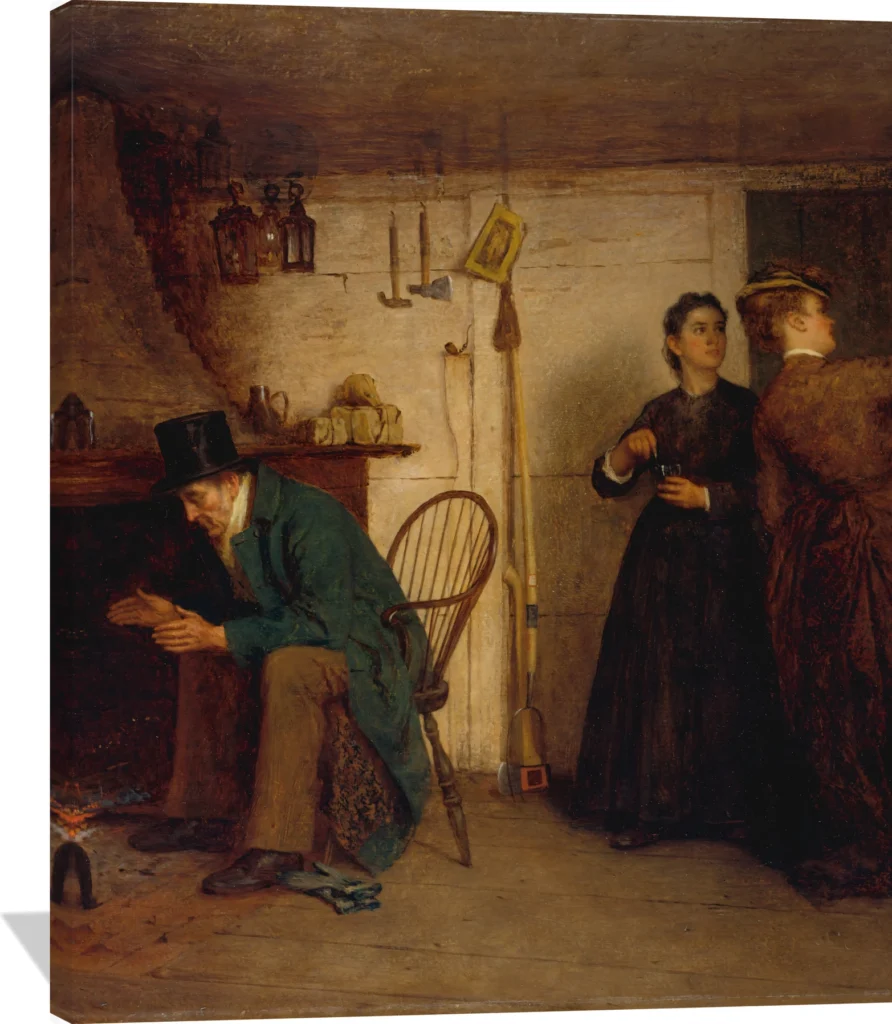
Eastman Johnson’s The New Bonnet canvas captures a tender domestic moment with masterful warmth and realism. Set in a rustic interior, the scene glows with rich earth tones of amber, chestnut, and deep green, illuminated by the soft light of a hearth. Johnson’s brushwork evokes quiet intimacy and the charm of everyday life, making this piece a timeless reflection of 19th-century American genre painting.
This elegant The New Bonnet wall art brings depth and character to any living room, study, or entryway. A premium canvas print that celebrates craftsmanship and nostalgia, it’s an inviting focal point for those who appreciate art that tells a story through light, texture, and human connection.
Eastman Johnson (1824–1906) was an American painter born in Lovell, Maine, and later based in New York. Renowned as a founding member of the Metropolitan Museum of Art, he became one of the most respected genre painters of the nineteenth century. His work is celebrated for its empathetic portrayals of everyday life and its ability to capture the cultural character of a rapidly changing nation.
Artistic Style
Johnson’s style blends the warmth of European genre traditions with a distinctly American sensibility. His paintings are marked by meticulous draftsmanship, rich tonal harmonies, and an ability to evoke narrative through subtle gesture and expression. Influenced by time spent studying in Düsseldorf and The Hague, he developed a refined, realist approach that remained central throughout his career.
Subjects and Themes
Johnson is best known for scenes depicting rural New England life, domestic interiors, and intimate family moments. He also created significant works portraying African American subjects, frontier communities, and the lived experience of everyday Americans. His images often reveal a quiet dignity in his sitters and convey a deep respect for ordinary moments, making him a defining figure in American genre painting.
Legacy and Significance
Often referred to as the “American Rembrandt,” Johnson earned this distinction for his mastery of chiaroscuro and his sensitive rendering of character. His paintings offer invaluable insight into nineteenth‑century American identity, capturing both social realities and idealized visions of national life. As a pioneer of genre painting and a contributor to the institutional foundations of American art, Johnson’s work remains a touchstone for its authenticity, humanity, and enduring narrative power.
Trust & policies
- 🚚 Free tracked shipping to 45+ countries. Local import duties or taxes may apply in some destinations.
- 🎨 Made-to-order, printed close to your delivery location
- 🛡️ If damaged, defective, or misprinted: free replacement or refund
- 🌍 Printed in US/CA/EU/UK/AU based on delivery location
- 💎 Acid-free, fade-resistant canvas with solid wood stretcher bars
- 🖼️ Optional pine floating frames in white, black, or brown
- 🪝 Ready to hang — hardware pre-installed