
A Dance in the Country
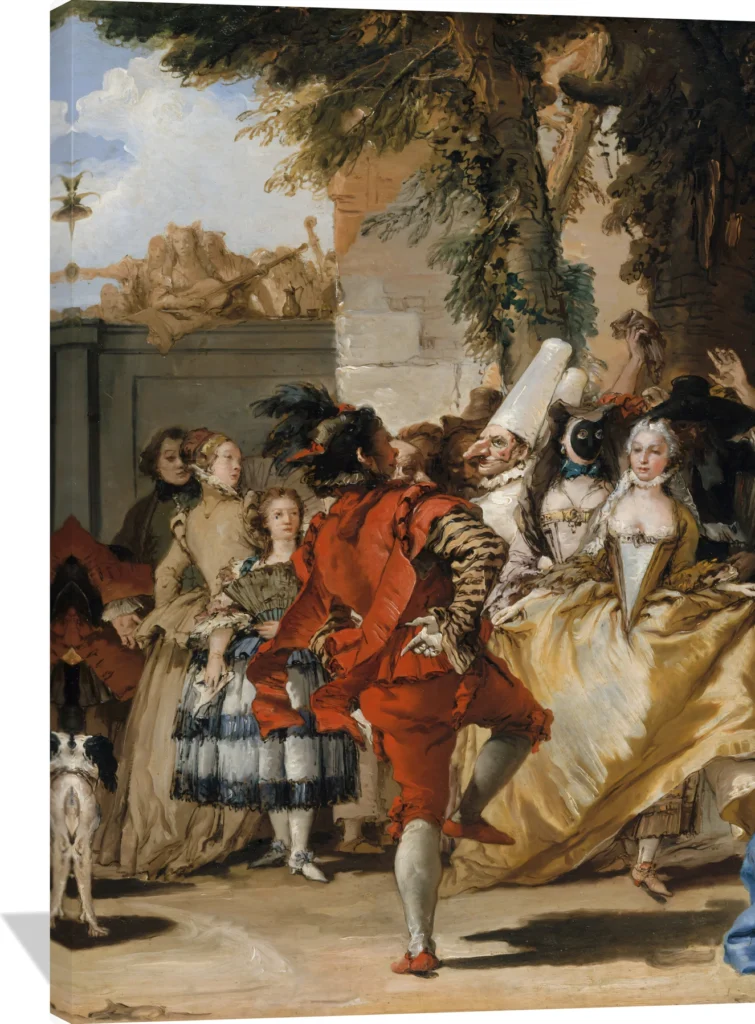
The lively elegance of Venetian festivity comes alive in Giovanni Domenico Tiepolo’s A Dance in the Country canvas. This captivating wall art captures a joyous outdoor gathering, where masked figures and dancers move amid soft golden light and rich tones of crimson, cream, and sky blue. Tiepolo’s fluid brushwork and theatrical composition evoke both movement and refinement, making this piece a timeless celebration of 18th-century charm.
Perfect as a statement canvas print for a living room, study, or entryway, A Dance in the Country brings a touch of Italian artistry and spirited grace to any interior. A masterful blend of color, texture, and storytelling, it invites viewers into a world of elegance and delight.
Giovanni Domenico Tiepolo (1727–1804) was a Venetian painter and printmaker whose career unfolded at the height of the late Baroque and Rococo periods. Trained in the workshop of his father, the celebrated Giovanni Battista Tiepolo, he developed a distinct artistic voice that blended narrative clarity with playful elegance.
Artistic Style
Tiepolo’s style is marked by luminous color, fluid draftsmanship, and an ability to infuse even grand compositions with an intimate, human quality. While influenced by his father’s dramatic flair, he often favored a more grounded emotional tone. His frescoes, drawings, and prints reveal a masterful control of light and a refined sensibility that bridges theatricality with gentle wit.
Subjects and Themes
His subjects ranged from biblical and mythological narratives to everyday Venetian scenes. Tiepolo had a particular gift for storytelling, whether depicting sacred events or the lighthearted antics seen in his celebrated Punchinello series. These works showcase his ability to combine humor with an insightful understanding of human nature.
Legacy and Significance
Active during a moment of cultural transition in Venice, Tiepolo helped shape the visual language of the late eighteenth century. His contributions in fresco decoration, narrative cycles, and printmaking demonstrate a distinctive artistic vision that complemented and expanded the achievements of his renowned family. Today he is recognized for his subtle expressiveness, technical finesse, and his role in carrying the Venetian tradition into a new era, making him a figure of enduring importance in European art.
Trust & policies
- 🚚 Free tracked shipping to 45+ countries. Local import duties or taxes may apply in some destinations.
- 🎨 Made-to-order, printed close to your delivery location
- 🛡️ If damaged, defective, or misprinted: free replacement or refund
- 🌍 Printed in US/CA/EU/UK/AU based on delivery location
- 💎 Acid-free, fade-resistant canvas with solid wood stretcher bars
- 🖼️ Optional pine floating frames in white, black, or brown
- 🪝 Ready to hang — hardware pre-installed