
Portrait of a Man with a Hebrew Tablet
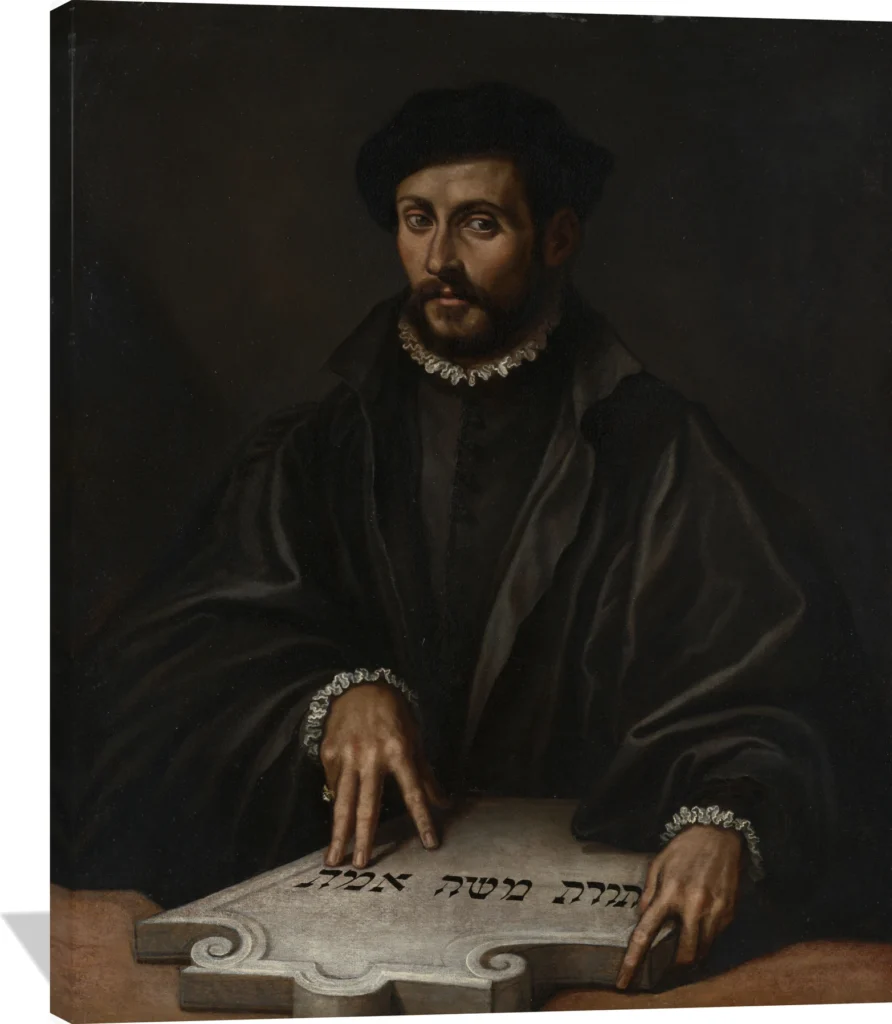
The Antonio Campi Portrait of a Man with a Hebrew Tablet canvas captures the quiet dignity of Renaissance portraiture. Bathed in deep umber, charcoal, and soft ivory tones, the sitter’s calm gaze and finely rendered textures evoke introspection and intellect. Campi’s masterful use of light and shadow brings a timeless depth to this refined composition.
This premium canvas print lends an air of sophistication to any space—ideal for a study, library, or elegant living room. A striking piece of wall art, it celebrates the craftsmanship and contemplative spirit of 16th-century Italy while offering a serene focal point for modern interiors.
Antonio Campi (Cremona, 1523–1587) was a pivotal figure of the Cremonese Renaissance, celebrated for his inventive narrative vision and sophisticated command of color. Working within a family of accomplished painters, he developed a distinctive voice that merged the elegant naturalism of Lombard art with the emotional intensity associated with late Renaissance Mannerism.
Artistic Style and Approach
Campi’s paintings are marked by vivid contrasts, precise draftsmanship, and a dramatic handling of light that heightens the psychological depth of his scenes. His compositions often balance meticulous realism with expressive, sometimes theatrical, arrangements of figures. This fusion gives his work a dynamic clarity that resonates even in his most complex narratives.
Subjects and Notable Contributions
Renowned for his religious imagery, Campi produced altarpieces and devotional works that reflect both spiritual intensity and refined technical skill. He frequently rendered scenes from the lives of saints, the Passion of Christ, and Marian themes, shaping them with a palpable sense of humanity. His architectural backgrounds and carefully observed details reveal his broader interests as a designer and chronicler of his era.
Cultural and Historical Significance
As a leading member of the Cremonese school, Campi played a central role in elevating the city’s artistic reputation. His contributions extended beyond painting to include work as an engraver and chronicler, demonstrating a rare interdisciplinary talent. Campi’s legacy endures through his influence on subsequent generations and his ability to merge traditional religious subjects with a striking emotional immediacy that remains compelling today.
Trust & policies
- 🚚 Free tracked shipping to 45+ countries. Local import duties or taxes may apply in some destinations.
- 🎨 Made-to-order, printed close to your delivery location
- 🛡️ If damaged, defective, or misprinted: free replacement or refund
- 🌍 Printed in US/CA/EU/UK/AU based on delivery location
- 💎 Acid-free, fade-resistant canvas with solid wood stretcher bars
- 🖼️ Optional pine floating frames in white, black, or brown
- 🪝 Ready to hang — hardware pre-installed