
Portrait of a Man
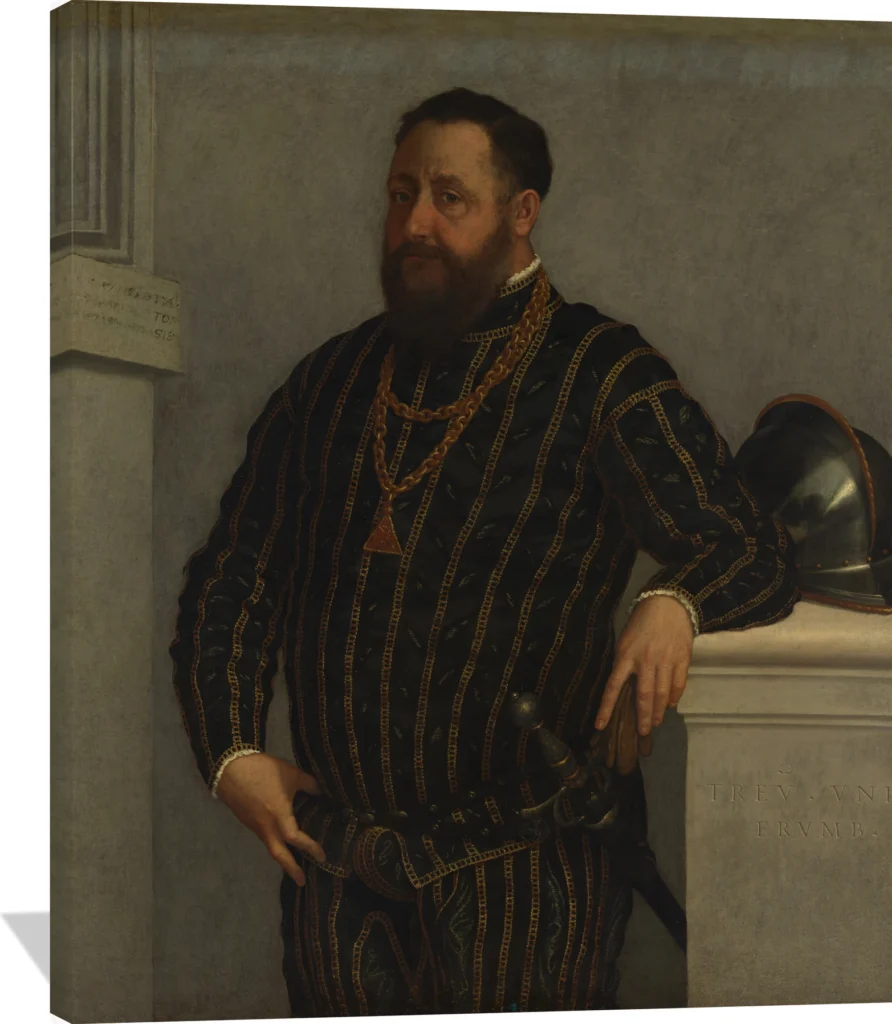
The Giovanni Battista Moroni Portrait of a Man canvas captures the quiet authority and refined dignity of a Renaissance gentleman. Rich tones of deep black, gold, and muted gray are balanced by the soft illumination of the sitter’s face, creating a timeless interplay of light and texture that draws the eye. Moroni’s masterful realism gives this piece a commanding yet contemplative presence.
This premium canvas print brings classical sophistication to any space—ideal for a study, living room, or elegant entryway. The Portrait of a Man wall art evokes heritage and strength, adding depth and character to both traditional and modern interiors.
Giovanni Battista Moroni (no later than 1524–1578) was an influential Italian painter from Albino whose mastery of lifelike portraiture positioned him as one of the most compelling artists of the late Renaissance. Renowned for his ability to capture psychological depth with striking clarity, Moroni created an enduring legacy that continues to resonate with admirers of portrait art.
Artistic Style
Moroni’s work is distinguished by its precise naturalism and unembellished honesty. His portraits reveal a keen observational eye, pairing meticulous anatomical accuracy with subtle emotional nuance. This approach aligned him with the Lombard tradition, favoring clarity and truth over idealization. His restrained palette and controlled compositions highlight the sitter’s presence, making the individual not decorative flourish the central focus.
Notable Contributions
Celebrated during his lifetime, Moroni produced some of the era’s most memorable portraits, including depictions of nobles, scholars, clergy, and professionals. He is particularly known for presenting his subjects in everyday attire and settings, an approach that distinguished him from many of his contemporaries. His boldly direct style influenced later portraitists and helped shape the evolution of realist portraiture in Italy.
Typical Subjects
Moroni excelled at portraying individuals at the height of their social and personal identities. Whether painting a learned gentleman, a dignified noblewoman, or a craftsman, he conveyed a powerful sense of character. Many of his sitters are shown frontally or three-quarter length, meeting the viewer’s gaze with calm assurance. His religious works, though fewer, also display a thoughtful balance of devotion and realism.
Cultural and Historical Significance
Active during a period of artistic transition, Moroni stands out for his commitment to unvarnished realism and the quiet sophistication of his technique. His portraits serve as invaluable historical documents, offering insight into the fashions, personalities, and social structures of 16th‑century northern Italy. Today, he is celebrated as one of the Renaissance’s most authentic visual storytellers, admired for the understated power and enduring humanity of his art.
Trust & policies
- 🚚 Free tracked shipping to 45+ countries. Local import duties or taxes may apply in some destinations.
- 🎨 Made-to-order, printed close to your delivery location
- 🛡️ If damaged, defective, or misprinted: free replacement or refund
- 🌍 Printed in US/CA/EU/UK/AU based on delivery location
- 💎 Acid-free, fade-resistant canvas with solid wood stretcher bars
- 🖼️ Optional pine floating frames in white, black, or brown
- 🪝 Ready to hang — hardware pre-installed