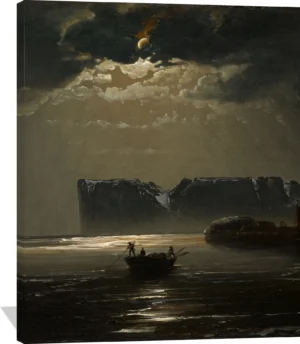
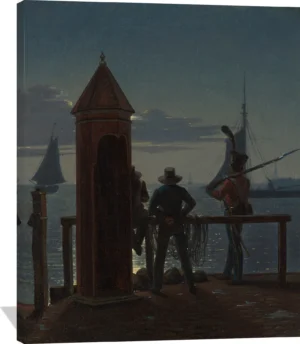
Virgil’s Tomb by Moonlight, with Silius Italicus Declaiming
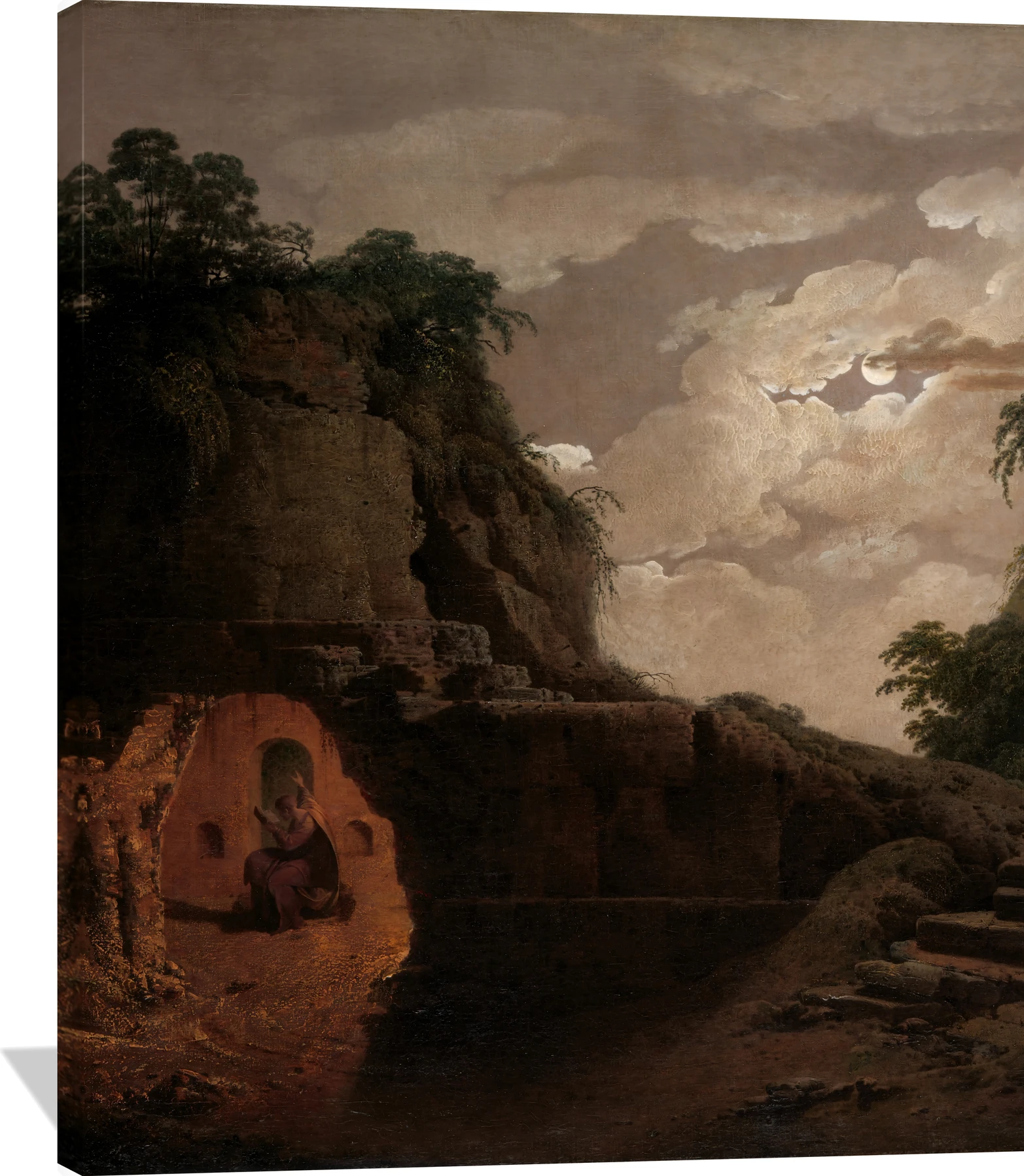
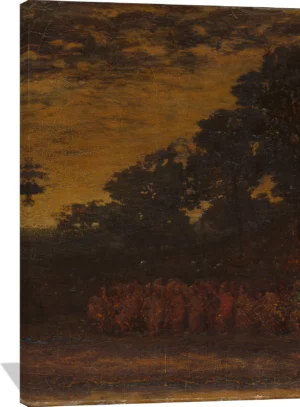
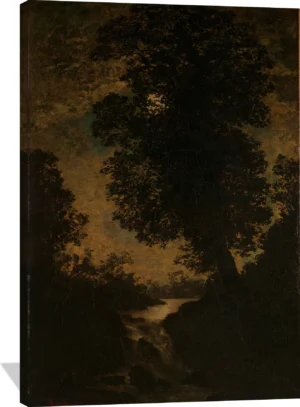
The Joseph Wright Virgil’s Tomb by Moonlight, with Silius Italicus Declaiming canvas captures the poetic stillness of night under a luminous moon. Warm amber tones radiate from the tomb’s interior, contrasting beautifully with silvery clouds and deep earthen shadows. Wright’s mastery of light and atmosphere evokes quiet contemplation and timeless grandeur.
This elegant wall art brings a sense of mystery and refinement to any space—perfect for a living room, study, or entryway. A Joseph Wright canvas print like this transforms classical inspiration into a striking focal point, blending historical depth with serene, moody beauty.
Joseph Wright of Derby (1734–1797) was a British painter celebrated for his evocative depictions of the Enlightenment and the transformative power of scientific discovery. Born and based for most of his life in Derby, he forged a distinctive artistic identity outside London’s traditional art circles, becoming one of the first major artists to capture the spirit of modern industry.
Artistic Style
Wright is renowned for his masterful use of chiaroscuro, creating dramatic contrasts of light and shadow that heighten emotional intensity. His compositions often feature a single, brilliantly illuminated focal point surrounded by deep darkness, a technique that lends his scenes a theatrical, almost cinematic quality. This signature approach made him one of the most compelling interpreters of the Enlightenment’s fascination with experimentation and human curiosity.
Notable Themes and Subjects
He is best known for scenes that portray scientific demonstrations, philosophical inquiry, and early industrial settings. Works such as A Philosopher Giving a Lecture on the Orrery and An Experiment on a Bird in the Air Pump exemplify how he elevated scientific subjects to the realm of high art, portraying them with emotional depth and narrative tension. Wright also painted portraits, landscapes, and depictions of industrial labor, capturing both the human and atmospheric dimensions of Britain’s evolving social landscape.
Cultural and Historical Significance
Wright’s paintings offer a vivid visual record of the Enlightenment and the dawn of the Industrial Revolution. His ability to merge scientific subject matter with compelling storytelling made him a pivotal figure in British art. Working outside the Royal Academy, he developed a perspective that was at once regional and universal, revealing the profound shifts taking place in eighteenth-century life. Today he is regarded as a pioneering interpreter of scientific modernity and a master of atmospheric light, with a legacy that continues to resonate for its blend of intellect, drama, and illuminated imagination.
Virgil’s Tomb by Moonlight, with Silius Italicus Declaiming
Trust & policies
- 🚚 Free worldwide shipping
- 🔁 30-day returns (change of mind)
- 🛡️ If damaged/defective/misprinted: free replacement or full refund
- 🌍 Printed in US/CA/EU/UK/AU (based on delivery location)
- 💎 Made to order using acid-free, fade-resistant canvas
- 💎 Solid wood stretcher bars • Pine floating frames
- 🪝 Ready to hang