
James Merrill Cook
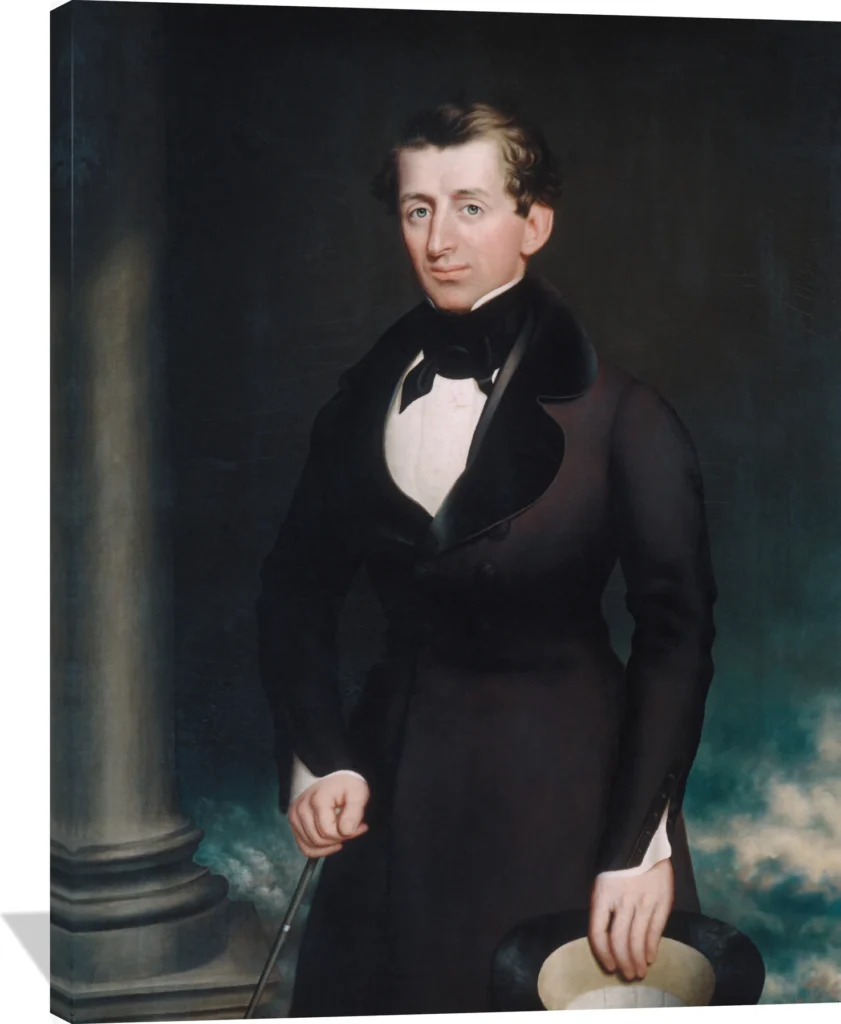
The Nelson Cook James Merrill Cook canvas captures timeless refinement through its poised portrayal of a distinguished gentleman. Deep charcoal, soft ivory, muted teal, and warm flesh tones create a balanced palette that evokes quiet confidence and 19th‑century sophistication. The vertical composition and subtle play of light draw the viewer into a moment of calm dignity and presence.
This museum‑quality wall art brings a sense of heritage and grace to any interior. Ideal for a study, library, or formal living room, this canvas print honors Nelson Cook’s artistry (1808–1892) while offering a classic focal point that complements both traditional and modern décor.
Nelson Cook (1808–1892) was an American portrait painter whose refined draftsmanship and sensitive character studies made him a sought-after artist throughout the mid‑19th century.
Artistic Style
Cook’s work is distinguished by its meticulous attention to facial detail, subtle modeling of light, and carefully balanced compositions. His portraits often convey a quiet dignity, revealing both the social stature and inner temperament of his sitters. He favored a polished, naturalistic approach aligned with the American academic tradition, emphasizing clarity, restraint, and emotional nuance.
Subjects and Contributions
Best known for his portraits of political figures, civic leaders, and prominent families, Cook established a reputation for creating images that blended accuracy with a sense of personal presence. Works such as Portrait of Governor William H. Seward highlight his ability to capture both likeness and character, contributing to the visual record of influential Americans during a period of significant cultural and political transformation.
Historical Significance
Active across New York and the northeastern United States, Cook played a meaningful role in shaping the visual identity of 19th‑century America. His paintings remain valued for their clarity, craftsmanship, and preservation of a rapidly evolving society. Today, collectors appreciate his portraits for their refined execution and their connection to the era’s broader artistic development, marking Cook as a notable figure in American portraiture whose work continues to resonate.
Trust & policies
- 🚚 Free tracked shipping to 45+ countries. Local import duties or taxes may apply in some destinations.
- 🎨 Made-to-order, printed close to your delivery location
- 🛡️ If damaged, defective, or misprinted: free replacement or refund
- 🌍 Printed in US/CA/EU/UK/AU based on delivery location
- 💎 Acid-free, fade-resistant canvas with solid wood stretcher bars
- 🖼️ Optional pine floating frames in white, black, or brown
- 🪝 Ready to hang — hardware pre-installed