
Portrait of a Woman
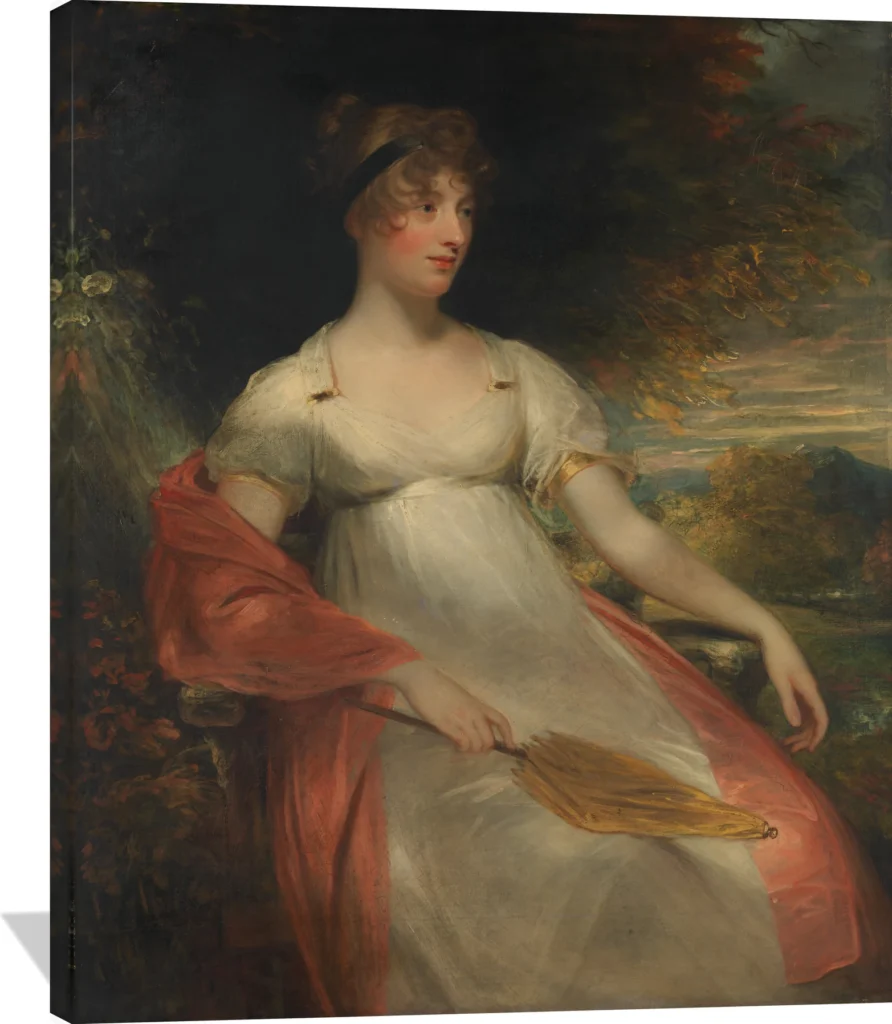
The Sir William Beechey Portrait of a Woman canvas captures timeless grace through soft light, gentle color, and refined composition. Subtle tones of cream, rose, gold, and deep green evoke the quiet elegance of late Georgian portraiture, while the sitter’s poised expression and flowing gown convey serenity and sophistication.
This premium canvas print brings classic British artistry into any modern interior. Ideal as statement wall art for a living room, study, or entryway, it adds warmth and cultured charm to your space. A masterful celebration of beauty and restraint, this canvas print embodies the enduring allure of Beechey’s refined style.
Sir William Beechey (1753–1839) was a distinguished British portraitist whose refined elegance and sensitive characterization made him one of the most sought‑after artists of the late Georgian era. Born in Burford, Oxfordshire, and later active in London and Hampstead, Beechey rose to prominence through his ability to blend polished academic technique with a keen observational eye, creating portraits that conveyed both status and personality.
Artistic Style
Beechey’s style is defined by its poised naturalism, luminous flesh tones, and balanced compositions. Working within the traditions of the Royal Academy, he developed a sophisticated approach that merged neoclassical restraint with the gentle warmth associated with the English portrait school. His brushwork is refined yet lively, lending his sitters an immediacy that contributed to his reputation for capturing character with grace.
Typical Subjects
Specializing in aristocratic and royal portraiture, Beechey painted courtiers, officers, noble families, and most notably members of the British monarchy. His portraits often feature richly rendered textiles and subtle atmospheric depth, enhancing the dignity of his subjects without overwhelming their presence. He was especially admired for his portrayals of children, whose expressions he depicted with disarming sincerity.
Notable Contributions
Beechey became a Royal Academician and served as portrait painter to Queen Charlotte, cementing his role at the center of British artistic life in the 1790s and early 1800s. His works, including celebrated pieces such as George III and the Prince of Wales Reviewing Troops, exemplify the grandeur of state portraiture during a period marked by political change and expanding empire. His studio trained and influenced younger painters who carried forward the refined traditions he helped define.
Cultural Significance
As one of the leading portraitists of his generation, Beechey played a significant role in shaping the visual identity of Britain’s ruling class during the reign of George III and George IV. His portraits remain valued for their clarity, dignity, and historical insight, offering a window into the personalities and aesthetics of late‑18th‑ and early‑19th‑century Britain. Today, his work is recognized for its enduring elegance and its contribution to the development of British portraiture.
Trust & policies
- 🚚 Free tracked shipping to 45+ countries. Local import duties or taxes may apply in some destinations.
- 🎨 Made-to-order, printed close to your delivery location
- 🛡️ If damaged, defective, or misprinted: free replacement or refund
- 🌍 Printed in US/CA/EU/UK/AU based on delivery location
- 💎 Acid-free, fade-resistant canvas with solid wood stretcher bars
- 🖼️ Optional pine floating frames in white, black, or brown
- 🪝 Ready to hang — hardware pre-installed