
Jacob Hurd
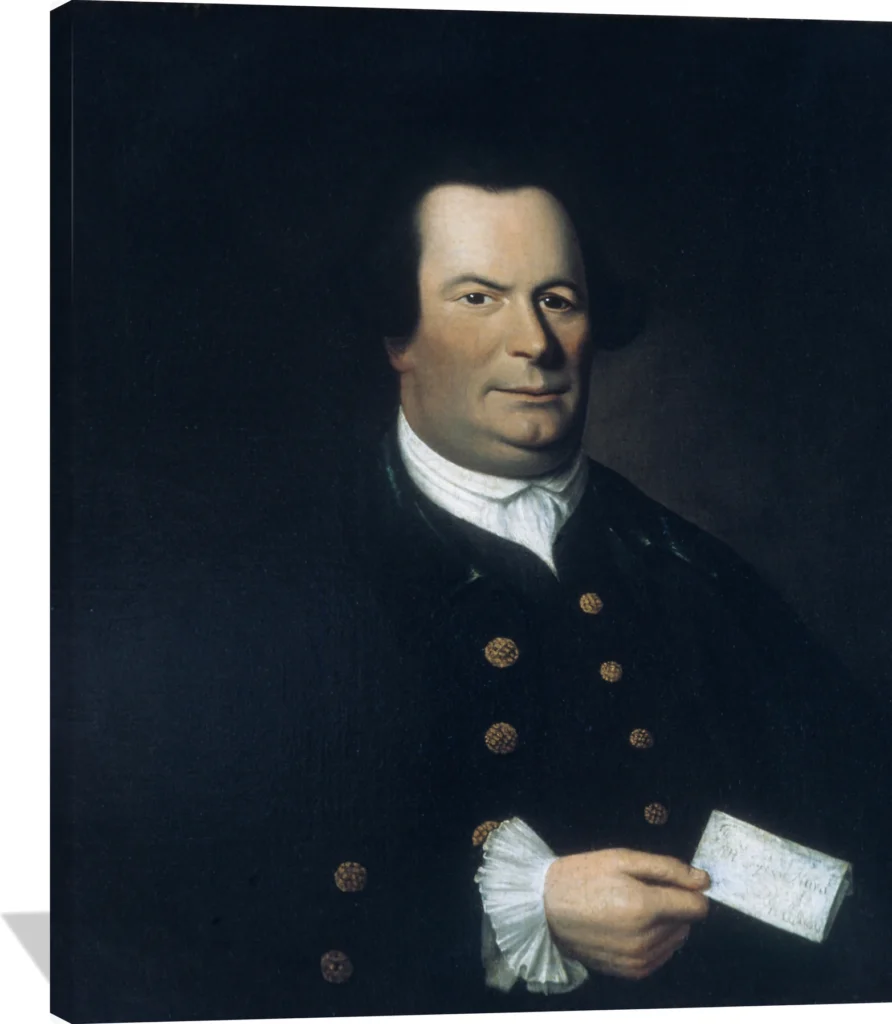
The William Johnston Jacob Hurd canvas captures the dignified presence of its subject with refined detail and depth. Rich tones of deep navy, warm ivory, and muted gold create a timeless palette that exudes sophistication. The artist’s confident brushwork and subtle lighting lend the portrait a quiet authority, making it an elegant focal point for any collection.
This premium wall art brings a sense of heritage and poise to your space—perfect for a study, library, or classic living room. A canvas print that embodies 18th-century grace, Jacob Hurd invites reflection and adds enduring character to contemporary interiors.
William Johnston (1732–1772) emerged as a refined British painter of the eighteenth century, known for his elegant handling of portraiture and his sensitive approach to character and atmosphere. Working during a period of heightened interest in personal likeness and social identity, Johnston developed a reputation for creating portraits that balanced compositional clarity with subtle emotional depth.
Artistic Style
Johnston’s work reflects the polished restraint characteristic of mid‑Georgian art, where clarity of form and controlled tonal transitions guided the viewer’s attention toward the sitter’s expression. His technique often favored luminous skin tones, carefully rendered fabrics, and a poised, dignified presentation. While rooted in the conventions of his era, his paintings revealed a distinctive sensitivity that set his portraiture apart.
Subjects and Themes
He devoted much of his career to portraying members of Britain’s social and professional classes, capturing merchants, scholars, and families who sought a lasting visual record of identity and status. These portraits frequently included symbolic details or refined interior settings that enriched the narrative of the sitter’s life. Johnston’s ability to merge likeness with suggestion status, intellect, or personal virtue made his works especially valued.
Cultural and Historical Significance
Active during a flourishing period in British art, Johnston contributed to a cultural moment when portraiture served as both personal documentation and societal expression. His paintings provide insight into the aesthetics and customs of Georgian Britain, illustrating the era’s ideals of refinement, composure, and civility. Though his career was brief, his surviving works offer a meaningful window into the artistic ambitions of his time.
Legacy
Johnston remains appreciated for his elegant portrait style and his ability to engage viewers through quiet detail rather than dramatic flourish. Collectors and admirers continue to value his paintings for their craftsmanship, historical resonance, and the understated grace that defines his artistic legacy.
Trust & policies
- 🚚 Free tracked shipping to 45+ countries. Local import duties or taxes may apply in some destinations.
- 🎨 Made-to-order, printed close to your delivery location
- 🛡️ If damaged, defective, or misprinted: free replacement or refund
- 🌍 Printed in US/CA/EU/UK/AU based on delivery location
- 💎 Acid-free, fade-resistant canvas with solid wood stretcher bars
- 🖼️ Optional pine floating frames in white, black, or brown
- 🪝 Ready to hang — hardware pre-installed