
Portrait of a Woman
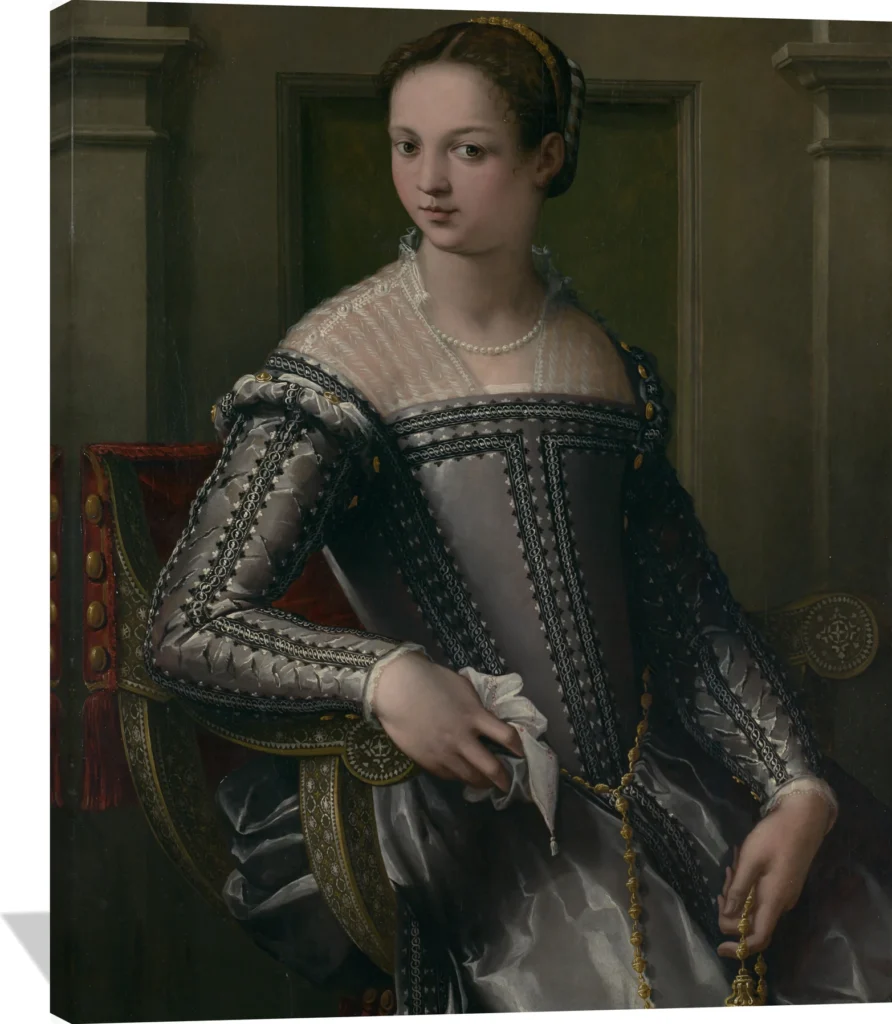
The Italian (Florentine) Painter Portrait of a Woman canvas captures Renaissance elegance with remarkable precision and grace. The sitter’s poised expression, luminous skin tones, and finely rendered silk gown in shades of silver, pearl, and muted gold evoke timeless sophistication. Subtle contrasts of soft light and shadow enhance the painting’s depth, lending a serene yet commanding presence to any space.
This exquisite canvas print brings classical refinement to modern interiors. Ideal for a living room, study, or entryway, it adds a touch of Florentine artistry and quiet luxury to your décor. A masterful choice for collectors and admirers of historical portraiture alike.
Jacopo Zucchi (Florence 1541–1590 Rome) was a distinguished Mannerist painter whose refined elegance and intellectual symbolism helped shape the visual culture of late sixteenth‑century Italy. Trained in the vibrant artistic atmosphere of Florence, he worked closely within the circle of Giorgio Vasari before establishing a prominent career in Rome.
Artistic Style
Zucchi’s work is celebrated for its polished execution, elongated forms, and sophisticated allegorical content. His paintings often display shimmering color harmonies, intricate detailing, and a heightened sense of theatricality characteristic of the Late Mannerist style. These qualities allowed him to convey complex narratives with both visual clarity and poetic nuance.
Typical Subjects
He frequently depicted mythological scenes, religious narratives, and refined allegories that appealed to elite patrons. Zucchi’s compositions are populated with graceful figures set within beautifully orchestrated architectural or natural settings, underscoring his talent for transforming intellectual themes into engaging visual experiences.
Notable Contributions
Working in Rome for influential patrons, including members of the Medici circle, Zucchi contributed to significant decorative programs that helped define the era’s cultured aesthetic. His mastery of symbolism and his ability to weave moral or philosophical concepts into visually appealing imagery made him a sought‑after painter in both private and courtly contexts.
Cultural Significance
Zucchi’s art stands as a testament to the transitional moment between the High Renaissance and the Baroque. His work embodies the courtly sophistication and expressive experimentation of the period, offering modern viewers insight into the intellectual and artistic aspirations of late sixteenth‑century Italy. Collectors value his paintings for their luminous beauty and for the artist’s role in shaping the refined visual language of Mannerism, a style that remains prized for its elegance and imaginative complexity.
Trust & policies
- 🚚 Free tracked shipping to 45+ countries. Local import duties or taxes may apply in some destinations.
- 🎨 Made-to-order, printed close to your delivery location
- 🛡️ If damaged, defective, or misprinted: free replacement or refund
- 🌍 Printed in US/CA/EU/UK/AU based on delivery location
- 💎 Acid-free, fade-resistant canvas with solid wood stretcher bars
- 🖼️ Optional pine floating frames in white, black, or brown
- 🪝 Ready to hang — hardware pre-installed