
The Grandchildren of Sir William Heathcote, 3rd Baronet
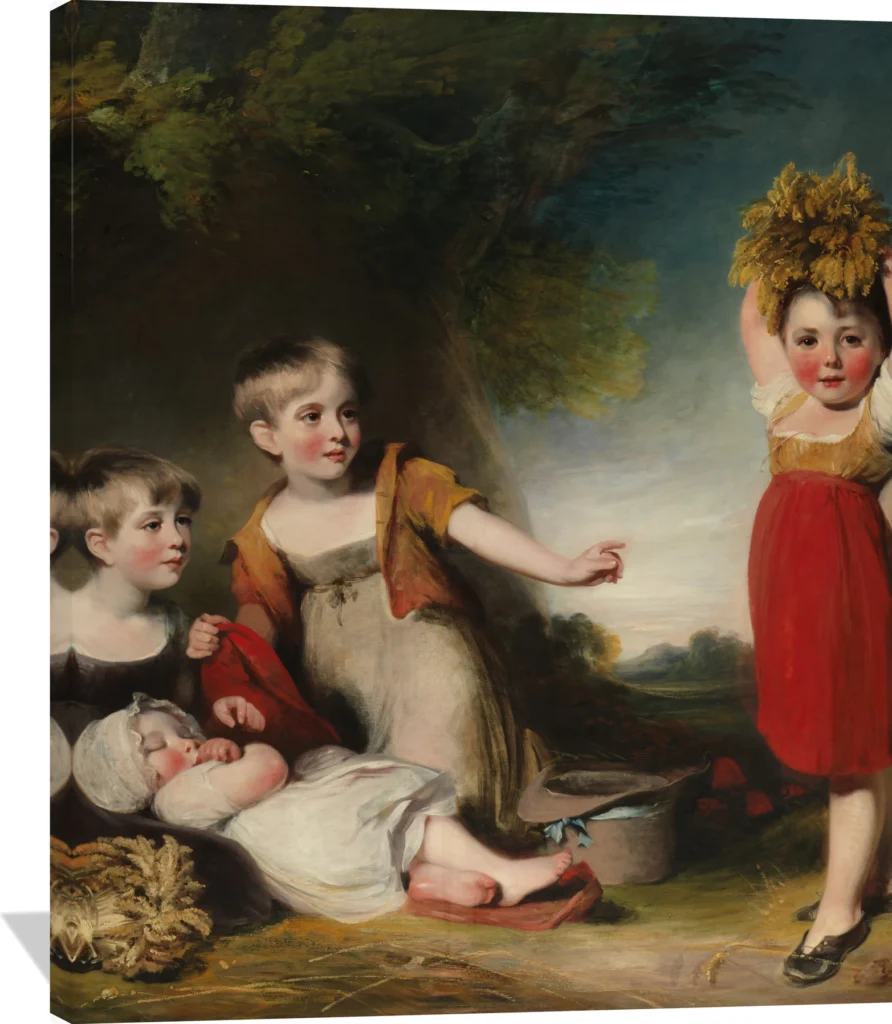
The William Owen The Grandchildren of Sir William Heathcote, 3rd Baronet canvas captures a tender moment of childhood innocence bathed in soft natural light. Set against a lush countryside backdrop, four children are portrayed with lifelike warmth and harmony, their rosy tones and gentle expressions framed by earthy greens, golden wheat, and rich crimson accents. Owen’s refined brushwork and balanced composition evoke both intimacy and grace.
This timeless wall art brings a sense of heritage and serenity to any interior. Perfect for a living room, study, or entryway, this exquisite canvas print celebrates the charm of family and the artistry of one of Britain’s early 19th-century portrait masters.
William Owen (1769–1825), born in Ludlow and active in London, was a distinguished British portrait painter whose work captured the refinement and social stature of early nineteenth‑century Britain. Trained during a period of expanding artistic patronage, he established himself as a sought‑after portraitist known for his sensitive rendering of character and polished, dignified compositions.
Artistic Style
Owen’s style is marked by a harmonious balance of realism and grace. His portraits display a gentle luminosity, careful modulation of color, and a poised elegance that aligns him with the refined traditions of late Georgian and Regency portraiture. He excelled at creating lifelike textures and subtle expressions, imbuing his sitters with a serene presence that set his work apart.
Subjects and Themes
Specializing primarily in portraiture, Owen painted members of Britain’s cultural, political, and social circles. His sitters were often portrayed with understated dignity, their personalities revealed through nuanced gestures and meticulously observed details. Whether depicting public figures or private individuals, he maintained a focus on human presence and emotional clarity.
Legacy and Significance
Owen’s contribution to British art lies in his ability to fuse technical finesse with a warm, approachable humanism. His portraits reflect the aesthetic values of his era while also offering a timeless study of character and composure. Celebrated in his lifetime and respected by peers, he remains recognized today for his refined portraiture and for shaping the visual language of Regency‑era representation.
Trust & policies
- 🚚 Free tracked shipping to 45+ countries. Local import duties or taxes may apply in some destinations.
- 🎨 Made-to-order, printed close to your delivery location
- 🛡️ If damaged, defective, or misprinted: free replacement or refund
- 🌍 Printed in US/CA/EU/UK/AU based on delivery location
- 💎 Acid-free, fade-resistant canvas with solid wood stretcher bars
- 🖼️ Optional pine floating frames in white, black, or brown
- 🪝 Ready to hang — hardware pre-installed