
Matilda Stoughton de Jaudenes
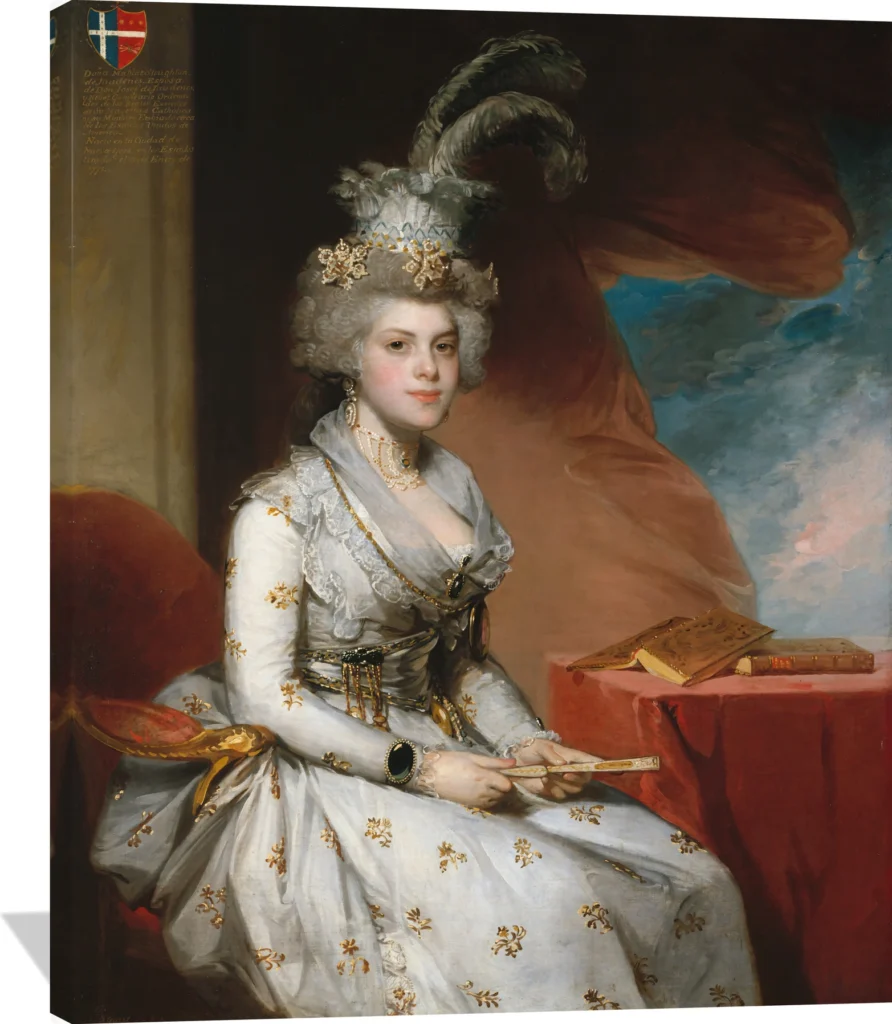
The Gilbert Stuart Matilda Stoughton de Jaudenes canvas captures refined elegance and timeless grace in luminous detail. Stuart’s masterful brushwork highlights the sitter’s poise through soft ivory tones, gold accents, and warm crimson drapery, set against a serene blue backdrop. The composition exudes sophistication, making it a striking centerpiece for any interior.
This exquisite wall art brings the grandeur of 18th-century portraiture into the modern home. Perfect for a living room, study, or entryway, this canvas print offers a touch of historic charm and quiet luxury, inviting viewers to appreciate the artistry and presence of one of America’s most celebrated painters.
Gilbert Stuart (1755–1828) was an American portraitist born in North Kingston, Rhode Island, and active throughout the early years of the United States. Celebrated for his psychological insight and refined technique, he became one of the most influential painters of the early American republic.
Artistic Style
Stuart was renowned for his elegant brushwork, lifelike modeling, and ability to capture subtle expressions. His portraits combined British academic training with a fresher, more spontaneous handling of paint, resulting in works that conveyed both dignity and intimacy. He often emphasized the face with strong focus and softened surrounding details, creating compositions marked by grace and directness.
Notable Contributions
Stuart’s legacy is anchored by his iconic portrayals of early American leaders, most famously his unfinished depiction of George Washington, known as the Athenaeum portrait. This image became the basis for the likeness of Washington used on the U.S. one‑dollar bill and remains one of the most widely recognized artworks in American history. His portraits of figures such as John Adams, Thomas Jefferson, and James Madison further cemented his role as a visual chronicler of the nation’s formative era.
Typical Subjects
While he painted a range of patrons, Stuart specialized in capturing prominent political, social, and cultural figures. His sitters were rendered with striking immediacy, their personalities conveyed through subtle expressions and masterful control of light and shadow. He approached his subjects not merely as public icons but as nuanced individuals, a quality that made his work highly sought after.
Cultural and Historical Significance
Stuart’s portraits became foundational images of American identity. His work offered a compelling visual narrative of the early republic, presenting leaders with a blend of realism and idealized restraint. As one of the most accomplished portrait painters of his generation, he shaped how the nation envisioned its founders and left an enduring imprint on American art. His confident yet understated artistry, marked by technical finesse and psychological depth, continues to influence portraiture today.
Trust & policies
- 🚚 Free tracked shipping to 45+ countries. Local import duties or taxes may apply in some destinations.
- 🎨 Made-to-order, printed close to your delivery location
- 🛡️ If damaged, defective, or misprinted: free replacement or refund
- 🌍 Printed in US/CA/EU/UK/AU based on delivery location
- 💎 Acid-free, fade-resistant canvas with solid wood stretcher bars
- 🖼️ Optional pine floating frames in white, black, or brown
- 🪝 Ready to hang — hardware pre-installed