
Frieda Schiff (1876–1958), Later Mrs. Felix M. Warburg
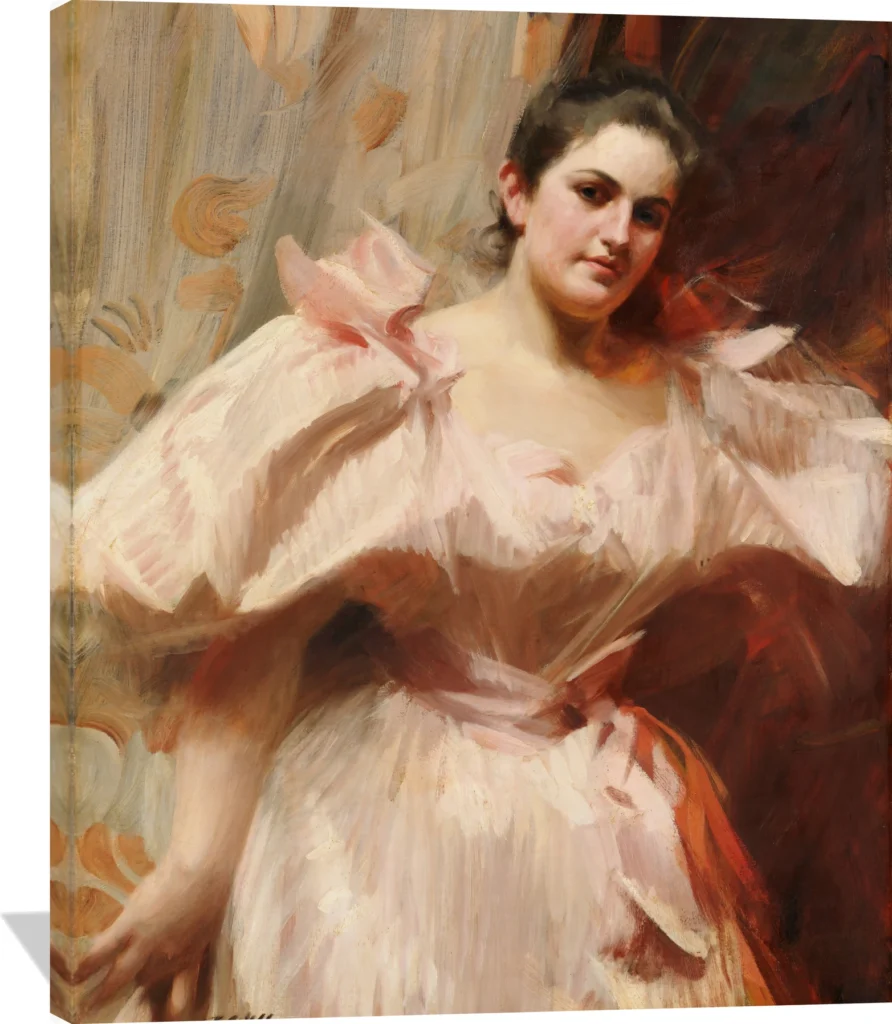
The Anders Zorn Frieda Schiff (1876–1958), Later Mrs. Felix M. Warburg canvas captures timeless elegance through masterful brushwork and luminous color. Soft blush tones, creamy whites, and warm russet hues blend in a sweeping composition that highlights Zorn’s signature impressionistic style. The poised figure, rendered with fluid strokes and radiant light, exudes grace and quiet confidence.
This exquisite wall art brings a refined, classic presence to any space—ideal for a living room, study, or entryway. A premium canvas print of Zorn’s portrait invites a touch of sophistication and historical charm into contemporary interiors.
Anders Zorn (1860–1920), born and died in Mora, Sweden, was one of the most celebrated painters and printmakers of his era, admired across Europe and the United States for his remarkable command of light, texture, and atmosphere. His mastery of the limited but powerful “Zorn palette” helped define a distinctive approach to color that remains influential among artists today.
Artistic Style
Zorn’s work is characterized by fluid brushwork, naturalistic light, and an effortless sense of immediacy. Whether working in oil, watercolor, or etching, he achieved an exceptional balance between precision and spontaneity. His ability to capture the warmth of skin tones, the shimmer of water, and subtle shifts in daylight placed him at the forefront of late nineteenth-century realism.
Notable Subjects
Zorn gained international acclaim for his portraits, depicting cultural figures, statesmen, and society elites with a vivid presence that feels both intimate and grand. His scenes of rural Swedish life such as bathing figures, folk traditions, and lakeside landscapes reveal his deep connection to Mora and remain among his most beloved compositions. Works like the celebrated Midnatt exemplify his ability to merge natural setting and human form into a unified, atmospheric whole.
Legacy and Significance
Recognized as a leading Scandinavian artist of his time, Zorn played a pivotal role in presenting Swedish culture to an international audience. His portraits of American presidents and influential patrons expanded his reputation across continents. Today, collectors and historians continue to admire his refined technique, his expressive handling of paint, and his enduring contribution to modern portraiture and genre scenes.
Through his confident brushwork and profound sensitivity to light, Anders Zorn secured his place as a master of naturalistic painting and a defining figure of Scandinavian art. His work remains a testament to the power of observation, craftsmanship, and the artistic pursuit of the human presence within its surroundings.
Trust & policies
- 🚚 Free tracked shipping to 45+ countries. Local import duties or taxes may apply in some destinations.
- 🎨 Made-to-order, printed close to your delivery location
- 🛡️ If damaged, defective, or misprinted: free replacement or refund
- 🌍 Printed in US/CA/EU/UK/AU based on delivery location
- 💎 Acid-free, fade-resistant canvas with solid wood stretcher bars
- 🖼️ Optional pine floating frames in white, black, or brown
- 🪝 Ready to hang — hardware pre-installed