
Mrs. Mary Arthur
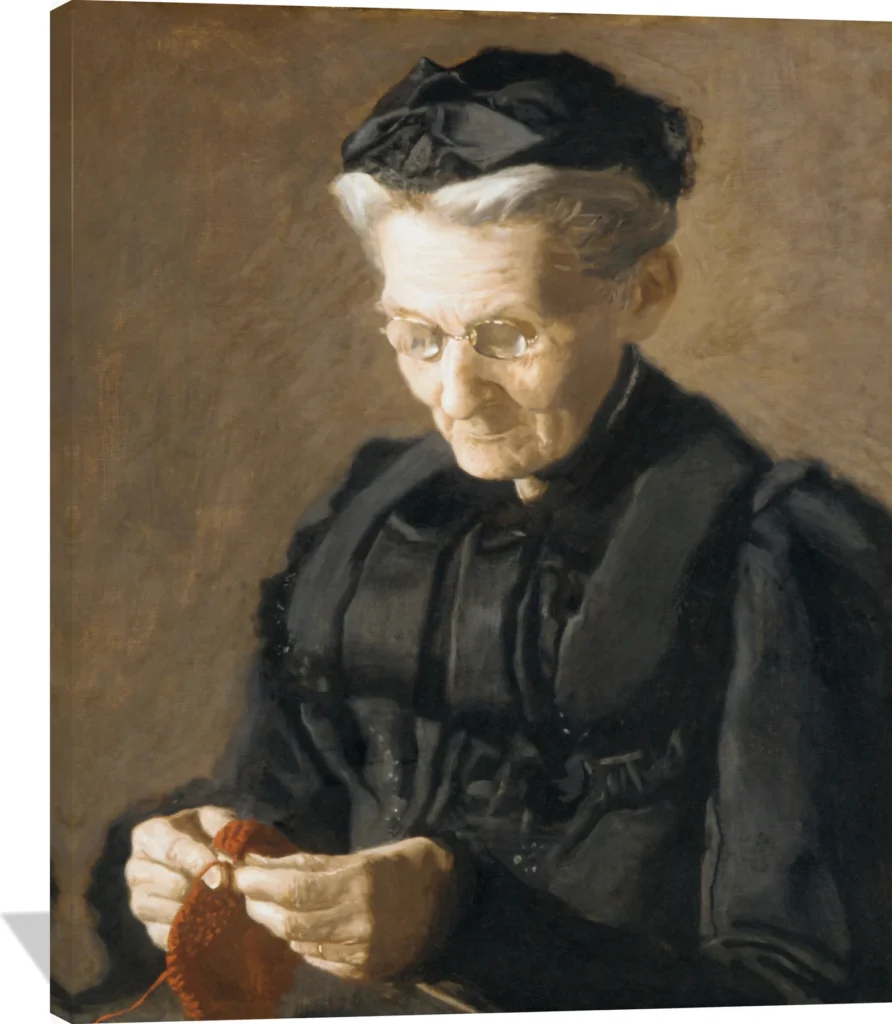
The Thomas Eakins Mrs. Mary Arthur canvas captures a moment of quiet dignity and reflection. Rendered in warm neutrals, soft browns, and deep blacks, this intimate portrait highlights Eakins’ mastery of light and texture. The gentle illumination across the sitter’s face and hands evokes a timeless serenity, making it a striking focal point for any refined space.
This museum-quality canvas print brings classical elegance to your living room, study, or entryway. Eakins’ thoughtful realism and subtle palette create an atmosphere of calm introspection—an ideal choice for collectors who appreciate the depth and grace of American portraiture.
Thomas Eakins (1844–1916) was an American artist born and based in Philadelphia, celebrated for his uncompromising commitment to realism and his profound influence on the trajectory of American art.
Artistic Style and Approach
Eakins is renowned for his meticulous draftsmanship, scientific precision, and deep respect for the observable world. Working primarily in painting and photography, he pursued a level of anatomical accuracy that was uncommon among his contemporaries. His approach combined rigorous study, careful observation, and a willingness to challenge artistic conventions, establishing him as a central figure in the development of **American Realism**.
Subjects and Themes
Eakins frequently depicted the people and environments of his native Philadelphia, focusing on portraits, sporting scenes, and moments of everyday labor. He approached his sitters with psychological depth, resulting in portraits that feel intimate, grounded, and quietly expressive. His well‑known portrayals of rowing, boxing, and medical demonstrations, including works such as The Gross Clinic and The Agnew Clinic, reflect his interest in human capability, professionalism, and the intersection of physical and intellectual discipline.
Notable Contributions
A devoted teacher, Eakins transformed art education in the United States by emphasizing life drawing, anatomical study, and the use of photography as a tool for understanding motion and form. His insistence on working from live nude models controversial at the time ultimately reshaped academic standards and helped future generations of artists pursue a more honest engagement with the human figure.
Cultural and Historical Significance
Though not fully appreciated during his lifetime, Eakins is now widely regarded as one of the most important American painters of the nineteenth century. His body of work offers a vivid and truthful portrait of American life during a period of rapid change, and his commitment to authenticity continues to resonate. Distinguished by clarity, emotional restraint, and extraordinary technical skill, Eakins’s art stands as a powerful testament to the value of direct observation and the enduring human stories found in everyday experience.
Trust & policies
- 🚚 Free tracked shipping to 45+ countries. Local import duties or taxes may apply in some destinations.
- 🎨 Made-to-order, printed close to your delivery location
- 🛡️ If damaged, defective, or misprinted: free replacement or refund
- 🌍 Printed in US/CA/EU/UK/AU based on delivery location
- 💎 Acid-free, fade-resistant canvas with solid wood stretcher bars
- 🖼️ Optional pine floating frames in white, black, or brown
- 🪝 Ready to hang — hardware pre-installed