
Still Life: Balsam Apple and Vegetables
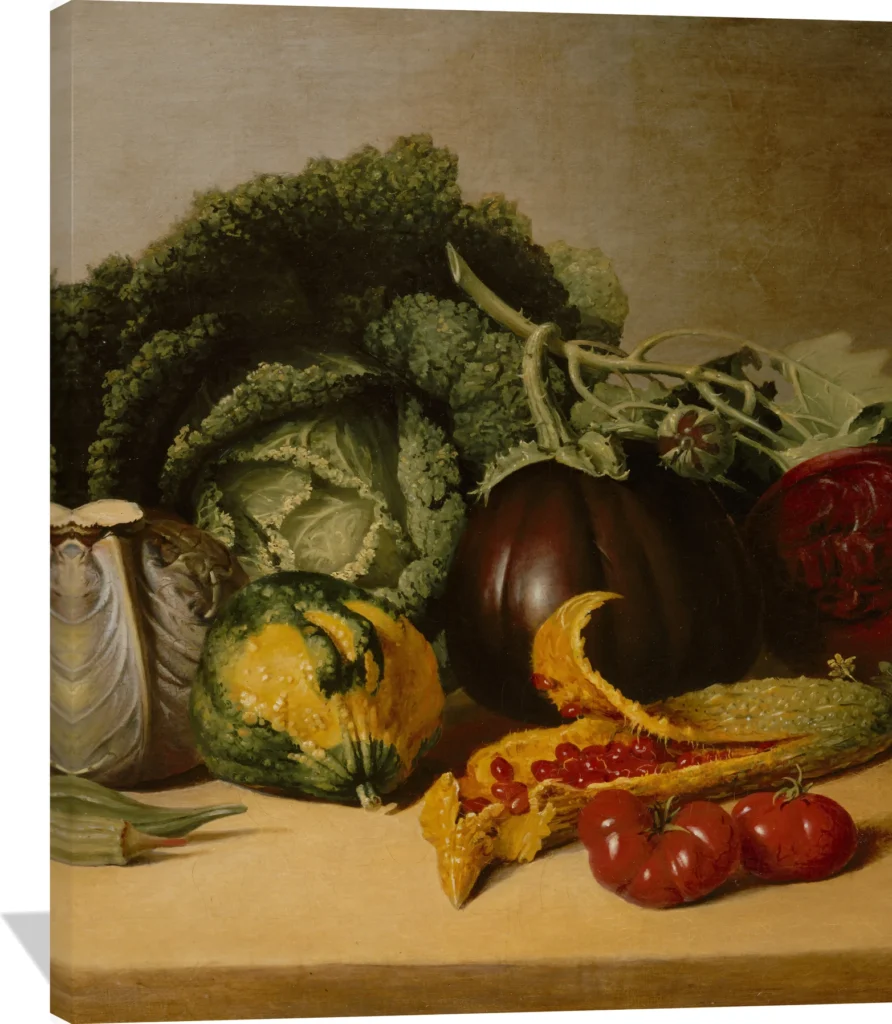
The James Peale Still Life: Balsam Apple and Vegetables canvas captures the timeless beauty of nature’s bounty with exquisite realism. Rich tones of deep green, golden yellow, earthy brown, and crimson red create a harmonious composition that glows with quiet elegance. Each vegetable is rendered with meticulous detail, evoking both abundance and serenity.
This museum-quality wall art brings a refined, classic touch to any space—perfect for a dining room, study, or entryway. A canvas print of Peale’s masterful still life invites warmth and sophistication, celebrating the artistry of everyday forms in a way that feels both historic and enduringly modern.
James Peale (1749–1831), an American artist born in Chestertown, Maryland and later active in Philadelphia, was a distinguished member of the renowned Peale family and an important figure in early American painting.
Artistic Focus and Style
Best known for his exceptional miniature portraits, refined still lifes, and quietly expressive domestic scenes, Peale brought a distinctive clarity and delicacy to his work. His compositions are marked by meticulous detail, balanced arrangements, and a subtle yet resonant emotional tone. His mastery of watercolor on ivory made him one of the leading miniature painters of his era, while his still lifes reveal a sensitivity to texture, light, and natural beauty.
Notable Contributions
After serving as an officer in the Revolutionary War, Peale devoted himself fully to painting, working alongside his brother Charles Willson Peale before establishing an independent practice. His portraits offered early Americans a refined visual record of personal identity and social aspiration, while his still lifes helped shape a genre that would become a hallmark of American art. Through these works, he became a quiet but influential contributor to the nation’s developing artistic identity.
Subjects and Significance
Peale’s subjects ranged from dignified portrait sitters to arrangements of fruit, flowers, and tableware rendered with remarkable precision. His ability to capture intimate human likeness and elevate everyday objects gave his paintings enduring appeal. Today, his work is appreciated for its craftsmanship, its contribution to early American cultural history, and its role within the foundational Peale family legacy that helped shape the country’s artistic landscape.
Trust & policies
- 🚚 Free tracked shipping to 45+ countries. Local import duties or taxes may apply in some destinations.
- 🎨 Made-to-order, printed close to your delivery location
- 🛡️ If damaged, defective, or misprinted: free replacement or refund
- 🌍 Printed in US/CA/EU/UK/AU based on delivery location
- 💎 Acid-free, fade-resistant canvas with solid wood stretcher bars
- 🖼️ Optional pine floating frames in white, black, or brown
- 🪝 Ready to hang — hardware pre-installed