Artistic Style
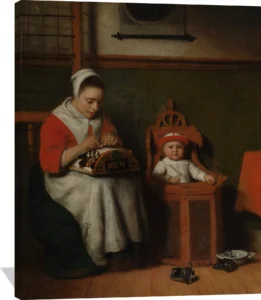
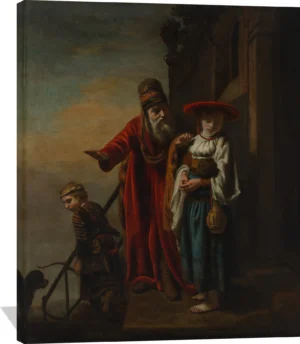
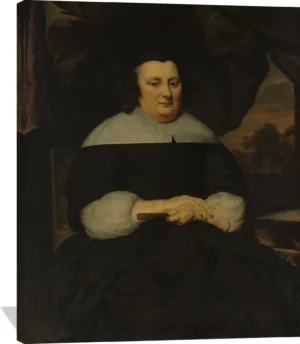
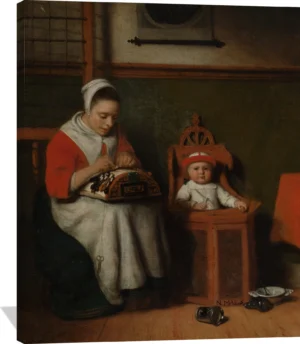
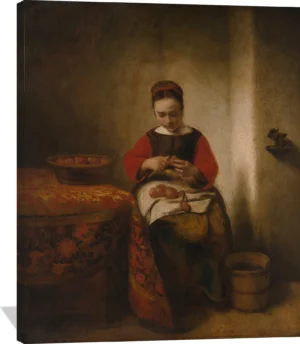
Maes’s early works reveal a deep sensitivity to atmosphere, combining warm chiaroscuro with intimate interior settings. His later career, centered in Amsterdam, shifted toward an elegant and polished portrait style. Across both periods, Maes demonstrated exceptional control of color, texture, and the quiet psychological depth that characterizes much of Dutch 17th‑century painting.
Notable Subjects
Maes is particularly known for evocative genre scenes depicting household life figures reading, sewing, or glimpsing activity through doorways. These moments, often filled with gentle humor or introspective stillness, highlight his keen understanding of everyday human behavior. His portraits, meanwhile, present sitters with dignity and subtle emotional presence, reflecting the tastes of Amsterdam’s affluent society.
Legacy and Significance
As one of Rembrandt’s most successful pupils, Maes contributed significantly to the development of Dutch domestic genre painting. His works helped refine the era’s shift toward nuanced interior storytelling while influencing subsequent generations of portraitists. Today, Maes is valued for the way he combined technical mastery with a distinctively intimate vision, making his paintings both culturally important and enduringly appealing.